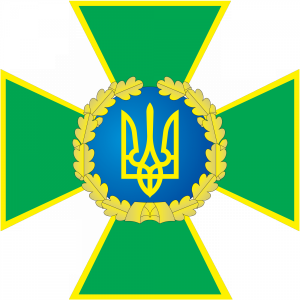
The State Border Guard Service of Ukraine is the law enforcement agency that stands between a nation of forty-four million people and the outside world — responsible for 6,993 kilometres of land border and 1,355 kilometres of sea coast, a perimeter longer than the entire Great Wall of China. Known in Ukrainian as Державна прикордонна служба України and abbreviated as DPSU, this agency was founded in 1991 as Ukraine declared independence and needed a sovereign force to replace the Soviet border troops that had previously guarded the territory. The emblem we are sharing today captures the essence of this mission: vigilance, sovereignty, and the unwavering protection of Ukraine's territorial integrity. We provide the vector emblem in CMX (CorelDRAW) and EPS formats in one ZIP archive, plus a high-resolution PNG — everything a designer, researcher, or government contractor needs for professional-quality reproduction.
What makes this emblem particularly striking from a design standpoint is its use of heraldic symbolism that connects modern Ukraine to centuries of Cossack military tradition. The shield, the trident, the crossed weapons — each element is a carefully chosen signifier that tells a story about how Ukraine views its borders not as arbitrary lines on a map but as sacred territory to be defended at all costs. Having access to the clean vector version allows you to study these elements at any scale, from microscopic detail to building-sized reproduction.
The DPSU: Thirty-Plus Years of Guarding a Nation's Sovereignty
The modern DPSU traces its legal foundation to November 4, 1991, when the Verkhovna Rada adopted the Law of Ukraine «On the State Border of Ukraine». Before that date, Ukrainian borders were controlled by the Soviet KGB Border Troops — a force answerable not to Kyiv but to Moscow. The transition from a colonial border guard to a national one was neither smooth nor automatic. Officers had to be vetted, doctrine had to be rewritten, and an entirely new institutional culture had to be forged from the remnants of a system designed to keep Ukrainians in, not invaders out.
The agency was formally established as a committee under the President of Ukraine in December 1991 and underwent several reorganisations before reaching its current form in 2003 as the State Border Guard Service — a full-fledged law enforcement body with the authority to investigate, detain, and use force in defence of the state border. Over the decades that followed, the DPSU expanded its capabilities to include aviation units, maritime patrol, canine squads, and specialised rapid-reaction teams capable of operating in any terrain from the Carpathian Mountains to the Black Sea littoral.
The DPSU's mission has been tested in ways that no border service in Europe has experienced since the Balkan wars. The annexation of Crimea in 2014 and the subsequent conflict in eastern Ukraine transformed border security from a routine administrative function into a frontline military operation. Border guards became the first line of defence — literally the first uniformed Ukrainians that any cross-border incursion would encounter. The emblem of the service, worn on uniforms and displayed at checkpoints, became not just a departmental logo but a symbol of national resistance.
Today, the DPSU operates 26 border detachments, two maritime guard detachments, an aviation squadron, and multiple training centres. Its personnel strength fluctuates between forty and fifty thousand, making it one of the largest uniformed services in Ukraine and by far the most geographically dispersed. Every village on the border, every crossing point, every stretch of river and coastline falls under the watch of this single agency.
Anatomy of the Emblem: Heraldry and Meaning
The DPSU emblem is a masterclass in institutional heraldry — every element has a specific meaning rooted in Ukrainian military tradition and national symbolism. Let us break it down piece by piece.
The central element is a blue shield, the colour of the Ukrainian sky and a reference to the national flag. On this shield sits the Tryzub — the trident that has been the national symbol of Ukraine since the era of Kyivan Rus and was adopted as the state coat of arms in 1992. The trident is rendered in gold, the traditional colour of Ukrainian sovereignty. Its presence on a border guard emblem is particularly resonant: the trident represents the state, and the border is where the state begins — or ends.
Crossed swords behind the shield form a classic military heraldic device. They signify the dual nature of the border guard's mission: defence of the nation and readiness to use force when diplomacy fails. The swords are not aggressive — they are crossed in a gesture of controlled power, ready but restrained. In Ukrainian military tradition, crossed weapons on an emblem denote a unit or service that is prepared for combat but whose primary function is protective rather than offensive.
The laurel wreath encircling the lower portion of the shield is a universal symbol of victory, honour, and service. In the DPSU emblem, it takes on additional meaning: the border is not merely a line but a theatre of continuous effort, and those who serve there deserve the laurels of recognition. The wreath also softens the composition visually, providing an organic counterbalance to the hard geometric lines of the shield and swords.
Below the wreath, a ribbon carries the agency's name in Ukrainian. This is a standard feature of military and law enforcement heraldry — the ribbon anchors the composition and provides a space for institutional identification. The typography is bold and sans-serif, projecting authority and modernity without sacrificing legibility at small sizes.
\u{201c}The emblem of a border guard service is unique among government symbols: it is seen by citizens and foreigners alike at the most emotionally charged moments of their journeys — arrival, departure, inspection, and sometimes denial. It must project authority without intimidation, welcome without weakness. The DPSU emblem achieves this balance with remarkable precision.
| Element | Symbolism | Heraldic Tradition | Visual Role |
|---|---|---|---|
| Blue Shield | Ukrainian sky, national flag | State coat of arms tradition | Central anchor, colour identity |
| Tryzub (Trident) | State sovereignty, Kyivan Rus heritage | Millennium-old national symbol | Focal point, state authority |
| Crossed Swords | Defence, controlled force | Military heraldry | Framework, power statement |
| Laurel Wreath | Victory, honour, continuous service | Classical heraldry | Organic balance, prestige |
| Ribbon with Text | Institutional identity | Modern law enforcement heraldry | Composition anchor, identification |
The overall composition follows what heraldic designers call the «pyramid» or «upward-pointing» structure: the viewer's eye is drawn from the wide base of the wreath, up through the shield and trident, to the implied point of the crossed swords above. This visual pathway reinforces the idea of grounded strength reaching upward — a border guard standing his ground while looking toward the horizon.
Colour Palette: The Language of Blue and Gold
The DPSU emblem uses a restrained colour palette that is entirely intentional. Blue and gold are not merely the colours of the Ukrainian flag — they carry deep cultural associations that predate the modern state by centuries. In Ukrainian folk tradition, blue represents the sky and water — the two elements that define the physical geography of the country, from the Carpathian peaks to the Dnipro River to the Black Sea. Gold represents wheat fields, sunshine, and the prosperity that comes from a land that has been cultivated for over five thousand years.
In the context of the border guard, the blue of the shield also suggests calm authority. Border crossings are inherently tense environments: travellers are tired, paperwork is scrutinised, and the power imbalance between guard and civilian is palpable. A blue shield — rather than red, which suggests aggression, or black, which suggests menace — communicates professionalism and restraint. It says: the state is watching, but not threatening.
The gold of the trident and wreath introduces contrast and warmth. Without it, the emblem would be a monochromatic blue field that lacks visual hierarchy. The gold draws the eye to the most important elements and creates a sense of value — in heraldry, gold is the metal of kings and nations. Its use here asserts that the border is valuable, that what lies within it is precious.
The vector files preserve these colours in their exact values. When you open the CMX or EPS file in a professional graphics editor, you will find the blue as a specific CMYK or RGB swatch — not an approximation produced by scanning or photographing a physical badge. This precision matters for anyone producing official materials, from government ID cards to informational signage at border crossing points.
File Formats Explained: CMX, EPS, and PNG
Our download package is deliberately lean: one vector archive containing CMX and EPS formats, plus a high-resolution PNG. This covers the two most common professional workflows without burdening you with redundant files.
The CMX file is native to CorelDRAW, which remains the dominant vector editing software across Ukraine and much of Eastern Europe. If you are working in a Ukrainian design studio, a government print shop, or any environment where CorelDRAW is the standard, open the CMX file. It preserves layers, colour swatches, and all path data exactly as the designer saved them. No font dependencies — all text has been converted to curves.
The EPS file is the universal translator of the vector world. Drop it into Adobe Illustrator, Affinity Designer, Inkscape, Scribus, QuarkXPress, or any software that understands PostScript. The EPS format is what professional print shops request when you submit artwork for large-format production — billboards, vehicle wraps, building signage, and official banners all start from an EPS file.
The PNG file at high resolution is your quick-access raster version. Unlike JPEG, PNG preserves transparency — the emblem appears with a clean alpha channel, meaning you can place it on any background colour or image without the dreaded white rectangle. Use the PNG for presentations, web mockups, social media posts, or any scenario where opening a vector editor would be overkill.
| Format | Type | Best Software | Editable | Transparency | Ideal Use Case |
|---|---|---|---|---|---|
| CMX | Vector | CorelDRAW | Yes | N/A (vector) | Ukrainian/Eastern European workflows |
| EPS | Vector | Illustrator, Inkscape, Affinity | Yes | N/A (vector) | Print production, cross-platform sharing |
| PNG | Raster | Any image viewer/editor | No | Yes | Web, presentations, quick placement |
Practical Applications: Where and How to Use the DPSU Emblem
The question of how to use a government emblem is not trivial. Unlike a football club logo, which can be placed on fan merchandise with relative freedom, a border guard emblem carries legal and ethical considerations. Let us walk through the legitimate use cases.
Official government documentation is the primary use case. If you work for an agency that interfaces with the DPSU — customs, migration, international trade — the vector files allow you to include the correct emblem on joint publications, memoranda of understanding, and operational signage. Using a scanned or photographed version of the emblem on an official document signals amateurism; using a clean vector version signals professionalism.
Academic and journalistic publications are another legitimate domain. Researchers writing about Ukrainian border policy, journalists covering migration issues, and historians documenting post-Soviet institution-building all benefit from access to accurate visual material. The emblem adds credibility and context to any analysis of Ukraine's border management.
Educational materials for Ukrainian diaspora communities represent a less obvious but meaningful use case. Ukrainian Saturday schools in Canada, the United States, Australia, and across Europe teach children about the institutions of their ancestral homeland. An accurate emblem, printed from a vector file, helps these lessons feel tangible and real rather than abstract.
Design reference and heraldic study rounds out the legitimate uses. The DPSU emblem is a case study in how a post-Soviet state adapts heraldic traditions to modern institutional needs. Design students, vexillologists, and heraldic artists study such emblems to understand how symbols travel across time and political systems. Having the vector source allows for detailed analysis of proportions, colour values, and design decisions that a photograph cannot provide.
The Evolution of Ukrainian Border Guard Symbolism
To fully appreciate the current emblem, it helps to understand what came before it. The Soviet Border Troops, which controlled Ukrainian borders until 1991, used a very different visual language — red stars, the hammer and sickle, and the standardised Soviet military heraldry that emphasised ideological loyalty rather than national identity. A border guard was a soldier of the USSR first and a person from any particular republic second.
The transition from Soviet to Ukrainian symbolism was not instantaneous. In the chaotic first months of independence, many DPSU personnel continued wearing Soviet uniforms with the insignia removed — a blank space where the hammer and sickle had been, waiting to be filled with something new. The adoption of the trident and the blue-and-gold colour scheme was a deliberate act of national reclamation: the border, more than any other space, is where the distinction between «us» and «them» is most acutely felt, and the symbols worn there must reflect who «we» are.
The current emblem represents the maturation of this process. It is neither a crude copy of pre-Soviet Ukrainian heraldry nor a hasty post-Soviet improvisation. It is a carefully calibrated design that draws on centuries of Cossack and national symbolism while meeting the functional requirements of a modern law enforcement agency operating in the twenty-first century. The vector file preserves this design in its purest form — every curve of the trident, every serif of the typography, every precisely measured proportion of the shield.
Why Vector Format Matters for Government Emblems
There is a practical dimension to vector emblems that goes beyond aesthetics. Government agencies reproduce their insignia across an astonishing range of media: embroidered shoulder patches (typically 80 mm wide), vehicle door decals (300-500 mm wide), checkpoint signage (1000-2000 mm wide), and ceremonial banners (up to 3000 mm wide). A single emblem must work at all these sizes without modification.
A raster image cannot meet this requirement. A PNG that looks crisp on an 80 mm patch will be visibly pixelated when blown up to signage scale. Conversely, a PNG sized for a large sign will be needlessly large for a small patch and may introduce scaling artefacts during reduction. The vector file solves this problem absolutely: define the design once, and the mathematics of Bezier curves ensures perfect reproduction at any physical dimension.
Colour consistency is another vector advantage. Government emblems use specific colour values — sometimes defined by law or regulation — that must be reproduced exactly. A raster image introduces colour shifts through compression, monitor calibration differences, and printer driver behaviour. The vector file contains absolute colour references that a properly calibrated workflow will reproduce identically every time.
For the DPSU, whose emblem appears on everything from the passports of Ukrainian citizens to the vehicles that patrol the border, this consistency is not a luxury. It is a requirement of state representation. The emblem must look the same in Kyiv, in Lviv, in Odesa, and at every crossing point in between. Vector files are the only format that guarantees this uniformity.
Frequently Asked Questions
What formats are included for the DPSU emblem?
The download contains CMX (CorelDRAW) and EPS vector formats in one ZIP archive, plus a high-resolution PNG file with transparent background.
What does DPSU stand for?
DPSU is the abbreviation of Державна прикордонна служба України — the State Border Guard Service of Ukraine, the primary law enforcement agency responsible for securing Ukraine's state border.
What is the Tryzub on the emblem?
The Tryzub is the trident — the state coat of arms of Ukraine, adopted in 1992, with origins tracing back to the seal of Volodymyr the Great of Kyivan Rus in the 10th century. On the DPSU emblem, it represents Ukrainian state sovereignty.
How long is Ukraine's border?
Ukraine has 6,993 kilometres of land border (shared with seven countries: Belarus, Russia, Moldova, Romania, Hungary, Slovakia, and Poland) and 1,355 kilometres of maritime border along the Black Sea and Sea of Azov — approximately 8,348 km total.
When was the DPSU founded?
The agency traces its legal foundation to November 4, 1991, with the adoption of the Law «On the State Border of Ukraine». It was formally established as a committee under the President of Ukraine in December 1991 and restructured into its current form in 2003.
Can I edit the colours of the vector emblem?
Technically yes, the vector files are fully editable. However, the emblem is an official state symbol with legislatively defined colours. Changing the colour scheme is not recommended for any official or representative use.
Which format should I use for printing a large sign?
Always use the EPS vector file. It scales to any dimension without quality loss. Provide the EPS to your print shop and specify the required print dimensions — they will handle the rest.
Does the PNG file have a transparent background?
Yes. The PNG includes alpha-channel transparency, so the emblem appears without a background colour. This makes it ideal for placing on coloured layouts, photographs, or presentation slides.
What do the crossed swords symbolise?
The crossed swords represent the dual nature of the border guard's mission: defence of the nation and readiness to use controlled force when necessary. In Ukrainian military heraldry, crossed weapons signify a protective rather than offensive role.
Is the text in the vector files editable?
The text has been converted to outlines (curves) to avoid font dependency issues. You can scale and modify the shapes freely, but you cannot type new text directly into the existing text fields without the original Ukrainian fonts.
How many personnel serve in the DPSU?
The DPSU maintains between 40,000 and 50,000 personnel, including border guards, maritime guard units, aviation squadrons, canine units, and specialised rapid-reaction teams deployed across 26 border detachments.
Can I use the emblem for commercial purposes?
The emblem is an official state symbol. Commercial use, particularly on merchandise sold for profit, typically requires authorisation from the DPSU. For non-commercial educational, academic, or journalistic use, the emblem may generally be used with proper attribution.
Tap to react