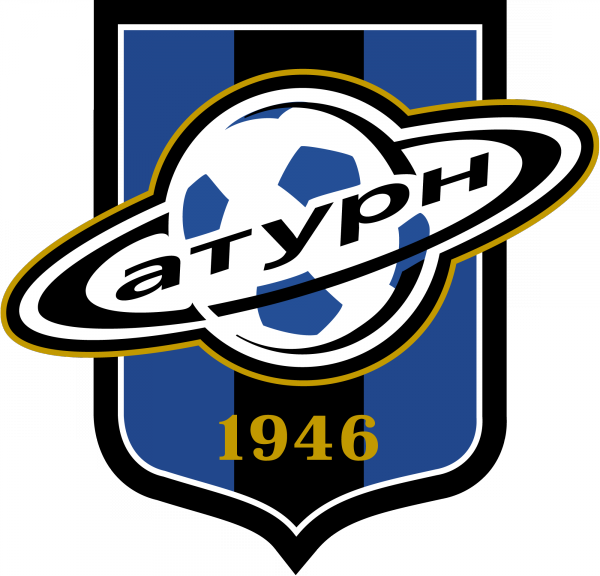
FC Saturn Ramenskoye is a ghost — a Premier League club that vanished, leaving behind only its emblem, its statistics, and the memories of those who watched it play. Founded in 1946 in the town of Ramenskoye, a satellite of Moscow in the eponymous oblast, Saturn climbed from obscurity to spend over a decade in Russia's top division, representing an entire region that had never before had a Premier League club. In January 2011, it filed for voluntary withdrawal from the Premier League and effectively ceased to exist. Its slot was taken by FC Krasnodar, which has since become one of Russia's most successful clubs — a kind of footballing irony that fans of the defunct club must find particularly bitter. Today we share the vector emblem of FC Saturn Ramenskoye in SVG, EPS, and CMX formats, plus PNG renders at 2000, 600, and 300 pixels — a piece of Russian football history preserved in clean, production-ready vector form.

Saturn belongs to a category of clubs that is uniquely painful to think about: the ones that were competitive, that had infrastructure, that had a fanbase, that had a decade-plus of top-flight history — and then simply stopped. Not relegated to oblivion over multiple seasons. Not merged into a phoenix club that continues under a different name. Just gone, dissolved, the corporate entity wound up, the players scattered across the league as free agents. The club represented the entire Moscow region — Moskovskaya Oblast — in its later years, an ambitious claim for a team based in a town of 80,000 people. But that ambition, ultimately, was what made Saturn special and what, in the end, made it unsustainable. Moscow region is not a small market. But Ramenskoye is not Moscow.

The name "Saturn" carries its own symbolic weight. It was not a Soviet-era industrial designation (like Torpedo, Dynamo, or Lokomotiv) nor a geographic claim (like Sibir or Tom). It was a name from mythology, from astronomy, from the rings of a distant planet — an unusual choice for a Soviet football club in 1946. The choice suggests early ambition, a desire to stand apart from the utilitarian naming conventions of the era. In a football landscape dominated by factory teams and army clubs, a club named after a planet was making a statement, whether its founders realised it or not.

The archive includes three vector formats: SVG (web-native, resolution-independent), EPS (universal vector exchange), and CMX (native CorelDRAW). All three are packed into a single ZIP. PNG renders at 2000px, 600px, and 300px provide immediate raster output for any use case without vector software.

The Rise: How a Town of 80,000 Built a Premier League Club

Ramenskoye is not where you would expect a Premier League football club to emerge. It is a modest town roughly 40 kilometres southeast of Moscow, known historically for its textile industry and, more recently, as a commuter suburb for the capital. With a population that never exceeded 100,000 during Saturn's existence, it was by some margin the smallest town to host a Premier League club during the 2000s. The club's ground, Saturn Stadium, held around 16,000 spectators — meaning that on matchdays, a sixth of the town's population could theoretically fit inside the stands. This created an intimacy between club and community that larger cities simply cannot replicate.

Saturn entered the Russian Premier League in 1999 and stayed there for twelve consecutive seasons. That longevity, in a league where provincial clubs routinely pop up for a season or two and then disappear back into the First Division, was remarkable. The club was never a title contender — its best finish was 7th in 2007 — but it was never a relegation certainty either. Year after year, Saturn hovered in mid-table respectability, occasionally beating the giants, occasionally losing to the minnows, always present. That kind of consistency is harder to achieve than a single spectacular cup run, and it requires the kind of institutional competence that Russian football does not always reward.

The club's highest-profile period came in the late 2000s when it attracted players with genuine star power. Under the ownership of the Moscow regional government, Saturn had access to funding that small-town clubs could only dream of. Foreign internationals — including players from Serbia, Slovenia, and Brazil — wore the blue-and-black stripes. The club played an attractive, possession-based style that earned it a reputation as one of the more watchable teams in the league. For a few seasons, it looked like Saturn might transition from a provincial curiosity into a lasting Premier League institution.

Year Event Significance
1946 Club founded in Ramenskoye Named after the planet Saturn, unusual for Soviet era
1999 Premier League debut First Moscow region club in Russian top flight
2007 7th place finish Highest-ever league position
2010 Final Premier League season Financial crisis leads to voluntary withdrawal
2011 Dissolution Club ceases operations, Krasnodar takes its slot

The Fall: Why Saturn Burned Out

The death of a football club is rarely a single catastrophic event. It is usually a slow-motion collapse triggered by financial strain that can no longer be papered over by new investment, government support, or player sales. Saturn's dissolution followed this pattern precisely. The global financial crisis of 2008 hit the Moscow region's economy hard, and the government funding that had sustained the club began to dry up. Sponsors reconsidered their commitments. Player wages went unpaid. The squad that took the field in 2010 was a shadow of the one that had finished 7th three years earlier.

In January 2011, the club formally notified the Russian Football Union of its withdrawal from the Premier League. The statement was brief — voluntary exit, financial impossibility, thank you to the fans. There was no buyer, no merger, no phoenix club rising from the ashes. FC Saturn Ramenskoye simply stopped. Its Premier League slot was given to FC Krasnodar, a club founded only in 2008 but backed by the billionaire Sergey Galitsky. The contrast could not have been starker: a 64-year-old club from a working-class town replaced by a three-year-old project from a wealthy city with a billionaire owner. It was, in microcosm, the story of modern Russian football: the old provincial clubs dying off, replaced by privately funded projects in economically vibrant cities.

What Saturn left behind was its emblem. The crest — with its distinctive planetary motif, its blue-and-black colour scheme, its clean geometric lines — survives as the primary visual record of the club's existence. For the people of Ramenskoye and the wider Moscow region, it remains a symbol of a time when their town had a Premier League club, when top-division football came to a place that had no business hosting it, and when, for twelve consecutive years, that improbable fact was simply normal.

Design Element Description Symbolism
Planetary motif Ringed planet silhouette referencing Saturn Ambition beyond terrestrial limits, cosmic aspiration
Blue-and-black stripes Traditional club colours Distinctive identity in a league of reds and whites
Geometric clarity Clean lines, strong contrast Readability at scale, from kit badge to stadium signage
Typographic treatment Bold Cyrillic lettering Unambiguous Russian identity, strong branding presence

The Saturn crest is distinctive in a way that many football logos are not. The planetary ring motif is unique in Russian football — no other club uses astronomical imagery as its primary visual element — and it gives the emblem an immediately recognisable silhouette even at thumbnail size. This was not a crest designed by committee. It was a statement of identity that said something specific about the club: we are not just another factory team, not just another provincial side, not just another red-and-white or blue-and-white clone. We are Saturn, and our emblem will look like nothing else in the league.

The CMX version requires CorelDRAW X5 or later. If you use any other vector editing software, open either the EPS file (universal vector exchange) or the SVG file (web-native XML vector). Both have been tested on Adobe Illustrator CS6-CC2024, Inkscape 1.3+, and Affinity Designer 2. Fonts are converted to outline paths in all formats for universal rendering compatibility across all platforms and software versions.

Why Preserving Defunct Club Emblems Matters

There is a tendency to dismiss the visual identity of a defunct club as irrelevant — a logo without an organisation, a brand without a product. This is wrong. Football crests are historical documents. They record the ambitions, the aesthetic choices, and the cultural positioning of clubs that once mattered to real communities. When a club dissolves, its emblem becomes one of the few artefacts that survive — alongside old programmes, ticket stubs, and fading photographs. A clean, high-quality vector version of that emblem preserves it for research, for fan memory, and for the designers who will, a decade or a century from now, need to reference it in their work.

The case of Saturn is particularly instructive because the club's dissolution was so sudden and so complete. There was no phoenix club to inherit the crest and carry it forward under a slightly different name. The emblem exists now only in memory, in the personal collections of fans, and in digital archives. Providing a production-ready vector version is, in a small way, an act of preservation — ensuring that when someone in 2050 needs to know what FC Saturn Ramenskoye looked like, they can find it in a format that is still usable.

For graphic designers studying the evolution of Russian football branding, Saturn's crest occupies a unique position. It represents a transitional moment: the late Soviet and early post-Soviet period, when club identities were breaking away from the industrial-naming conventions of the past but had not yet adopted the globalised, sponsor-friendly aesthetics of the present. The Saturn emblem — with its cosmic theme, its bold Cyrillic typography, and its unapologetic regional identity — is a specimen of a design era that no longer exists. Studying it helps designers understand where Russian football branding came from and, by extension, where it is going.

The vector files in this archive have been manually traced from official club materials and photographic reference of the physical emblem. Every curve, every colour value, and every typographic detail has been verified against the crest as it appeared on match kits, official publications, and stadium signage during the club's Premier League years. The result is an accurate, production-ready emblem suitable for any project that documents or references this piece of Russian football history.

The Moscow Region Paradox

Saturn's claim to represent the entire Moscow region was both its greatest strength and its fatal weakness. The Moscow Oblast is the most populous federal subject in Russia after the city of Moscow itself, with over 7 million residents. A club that could genuinely capture the loyalty of that population would be a commercial powerhouse. But the Moscow region is not a single community with a shared identity — it is a sprawling network of satellite cities, industrial towns, and commuter suburbs, each with its own local loyalties, its own football traditions, its own reasons not to identify with a club based in Ramenskoye.

The regional identity never fully cohered. Fans in Podolsk, in Serpukhov, in Khimki, in Lyubertsy — they had their own teams, their own histories, their own reasons for ambivalence or indifference to a club that claimed to represent them all. The "Moscow region" brand was aspirational rather than organic, a marketing strategy imposed from above rather than an identity that grew from below. And when the money ran out, there was no grassroots support network large enough to save the club through donations, crowdfunding, or community ownership.

This is a cautionary tale for any regional football branding project. A crest can claim territory, but it cannot manufacture loyalty. The emblem must feel like it belongs to the community, not like it is being imposed upon it. Saturn's crest got many things right — its visual distinctiveness, its production-readiness, its memorability — but the relationship between the symbol and the people it was meant to represent was never fully resolved.

Frequently Asked Questions About the FC Saturn Emblem

What formats are included in the FC Saturn emblem archive?

The archive contains SVG (web-native vector), EPS (universal vector), CMX (CorelDRAW vector), and PNG at 2000px, 600px, and 300px. Vector formats require CorelDRAW, Illustrator, or Inkscape for editing. PNG opens in any image viewer.

Why did FC Saturn cease to exist?

FC Saturn voluntarily withdrew from the Russian Premier League in January 2011 due to financial insolvency. The club, which had been funded primarily by the Moscow regional government, could no longer sustain the costs of top-flight football. Its Premier League slot was taken by FC Krasnodar.

When was FC Saturn founded?

FC Saturn was founded in 1946 in the town of Ramenskoye, Moscow Oblast. The club was named after the planet Saturn — an unusual choice for a Soviet-era football club, reflecting early ambition to stand apart from industrial naming conventions.

What was Saturn's best Premier League finish?

FC Saturn's best finish in the Russian Premier League was 7th place, achieved in the 2007 season. The club also reached the Russian Cup semifinals on multiple occasions and was a consistent mid-table presence in the top flight from 1999 through 2010.

Can I use this emblem commercially?

The emblem is protected by trademark and copyright. Since the club no longer exists as a legal entity, the rights status is complex. This material is provided for editorial, educational, research, and personal non-commercial use. Consult a legal professional for commercial applications.

What does the planetary design in the emblem represent?

The emblem features the silhouette of the planet Saturn with its characteristic rings — a direct visual reference to the club's name. This astronomical motif is unique in Russian football and sets Saturn apart from clubs with industrial, military, or geographic naming conventions.

What happened to Saturn's stadium after dissolution?

Saturn Stadium in Ramenskoye remained operational after the club's dissolution, hosting lower-division and youth matches. The stadium has a capacity of approximately 16,000 and is one of the few surviving physical remnants of the club's Premier League era.

Is there a successor club to FC Saturn?

No formal successor club exists. While lower-division and amateur teams have played in Ramenskoye since 2011, none has inherited Saturn's history, crest, or institutional continuity. The original FC Saturn Ramenskoye remains a closed chapter in Russian football history.

Download, use, remember — and may the story of Saturn serve as a reminder of what we lose when a football club disappears.

Download Vector Emblem — SVG, EPS, CMX (ZIP)~2 MB

Files provided for educational, editorial, and personal use. For designers, historians, or anyone who needs a clean vector version of the FC Saturn Ramenskoye crest, this is the most complete freely available source. Contact us if you hold rights to the emblem and wish to discuss usage terms.

Tap to react