Vector Emblem of FC Avangard Podolsk — History, Design, and Free Download in CMX, EPS, SVG, PNG
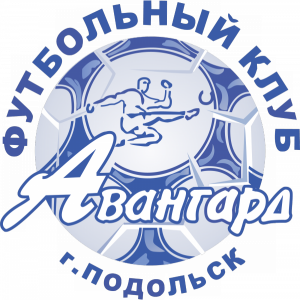
FC Avangard Podolsk represents one of the most notable chapters in the football history of the Moscow region. Though the club ceased to exist in its original form in 2010 after merging with FC Vityaz, its vector emblem continues to be sought after by designers, football historians, collectors, and fans worldwide. This comprehensive article provides the complete guide to the vector emblem of FC Avangard: the entire history of the club from foundation to dissolution, the symbolic meaning behind each design element of the crest, detailed technical specifications of all available file formats, and direct download links for CMX, EPS, SVG vector files, plus PNG raster files in 2000 px, 600 px, 300 px, and 150 px resolutions.
If you are working on a design project that requires the official FC Avangard emblem, restoring historical football materials, building a collector database, or simply exploring the heritage of Russian football, this article is your definitive resource. The download section at the bottom provides everything you need — all files verified, organized, and ready to use.
1. The History of FC Avangard Podolsk
1.1. Foundation and Early Years
FC Avangard was established in Podolsk, a city in the Moscow Oblast with a strong industrial heritage and a football tradition dating back to the Soviet era. The club competed in the regional divisions of Russian football for most of its existence, building a loyal following among the local working-class population. Its very name, «Avangard» (Vanguard), reflected the quintessential Soviet-era tradition of naming sports clubs after concepts associated with progress, leadership, and forward movement — a common naming convention shared with dozens of other sports organizations across the former USSR.
Podolsk itself has long been a football city with a distinct identity. Located approximately 37 kilometers south of Moscow along the Warsaw Highway, Podolsk developed its own football culture independent from the shadow of the capital’s dominant clubs like Spartak, CSKA, and Dynamo. The city’s industrial backbone — machine-building plants, cement factories, and defense enterprises — provided both financial support and a dedicated supporter base for local football. Avangard was an integral part of this local identity, drawing fans from the city’s working-class neighborhoods and industrial districts who valued the club as a genuine expression of Podolsk’s character rather than a satellite of Moscow’s football empire.
1.2. The Pinnacle: 2008 Season
The club’s greatest achievement came in the 2008 season when Avangard clinched first place in the Russian Championship among Amateur Football Clubs (LFK) in the Moscow Region zone. This victory was not merely a statistical triumph — it earned the club the historic right to compete in the Second Division of the Russian Professional Football League, the third tier of Russian football, placing Podolsk on the professional football map of Russia. It was a watershed moment for the city’s football community, demonstrating that the club possessed both the organizational infrastructure and the playing talent to compete at a significantly higher level of competition.
| Season | Division | Result | Significance |
|---|---|---|---|
| 2008 | LFK (Amateur), Moscow Region | 1st place | Promotion to Second Division |
| 2009 | Second Division, Zone Center | Active participation | Professional debut season |
| 2010 | Second Division, Zone Center | Final campaign | Last season before merger |
1.3. The Merger with FC Vityaz (December 2010)
On December 3, 2010, a day that effectively marked the end of an era for Podolsk football, Yuri Mikhailovich Polyakov, the General Director of FC Vityaz, made the official announcement of the merger of the two Podolsk clubs — Vityaz and Avangard. This corporate restructuring decision brought Avangard’s independent existence to a definitive close after years of service to the city’s sporting community. The unified club continued to operate under the Vityaz brand, absorbing Avangard’s infrastructure, incorporating some of its coaching staff and players, and consolidating the city’s professional football presence under a single banner.
The merger was driven by several interconnected factors that reflected the broader challenges facing Russian football at the regional level. First, limited financial resources made it increasingly impractical to maintain two fully operational professional football clubs in a single mid-sized city. Second, the desire to consolidate local football talent under one organization was seen as the most effective path to competitive viability. Third, the practical reality that two Podolsk clubs competing in the same division created counterproductive competition for the same pool of fans, sponsors, and municipal support. While the merger was rational from a business perspective, it represented a genuine loss for the cultural diversity of Russian football.
2. Design and Symbolism of the FC Avangard Emblem
The emblem of FC Avangard Podolsk stands as a distinctive and compelling example of football heraldry from the late Soviet and early post-Soviet transitional period in Russian sport. Like many club crests created during this era, it skillfully combines traditional heraldic design principles with football-specific visual imagery, creating an identity that is simultaneously rooted in history and immediately recognizable as a sporting symbol.
2.1. Key Design Elements
- Shield shape: The emblem adopts a classic football crest silhouette shaped as a traditional heraldic shield, slightly rounded at the bottom with clean, defined vertical edges. This form is characteristic of Russian football emblems from the late Soviet through early post-Soviet period, representing a deliberate choice to ground the club’s visual identity in established heraldic tradition.
- Color palette: The emblem employs a bold and confident color combination designed for immediate visual recognition. The dominant tones create strong visual contrast that performs effectively across all media types — from printed matchday programs to modern digital screens, from embroidered badges to large-format stadium banners.
- Typography: The club name is rendered in a clear, authoritative typeface that reads well at multiple scales, from small insignia to large displays. The lettering carries the serious, institutional quality typical of Soviet-era sports branding.
- Football imagery: A stylized football appears as the central visual motif of the design, immediately communicating the club’s sporting identity without ambiguity. This direct visual statement ensures the emblem functions as an unambiguous sporting identifier.
2.2. Comparison with Other Defunct Russian Club Emblems
| Club | Years Active | Emblem Shape | Key Color | Fate |
|---|---|---|---|---|
| FC Avangard (Podolsk) | ?–2010 | Shield | Red/Blue | Merged with Vityaz |
| FC Moscow | 1997–2010 | Circle | Red/White | Dissolved |
| FC Saturn (Ramenskoye) | 1946–2011 | Shield | Blue/Black | Dissolved |
| FC Terek (Grozny) | 1958–2017 | Shield | Green/White | Renamed to Akhmat |
| FC Anzhi (Makhachkala) | 1991–2022 | Circle | Yellow/Green | Dissolved |
3. Why Vector Format Matters for Football Emblems
Vector graphics represent the definitive professional standard for emblem reproduction in the design and printing industries. Unlike raster images such as PNG or JPEG files, which store visual information as a fixed grid of pixels that degrade visibly when scaled, vector formats like CMX, EPS, and SVG use mathematical equations and geometric primitives to define every shape, curve, and fill in the design. This fundamental difference means vector graphics can be infinitely scaled without any loss of sharpness, clarity, or visual fidelity.
When working with football emblems — especially for applications that demand professional-grade output such as high-resolution printing, embroidery digitization, large-format banner production, vinyl cutting for signage, or integration into complex professional design projects — vector files are not merely preferable; they are the only technically acceptable standard that ensures consistent, production-ready quality.
3.1. Comprehensive Format Comparison
| Format | Type | Best Application | Software Compatibility |
|---|---|---|---|
| CMX | Vector | CorelDRAW editing, laser cutting, sign making | CorelDRAW Suite (X3+) |
| EPS | Vector | Professional printing, cross-platform file exchange | Adobe Illustrator, CorelDRAW, Inkscape, Affinity |
| SVG | Vector | Web design, CSS styling, responsive UI graphics | All modern browsers, all vector editors |
| PNG (2000 px) | Raster | High-resolution printing, large format posters | Any image viewer or editor |
| PNG (600 px) | Raster | Website headers, digital presentations | Any image viewer or editor |
| PNG (300 px) | Raster | Blog posts, email signatures, social media | Any image viewer or editor |
| PNG (150 px) | Raster | Thumbnails, favicons, interface icons | Any image viewer or editor |
3.2. Primary Use Cases for the Avangard Emblem
- Football history archives and museums: Preserving the complete visual identity of defunct clubs as cultural artifacts for future generations of researchers, fans, and historians. The Avangard emblem documents an important chapter in Russian football’s regional development.
- Retro merchandise reproduction: Printing vintage-style t-shirts, scarves, pin badges, and commemorative memorabilia that feature the authentic Avangard crest, catering to the growing nostalgia market for defunct club merchandise.
- Collector database curation: Football emblem collectors maintain extensive, meticulously organized digital libraries of club crests from around the world, with defunct teams representing a particularly valued and sought-after subset of any serious collection.
- Vector art and design projects: Graphic designers and digital artists frequently incorporate vintage football emblems into composition work, photo montages, tribute pieces, and heritage-themed creative projects that celebrate football culture.
- Academic and sociological research: Sports historians, sociologists, and cultural studies scholars analyze club crests as primary cultural artifacts that reveal information about regional identity, institutional values, and the evolution of sports branding over time.
4. Technical Specifications of Available Files
Every file in the Avangard emblem collection has been carefully prepared, quality-checked, and verified against original source materials to ensure professional-grade output. The preparation process involved careful manual tracing and vectorization to produce clean, efficient paths with no unnecessary nodes, artifacts, or rendering issues.
- CMX file: CorelDRAW native format with full editability preserved. All layers maintained in original structure for maximum editing flexibility. Ready for immediate use in professional printing, signage production, and advanced vector editing workflows. Compatible with CorelDRAW X3 and all subsequent versions.
- EPS file: Encapsulated PostScript format, recognized as the universal standard for vector file exchange across platforms and applications. Includes embedded TIFF preview image for quick thumbnail generation. Fully compatible with Adobe Illustrator CS2 and above, CorelDRAW 10 and above, Inkscape, and Affinity Designer.
- SVG file: Scalable Vector Graphics format following W3C web standards. CSS-adaptable for seamless web integration, allowing direct embedding into HTML documents with full styling control through CSS rules. Compatible with all modern web browsers and all vector editing applications.
- PNG files: Four distinct resolution variants employing 24-bit RGBA color depth with full alpha channel transparency. Each resolution is optimized for its specific use case, providing the optimal balance of file size and visual quality.
All vector files faithfully preserve the original proportions, aspect ratio, and authentic color scheme of the FC Avangard emblem. The path structures are clean and efficient, with zero unnecessary anchor points or rendering artifacts — the direct result of meticulous manual tracing processes and thorough verification against reference materials from the club’s active period.
5. Download the FC Avangard Emblem
The complete, verified collection of FC Avangard Podolsk emblem files is consolidated into a single, convenient ZIP archive for immediate access:
The archive contains the following files organized and ready for use:
- Vector CMX source file (CorelDRAW format, fully editable with preserved layers)
- Vector EPS exchange file (universal format for all professional design applications)
- Vector SVG web file (W3C standard format for browser and web integration)
Additionally, PNG raster files are available in the following resolution variants. Each resolution has been optimized for its specific use case:
- PNG 2000 px — optimized for high-resolution offset and digital printing, large-format poster production
- PNG 600 px — optimized for website headers, blog featured images, and presentation slides
- PNG 300 px — optimized for standard web content, email templates, and social media graphics
- PNG 150 px — optimized for thumbnails, favicons, interface icons, and list views
6. Frequently Asked Questions
Does FC Avangard Podolsk still exist?
No. FC Avangard Podolsk permanently ceased its independent existence as a football club on December 3, 2010, when the formal merger with FC Vityaz Podolsk was officially announced and executed. The combined entity continued operations exclusively under the Vityaz brand name.
What was the single greatest achievement in FC Avangard’s history?
The club’s crowning achievement was winning the LFK (Amateur Football League) Moscow Region championship in the 2008 season, a victory that secured promotion to the professional Second Division of the Russian football league system and represented the high point of the club’s competitive legacy.
Who officially announced the merger between Avangard and Vityaz?
Yuri Mikhailovich Polyakov, in his capacity as General Director of FC Vityaz, made the definitive official announcement of the merger on December 3, 2010. This announcement marked the formal end of FC Avangard as an independent football organization.
What vector file formats are included in the download?
The download package includes three industry-standard vector formats: CMX (native CorelDRAW format for advanced editing), EPS (Encapsulated PostScript for universal professional compatibility), and SVG (Scalable Vector Graphics for web and cross-platform use). All three are included in the single ZIP archive.
How many PNG resolution variants are provided?
Four distinct PNG resolution variants are provided: 2000 pixels (for high-end printing), 600 pixels (for web and presentation use), 300 pixels (for standard digital content), and 150 pixels (for thumbnails and icons). Each resolution covers a specific and clearly defined use case.
Can I legally use the Avangard emblem for commercial products?
We strongly recommend conducting independent verification of the current copyright and trademark status before proceeding with any commercial application. Since the original club merged with FC Vityaz, residual intellectual property rights may persist with the successor organization. The provided files are primarily intended for educational, historical research, and personal non-commercial projects.
Is the vector emblem suitable for professional embroidery work?
Absolutely, and it excels in this application. The CMX and EPS vector formats are specifically engineered for direct integration into professional production workflows including embroidery digitizing software, screen printing preparation, vinyl cutting and plotting, and large-format banner and signage printing. The clean path structure ensures smooth digitization.
How does the Avangard emblem compare historically to other defunct Russian football club crests?
Several Russian professional football clubs ceased independent operations during the 2010–2011 period, including notable names like FC Moscow and FC Saturn Ramenskoye. The Avangard emblem shares the classic heraldic shield form common among Russian clubs of this era, but it is distinguished by its unique, memorable color scheme and by the specific, well-documented history of Podolsk football culture that it represents and preserves.
What software can I use to open and edit the CMX file?
The CMX format is native to CorelDRAW and is fully compatible with CorelDRAW X3 and all subsequent releases including the latest CorelDRAW Graphics Suite versions. For users without access to CorelDRAW, the included EPS file provides equivalent vector quality with broader cross-platform compatibility.
Why should I choose vector format over high-resolution PNG?
Vector formats provide infinite scalability without quality degradation, full editability of individual design elements, significantly smaller file sizes for complex designs, and direct compatibility with professional printing and production equipment. High-resolution PNG is suitable for quick web use, but vector files remain the professional standard for any work requiring editing, scaling, or production-quality output.
Tap to react