FC Krylya Sovetov Samara is a living monument of Russian football — founded in 1942, it is the oldest club outside Moscow to play in the Russian Premier League, and it has survived wars, economic collapses, and relegation battles with a stubbornness that mirrors the Volga River that runs through its city. The name translates to «Wings of the Soviets» — a poetic echo of its origins in the Soviet aviation industry, where factory workers and engineers came together to form a football team during World War II. Their best league finish came in 2004 when they claimed bronze medals, a season that remains the pinnacle of Samara football. Today we share the vector emblem of FC Krylya Sovetov in CMX (CorelDRAW), EPS, and AI (Adobe Illustrator) formats, plus high-resolution PNG renders at 2000, 600, and 300 pixels — everything you need in one download.
What makes this club particularly interesting from a design perspective is that its emblem has evolved through at least four distinct iterations while retaining one constant element: the Cyrillic letter «K» — for «Krylya» — rendered in a style that suggests both flight and strength. The evolution of this single letter across decades of Soviet and post-Soviet design tells a fascinating story about how sports branding adapts to political and cultural change. Having access to a clean vector version of any iteration of this emblem is a privilege for designers, historians, and fans alike.
From Wartime Factory to Premier League: The Krylya Sovetov Story
In April 1942, as the Second World War raged across Europe, workers from aviation factories evacuated to Kuibyshev (the Soviet name for Samara) founded a football club. They named it Krylya Sovetov — «Wings of the Soviets» — a direct reference to the aircraft manufacturing industry that sustained the city through wartime. This was not a club born from leisure or commercial ambition; it was born from displacement, necessity, and the human need for community even in the darkest of times.
The club spent the Soviet years as a fixture in the top division, earning a reputation for disciplined play and a strong connection to its industrial roots. After the collapse of the USSR, Krylya Sovetov became a founding member of the Russian Premier League in 1992 and has spent the vast majority of its post-Soviet history in the top flight — a remarkable achievement for a club from a city of just over a million people, far from the financial centres of Moscow and St. Petersburg.
The breakthrough season arrived in 2004. Under coach Gadzhi Gadzhiev, Krylya Sovetov finished third in the Premier League, securing bronze medals and a place in European competition. The team played an aggressive, counter-attacking style that caught many opponents off guard. That bronze-medal finish remains the club's highest league placing and stands as a testament to what a well-organised provincial club can achieve with smart management and a cohesive squad.
The years that followed brought financial turbulence. The club flirted with relegation multiple times, faced ownership crises, and at one point was denied a Premier League licence due to debt. Each time, Krylya Sovetov clawed its way back — supported by a fan base whose loyalty was forged in the grim years of wartime origins. The survival instinct is baked into the club's DNA, and the emblem bears witness to every chapter of this journey.
Inside the Emblem: Decoding the Krylya Sovetov Crest
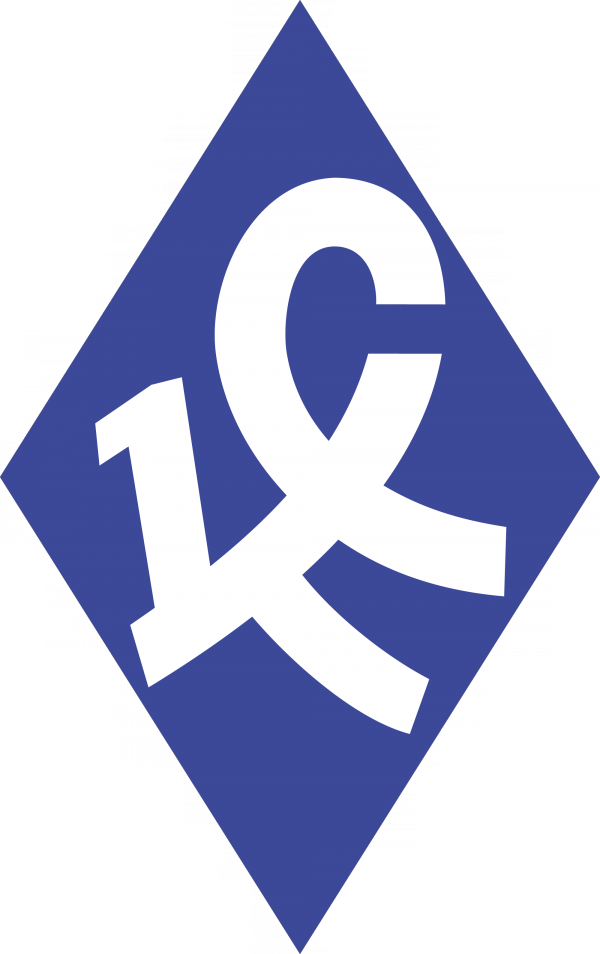
The current Krylya Sovetov emblem features a stylised Cyrillic letter «K» at its heart. This letter is not merely the initial of the club's name — it is designed to evoke the shape of a wing in flight. The upward sweep of the letterform, combined with its bold weight, creates a visual impression of lift and forward motion. This is emblem design at its most efficient: a single character that simultaneously functions as a letter, a symbol, and a metaphor.
Surrounding the «K» is a circular band that frames the composition like a traditional football crest. The colour palette is dominated by blue and white — the club's traditional colours since its founding. Blue represents the sky and the aviation heritage of the club; white represents purity and the snow-covered plains of the Volga region. Together, they create a clean, professional look that has aged remarkably well compared to the more ornate and graphically busy emblems of some rival clubs.
Above the «K», the full name «Крылья Советов» is written in crisp Cyrillic typography, while below it, the word «Самара» anchors the emblem geographically. The dual-naming approach — club name above, city below — is a classic Russian football design convention, and Krylya Sovetov executes it with balance and restraint. There is no clutter, no excessive ornamentation, and no trendy effects that would date the design to a specific year or decade. The result is a timeless crest that could have been designed yesterday or forty years ago.
Four Eras, Four Emblems: The Visual Evolution
Tracking the emblem through its iterations reveals a microcosm of Soviet and post-Soviet design philosophy. The earliest versions from the 1940s featured a more ornate, heraldic style — typical of the Stalinist era's preference for elaborate symbolism and political messaging. The club's connection to aviation was made explicit through depictions of aircraft wings and propeller motifs integrated into the badge.
By the 1960s and 1970s, the design had streamlined significantly. The Soviet modernist aesthetic prized clarity and function over decoration, and football emblems followed suit. The «K» became the dominant element, shedding its more elaborate surroundings. This was the era when the emblem first began to resemble its current form — a process of refinement that stripped away everything non-essential.
The post-Soviet 1990s brought a brief period of experimentation. Like many Russian clubs, Krylya Sovetov tried out more complex, sometimes chaotic designs as the country's football clubs transitioned from state-funded sports societies to commercial enterprises. Not all of these experiments were successful, but they reflected a genuine attempt to modernise for a new era. By the early 2000s, the club had returned to a cleaner, more traditional look — the version that most closely resembles the current emblem.
The current version, introduced in the 2010s, represents a synthesis of everything that came before. It retains the essential «K» motif from the 1960s, the colour scheme from the club's founding, and the modern production values expected of a twenty-first-century football brand. This is design evolution done right: honouring heritage while embracing clarity.
| Era | Design Characteristics | Influences | Status |
|---|---|---|---|
| 1940s-1950s | Ornate, heraldic, winged motifs | Stalinist aesthetic, aviation symbolism | Historical |
| 1960s-1980s | Streamlined, «K» becomes dominant | Soviet modernism, functional design | Historical |
| 1990s | Experimental, commercial influences | Post-Soviet transition, corporate identity | Historical |
| 2010s-present | Synthesis: clean, modern, traditional | Global football branding, heritage respect | Current |
What is striking about this progression is that despite four major redesigns, the club never abandoned its core visual identity. The «K» remained, the blue-and-white palette endured, and the connection to Samara was always explicit. This is the mark of a club that understands its own identity — something rarer in football than most fans realise.
File Formats: What You Get and When to Use Each
Our download package contains three vector formats plus three PNG sizes. This is deliberate: different workflows demand different tools, and providing everything in one ZIP eliminates the need to hunt for complementary file types elsewhere.
The CMX file is the native CorelDRAW format. If you work in CorelDRAW — common among Russian and Eastern European designers — this is your starting point. It opens with all layers intact, all text converted to curves, and all colours in the correct RGB values.
The EPS file is the universal vector interchange format. Open it in Adobe Illustrator, Affinity Designer, Inkscape, Scribus, or virtually any professional graphics software released in the last twenty years. EPS is the format you send to a print shop when they ask for a vector logo.
The AI file is the native Adobe Illustrator format. If you are deep in the Adobe ecosystem, this version provides the smoothest workflow, preserving artboards, layer names, and path data exactly as the designer set them up.
For quick placement without a vector editor, the PNG files at 2000, 600, and 300 px cover every typical use case from print to web to thumbnail. All PNGs have transparent backgrounds thanks to the alpha channel — drag them onto any background colour without that awkward white rectangle that plagues JPEG logos.
| Format | Type | Software | Editable | Scalable | Best Use |
|---|---|---|---|---|---|
| CMX | Vector | CorelDRAW X3+ | Yes | Unlimited | CorelDRAW workflow |
| EPS | Vector | Illustrator, Inkscape, Affinity | Yes | Unlimited | Print shops, cross-platform |
| AI | Vector | Adobe Illustrator | Yes | Unlimited | Adobe ecosystem users |
| PNG 2000px | Raster | Any image viewer | No | Limited | High-res print, displays |
| PNG 600px | Raster | Any image viewer | No | Limited | Web, presentations |
| PNG 300px | Raster | Any image viewer | No | Limited | Thumbnails, small inserts |
Practical Design Scenarios for the Krylya Sovetov Emblem
Let us walk through some real-world use cases so you can match the right file to your project without guesswork. These scenarios cover the most common requests we receive from designers and fans.
If you are building a Russian football database or fan wiki, the 600 px PNG is your go-to. It provides enough resolution for a clean presentation at typical web column widths (300-800 px) while keeping file sizes small for fast page loads. For the infobox or header area, the 2000 px version gives you the flexibility to crop or resize without visible degradation.
If you are designing a matchday poster or social media graphic, open the vector file. Place the emblem as a smart object in Photoshop, or work directly in Illustrator. The vector gives you complete freedom: change the colours to match your layout, extract the «K» as a standalone element, manipulate the typography for a custom title treatment. A raster file locks you into whatever the original export settings were.
If you are creating a fan banner or flag, the vector file is non-negotiable. A standard fan flag measures approximately 1.5 × 1 metre. Even the 2000 px PNG at full flag width gives you only about 34 pixels per centimetre — visibly blocky from any reasonable viewing distance. The vector file scales to the exact millimetre dimensions your print shop specifies, producing a razor-sharp result at any size.
If you are working on merchandise mockups — t-shirts, mugs, scarves — import the vector into your mockup software. The transparent background in the PNG files is helpful for quick previews, but for final production artwork, only the vector provides the print-quality output that manufacturers require. A screen printer typically needs the artwork at actual print size, 300 DPI, with separated colour channels — all of which are trivial to produce from a vector source and nearly impossible from a PNG.
Why the Krylya Sovetov Emblem Matters for Collectors
For collectors of football memorabilia and design historians, the Krylya Sovetov emblem occupies a unique position. It is not the most famous crest in Russian football — that honour belongs to Spartak, CSKA, or Zenit. It is not the most trophied club in its own region — Rubin Kazan has claimed more silverware. But Krylya Sovetov has something those clubs do not: an unbroken line of visual identity stretching back to wartime, preserved largely intact through the collapse of an empire and the birth of a new nation.
This continuity matters because it makes the emblem a historical document as much as a sports logo. When you look at the current «K» and compare it to photographs from 1950s match programmes, you see the same idea expressed with the tools of different eras. The vector file in our download is the latest chapter in that story — the most technically refined version of an idea that has persisted for over eighty years.
Moreover, as Russian football becomes increasingly globalised and commercialised, emblems like this serve as anchors to local identity. The stylised «K» is not just a letter — it is a visual shorthand for Samara, for the Volga, for the aviation factories, for the thousands of fans who have filled Metallurg Stadium through good times and bad. No amount of corporate rebranding can replicate the authenticity that comes from eighty-plus years of continuous use.
For designers studying the craft of sports branding, this emblem is a masterclass in restraint. In an era when many football clubs layer on gradients, drop shadows, metallic effects, and three-dimensional rendering, Krylya Sovetov sticks to flat colour, bold typography, and a single iconic element. The result is a crest that looks professional on a mobile phone screen, a stadium scoreboard, and a matchday programme — all without modification.
Download vector emblem (CMX + EPS + AI)ZIPFrequently Asked Questions
What vector formats are included for the Krylya Sovetov emblem?
The ZIP contains CMX (CorelDRAW), EPS (universal vector), and AI (Adobe Illustrator). PNG renders at 2000 px, 600 px, and 300 px are also provided.
When was FC Krylya Sovetov founded?
The club was founded in April 1942 in Kuibyshev (now Samara) by workers evacuated from aviation factories during World War II. It is the oldest non-Moscow club to play in the Russian Premier League.
What does the name «Krylya Sovetov» mean?
It translates to «Wings of the Soviets», referencing the club's origins in the Soviet aviation industry. The stylised «K» in the emblem is designed to evoke the shape of a wing.
What is Krylya Sovetov's best league result?
Third place in the 2004 Russian Premier League, securing bronze medals. This remains the club's highest league finish in its history.
How has the emblem changed over time?
The emblem has gone through four major iterations since 1942. The original was ornate and heraldic. By the 1960s, the design streamlined around the stylised «K». The 1990s brought experimentation, and the current version is a clean synthesis of traditional and modern elements.
Which format should I use for printing a fan flag?
Always use a vector format (EPS or AI). Fan flags are typically 1-1.5 metres wide, and even the 2000 px PNG will look pixelated at that size. The vector scales to any physical dimension without quality loss.
Can I open the AI file without Adobe Illustrator?
The EPS file is a better choice for non-Illustrator users. It opens in Inkscape (free), Affinity Designer, CorelDRAW, and most other vector editors. The AI file is optimised for Adobe Illustrator users.
Do the PNG files have transparent backgrounds?
Yes. All PNG renders include alpha-channel transparency, so the emblem appears without any background colour — ideal for overlaying on photos or coloured layouts.
Is the text in the vector files editable?
The text has been converted to outlines (curves), which means you can scale and modify the shapes freely without needing the original fonts installed. However, you cannot type new text directly into the existing text fields.
Why is the emblem an important piece of football design history?
It represents over eighty years of continuous visual identity through war, political upheaval, and economic change — a rare example of branding consistency in any industry, let alone football.
Tap to react