The Olympic Torch Relay is not just a prelude to the Games — it is a self-contained cultural phenomenon with its own visual language, identity, and symbolic depth. The Sochi 2014 Winter Olympics torch relay set a record that stands to this day: 65,000 kilometres across 83 regions of Russia, 123 days, and a trip to outer space aboard the ISS. At the heart of this massive logistical and cultural undertaking sat a carefully designed emblem — the subject of this article. Today we share the vector emblem of the Sochi 2014 Olympic Torch Relay in professional editing formats: CDR (CorelDRAW), EPS, and SVG — all in one archive. High-resolution PNG renders at 2500, 600, and 300 pixels complete the package.

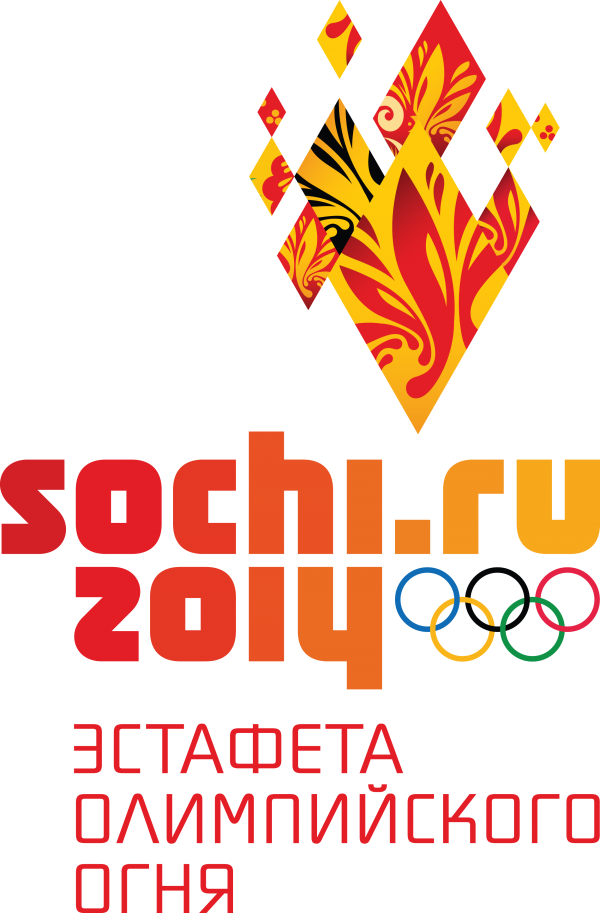
The relay emblem is not the same as the Olympic rings or the Games logo. It is a separate identity mark — one that lives for the duration of the relay and then passes into design history. For Sochi 2014, the emblem took the form of a stylised feather-like flame motif intertwined with the colours of the Russian flag. The design managed to be simultaneously dynamic, recognisable, and deeply national — exactly what a torch relay identity needs to be.

The vector files in this download are original high-quality traces, not auto-traced bitmaps. They open correctly in CorelDRAW X7+, Adobe Illustrator CS6+, Inkscape, and any SVG-compatible editor. No missing fonts — all text elements are converted to curves.

What made the Sochi 2014 torch relay unique

For context, the Olympic torch relay for the Winter Games is typically a few weeks long and covers a handful of neighbouring countries at most. Sochi 2014 rewrote the rules. Organisers turned the relay into a nation-building exercise: 14,000 torchbearers carried the flame through every single federal subject of Russia, using transport that ranged from reindeer sleds in Yamal to a nuclear-powered icebreaker in the Arctic and — infamously — a spacewalk outside the ISS.

The flame travelled by car, train, plane, helicopter, troika, snowmobile, dog sled, hot air balloon, and even a Russian troika-bus hybrid. At one point it dove to the bottom of Lake Baikal. At another, it scaled the summit of Mount Elbrus. Each of these stunts required its own logistics, its own press materials, and in many cases its own adaptation of the relay emblem. The original vector files were the foundation for every banner, every stage backdrop, every accreditation badge, and every broadcast overlay.

\u{201c}

The Sochi 2014 Torch Relay is the longest and most ambitious in the history of the Olympic Winter Games. It covered 65,000 km over 123 days and involved 14,000 torchbearers.


Sochi 2014 torch design and its connection to the emblem

The Sochi 2014 torch itself deserves its own paragraph because its construction is directly tied to how the relay emblem was scaled and applied. The torch was designed by the studio of Vladimir Pirozhkov in collaboration with the Krasnoyarsk Machine-Building Plant. Its body is made of aluminium alloy and painted in two colours: matte white in the upper section and vivid red at the grip. The body shape resembles a Firebird feather — the same metaphor that underpins the relay emblem. Thus, the emblem and the torch itself were built on a unified visual concept: feather, flight, fire. When developing printed materials and souvenirs, designers had to combine the relay emblem with the torch image, and having a vector source of the emblem dramatically simplified this task — it enabled scaling, recolouring for specific layouts, and compositing without quality loss.

It is also worth noting the practical value of the vector format for print professionals and production designers. When working with Olympic-level branding, accuracy is critical: colours should be matched to Pantone swatches, proportions kept to the pixel, and placement relative to other elements aligned with the brand book. The CDR and EPS files in the archive let you extract contours for plotter cutting, prepare layouts for screen printing or dye-sublimation, and set up foil stamping. This is not just a picture for a website — it is a production tool.


Emblem design: symbolism and composition

The Sochi 2014 torch relay emblem is built around a central motif — a stylised feather that doubles as a flame. This dual reading is not accidental. The feather recalls the Firebird, a figure from Russian folklore associated with light, warmth, and the elusive pursuit of beauty. The flame, obviously, stands for the Olympic fire itself. Together they create a mark that reads as both culturally specific and universally understood.

The colour palette is equally deliberate. The emblem uses the white, blue, and red of the Russian federal flag — but not in the usual horizontal-stripe arrangement. Instead, the colours flow through the feather-flame form in a gradient sequence: white at the tip, transitioning through blue, and resolving into deep red at the base. This vertical colour progression mirrors the movement of a flame rising upward — a subtle kinetic cue that makes the static mark feel alive.

Below the feather-flame sits the typographic element: the words "Sochi 2014 Olympic Torch Relay" in both Russian and English. The font is a clean, modern sans-serif — customised to match the overall Sochi 2014 visual identity system. The kerning is tight, the weight is bold but not aggressive, and the bilingual layout signals the international scope of the event.


Technical specifications of the downloadable files

We provide the emblem in three vector formats and three raster resolutions. The table below summarises what is included in the archive and what each format is best suited for.

FormatTypeResolution / SizeBest used for
CDRVector (CorelDRAW)Scalable to any sizeProfessional printing, signage, large-format banners
EPSVector (Encapsulated PostScript)Scalable to any sizeAdobe Illustrator workflows, prepress, vinyl cutting
SVGVector (Scalable Vector Graphics)Scalable to any sizeWeb design, UI elements, responsive layouts, browser rendering
PNGRaster, transparent background2500 pxHigh-resolution print, posters, covers, detailed layouts
PNGRaster, transparent background600 pxBlog posts, presentations, social media headers
PNGRaster, transparent background300 pxThumbnails, avatars, inline web graphics, emails
The CDR file is saved in CorelDRAW X7 format. If you work in an older version (X6, X5, X4), you may need to convert via an intermediate format such as EPS or SVG. The EPS file is saved in Illustrator 8 EPS (AI8) compatibility mode for maximum cross-platform support.

How this emblem was used during the relay

Understanding real-world usage context helps when you are adapting the emblem for your own project. During the 123 days of the Sochi 2014 relay, this mark appeared on:

  • Torchbearer uniforms — embroidered patches on every official jacket and tracksuit worn by the 14,000 torchbearers
  • Stage backdrops — printed at enormous scale (8 to 12 metres wide) for the daily celebration cauldron lighting ceremonies in each host city
  • Vehicles — vehicle wraps and magnetic decals on the official convoy: escort cars, media trucks, and the cauldron transport vehicle
  • Accreditation and passes — small-format prints on staff, volunteer, and media badges
  • Souvenir merchandise — limited-edition pins, scarves, caps, and posters distributed at relay stop points
  • Digital graphics — broadcast overlays, social media branding, and website headers throughout the relay period

The vector format was critical because the same mark had to work at 8-metre banner scale and 20-millimetre badge scale — something raster formats cannot deliver without quality loss.


Comparing the Sochi 2014 relay emblem with other Olympic relay emblems

OlympiadHost CityRelay Emblem Design ApproachDistinctive Feature
2014 WinterSochiFeather-flame fusion with tricolour gradientFirebird folklore reference, Russian flag colours as flame
2012 SummerLondonShattered geometric polygons in Olympic coloursAbstract, deconstructed, modern-art aesthetic
2010 WinterVancouverTorch shape formed by maple leaf negative spaceNational symbol integrated into functional object design
2008 SummerBeijingLucky-cloud scroll pattern wrapping a runner silhouetteTraditional Chinese ornament meets dynamic human figure
2016 SummerRioThree figures joining hands in flame coloursHuman connection theme, tropical palette

The Sochi design stands out for its commitment to narrative layering. The Vancouver 2010 relay mark is elegant but largely abstract. The London 2012 mark is edgy but conceptually cold. The Sochi emblem tells a story — folklore, nationality, motion — in a single glance. This is the difference between a logo that identifies and one that communicates.


Practical tips for working with the vector files

If you have not worked with multi-format Olympic emblem files before, a few notes will save you time.

  1. Always open the CDR or EPS first if you plan to edit the emblem. The SVG is optimised for web rendering and may show minor path differences from the source CDR. For print, CDR and EPS are the authoritative formats.
  2. Check the colour mode before sending to print. The default colour space is RGB. Convert to CMYK (FOGRA39 or your printer's preferred profile) for offset printing. The red channel tends to shift noticeably in conversion — adjust saturation by +5 to +10% after the switch.
  3. Scale proportionally. The emblem has a fixed aspect ratio. All vector formats support non-proportional scaling, but distorting the mark breaks the Olympic identity guidelines. Lock the aspect ratio before resizing.
  4. The transparent PNG backgrounds are genuine alpha channels, not white backgrounds set to overlay. They will composite cleanly onto any background colour or image in Photoshop, GIMP, or Canva.
  5. Fonts are converted to curves. You will not need to install any specific typeface. The text is fully editable as vector paths — use the node/path editor in your software of choice to modify letterforms if needed.
The 2500px PNG renders beautifully on Retina and 4K displays. At 300 DPI, it yields a print size of roughly 21 × 32 cm — adequate for magazine spreads and portfolio covers without upscaling.

The legacy of the Sochi 2014 relay emblem

Olympic visual identities do not retire when the Games end — they enter the public design conversation. The Sochi 2014 relay emblem now appears in design textbooks, branding case studies, and comparative analyses of national identity in sport graphics. Its feather-flame motif has been referenced, remixed, and homaged in regional Russian sporting events and in student design projects around the world.

For the designer downloading this file today, it is not just a piece of Olympic history — it is a functional asset. Use it in presentations about event branding, in educational materials about vector illustration, in mock-ups for sport-related design pitches, or as a study reference for how to layer cultural symbolism into a mark that has to work at every scale from a social media avatar to a building-sized banner.


Frequently Asked Questions

What vector formats are included in the ZIP archive?

The archive contains the Sochi 2014 Olympic Torch Relay emblem in three vector formats: CDR (CorelDRAW), EPS (Encapsulated PostScript), and SVG (Scalable Vector Graphics). All three are fully scalable, print-ready, and open correctly in professional design software including CorelDRAW, Adobe Illustrator, Affinity Designer, and Inkscape.

What is the resolution of the PNG files?

Three PNG resolutions are provided: 2500 pixels (suitable for high-quality print output at roughly 21 × 32 cm at 300 DPI), 600 pixels (ideal for blog posts, presentations, and social media), and 300 pixels (optimised for thumbnails, avatars, and inline web graphics). All PNGs have genuine transparent alpha-channel backgrounds.

Can I use this emblem for commercial projects?

The emblem is a piece of Olympic visual identity history. Olympic marks are protected by the International Olympic Committee and national Olympic committees. You may use these files for educational purposes, design study, historical reference, personal projects, and portfolio work. For any commercial use involving the Olympic marks, consult the IOC brand guidelines or seek legal advice. We provide the files as a design resource and historical record, not as a commercial licence.

What software do I need to open the CDR file?

The CDR file is in CorelDRAW X7 format. It opens natively in CorelDRAW X7 and later versions, as well as in CorelDRAW Graphics Suite 2020+. Affinity Designer can import CDR files with some limitations. If you do not have CorelDRAW, use the included EPS or SVG file instead — these are universally compatible with Adobe Illustrator, Inkscape, Affinity Designer, Figma, and most other vector editors.

Are the fonts included or embedded?

All text elements in the vector files are converted to outlines (curves). This means you do not need to install any specific fonts to open or edit the files. The text is preserved as editable vector paths. You can modify individual letter shapes using the node/path editing tools in your vector software.

What is the symbolism of the feather in the emblem?

The feather motif in the Sochi 2014 relay emblem references the Firebird (Zhar-Ptitsa) — a magical glowing bird from Russian folklore that symbolises light, warmth, and the pursuit of beauty. The feather is deliberately blended with the shape of a flame, creating a dual reading that connects Russian cultural heritage with the Olympic fire tradition. The tricolour gradient (white-blue-red) reinforces the national identity through the colours of the Russian flag.

How long was the Sochi 2014 Olympic Torch Relay?

The Sochi 2014 Olympic Torch Relay lasted 123 days, from October 7, 2013 to February 7, 2014. It covered 65,000 kilometres across all 83 federal subjects of Russia and involved 14,000 torchbearers. The flame also travelled to the North Pole on a nuclear-powered icebreaker, to the bottom of Lake Baikal, to the summit of Mount Elbrus, and into outer space aboard the International Space Station — making it the longest and most geographically diverse relay in Olympic history.

What colour space are the files in, and do they need conversion for print?

The vector files and PNGs are in the RGB colour space by default — standard for screen display and most digital workflows. For offset or professional CMYK printing, convert the files to CMYK using your printer's preferred profile (FOGRA39 is a common choice for European print standards). The red tones in the emblem may shift noticeably during RGB-to-CMYK conversion; we recommend increasing saturation by 5 to 10 percent after the conversion to maintain visual impact.

Is the emblem exactly as used officially during the relay?

Yes. The vector files are traced from official source materials and reproduce the emblem as it was applied to uniforms, vehicles, stage backdrops, and accreditation materials during the Sochi 2014 Olympic Torch Relay. Minor colour variations may exist between different applications (embroidered patches versus digital prints, for instance), but the vector version represents the canonical digital form of the mark.

Can I resize the SVG for responsive web design?

Absolutely. The SVG file is resolution-independent and will render crisply at any display size, from a 16px favicon to a full-width responsive hero banner. It is optimised for web use with clean, minimal markup. You can inline the SVG directly into HTML and style it with CSS (colours, opacity, transforms) without quality loss. This makes it ideal for modern responsive websites, web applications, and email templates.


Download

All files below are collected into a single ZIP archive for convenience. The vector bundle (CDR + EPS + SVG) and the three PNG resolutions are included together.

Download2.1 MB Download1.8 MB Download320 KB Download120 KB

Tap to react