Master Craftsmen: How Ordinary People Transform Everyday Objects into Extraordinary Art
Have you ever looked at a pile of ''junk'' in your garage, attic, or basement and seen not trash, but treasure? The remarkable individuals featured in this article possess a rare alchemy - the ability to see potential where others see only waste. Through ingenuity, patience, and remarkable craftsmanship, they transform cardboard, coins, paper, plastic, and seemingly useless materials into breathtaking works of art that challenge our perceptions of value and creativity.
This isn't just about making crafts - it's about a mindset shift. These artisans demonstrate that true creativity isn't dependent on expensive materials or specialized tools, but on vision, persistence, and the willingness to experiment. Their work spans functional objects, wearable art, intricate sculptures, and immersive installations, all created from materials most people would discard without a second thought.
Let's journey through their remarkable creations, examining the techniques, materials, and inspiration behind each piece. From wearable armor to functional furniture, from delicate paper art to imposing sculptures, these projects reveal the extraordinary potential hidden in our everyday surroundings.
The Philosophy of Found Object Art
Before diving into specific projects, it's essential to understand the mindset that drives these creators. Found object art isn't new - it has roots in movements like Dada and Assemblage - but contemporary makers have elevated it to new heights through technical skill and conceptual depth.
What drives someone to spend hundreds of hours transforming bottle caps into a mosaic or folding thousands of paper cranes into an installation? For many, it's a combination of:
- Environmental consciousness - keeping materials out of landfills
- Economic pragmatism - creating beauty without financial burden
- Technical challenge - mastering difficult techniques with limited resources
- Emotional resonance - imbuing objects with personal or cultural meaning
- Pure creative joy - the satisfaction of making something from nothing
As one artist noted in an interview: ''When you work with found materials, every piece has a history. That old newspaper isn't just paper - it's someone's breakfast reading from 1987. Those bottle caps weren't just metal - they sealed beverages that brought people joy. There's storytelling potential in every scrap.'' This perspective transforms the creative process from mere assembly to meaningful reconstruction.
Wearable Art: From Cardboard Armor to 3D-Printed Costumes
Some of the most striking transformations occur in the realm of wearable art, where creators challenge the boundaries between costume, sculpture, and functional clothing.
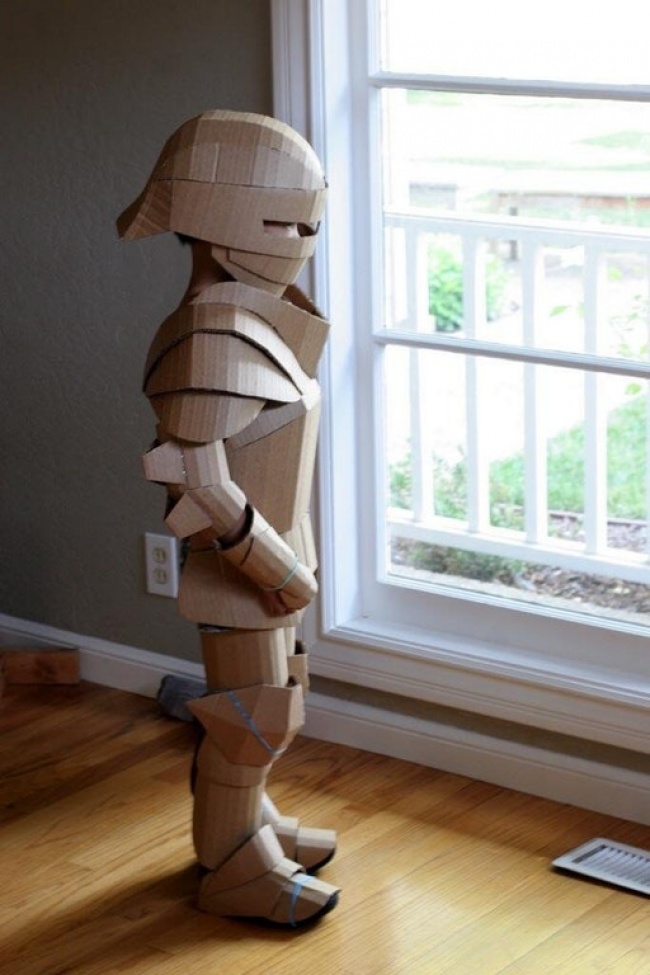
Cardboard Knight: Full Plate Armor from Shipping Boxes
Perhaps the most impressive demonstration of material transformation comes from an artist who created a full suit of plate armor using nothing but corrugated cardboard, hot glue, and acrylic paint. The project took approximately 200 hours over three months.
The process began with detailed research into historical armor patterns from the 15th century. Rather than simply copying designs, the artist adapted them to cardboard's unique properties - its flexibility, layering potential, and structural limitations.
Key techniques developed during the project included:
- Layering corrugated cardboard with alternating grain directions for strength
- Creating articulated joints using folded cardboard ''hinges''
- Using papier-mâché techniques for curved surfaces like helmets and pauldrons
- Developing a sealing system with multiple layers of gesso and acrylic medium
- Implementing weather-resistant finishes for outdoor display
The final piece weighs approximately 15 pounds - remarkably light compared to historical steel armor (which could exceed 50 pounds) - yet maintains impressive structural integrity. The artist has worn it for hours at conventions, demonstrating both its durability and comfort.
What makes this project particularly noteworthy is its accessibility. Cardboard is free, universally available, and requires only basic tools (scissors, glue gun, ruler). The artist has shared templates online, enabling others to create their own versions with varying degrees of complexity.
<\u{201c}Working with cardboard taught me that limitations breed creativity. When you can't just buy the perfect material, you're forced to innovate, and that's where the most interesting solutions emerge.
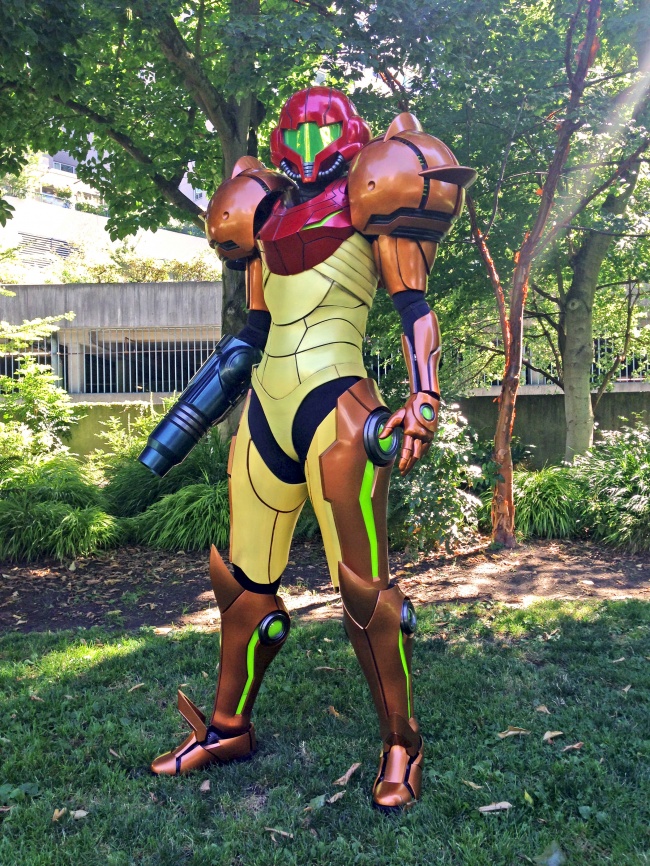
3D-Printed Samus Aran Suit: Bridging Digital and Physical Worlds
At the opposite end of the technological spectrum, a cosplayer combined 3D printing, traditional foam sculpting, and innovative finishing techniques to create a screen-accurate Samus Aran power suit from the Metroid series.
The project began with downloading open-source 3D models from fan communities, then modifying them for optimal printability and comfort. Rather than printing the entire suit as one piece (which would have been impractical), the creator broke it into modular components:
- Helmet with removable visor
- Chest plate with internal ventilation
- Shoulder pads with adjustable straps
- Arm cannons with movable parts
- Leg greaves with foam padding for comfort
- Boot covers with reinforced soles
Printing took approximately 80 hours across multiple printers, using PLA filament for most components and PETG for pieces requiring extra flexibility. Post-processing was equally intensive:
- Sanding to remove layer lines (progressing from 120 to 400 grit)
- Filling with epoxy putty for seamless surfaces
- Priming with automotive filler primer
- Painting with multiple layers of automotive basecoat and clearcoat
- Adding weathering effects with washes and dry brushing
The final suit features integrated LED lighting in the arm cannons and visor, controlled by a small battery pack hidden in the chest plate. Despite its complex construction, the suit remains wearable for extended periods thanks to strategic padding and ventilation systems.
This project exemplifies how modern makers combine digital fabrication with traditional craftsmanship. The 3D printing provided precision and repeatability for complex curves, while hand-finishing techniques added the organic texture and wear that make the piece feel authentic rather than machine-made.
Functional Art: When Beauty Serves Purpose
Some of the most impressive found object creations aren't just visually striking - they serve practical purposes in daily life, blurring the line between art and utility.
The Coin Floor: A Living Mosaic Underfoot
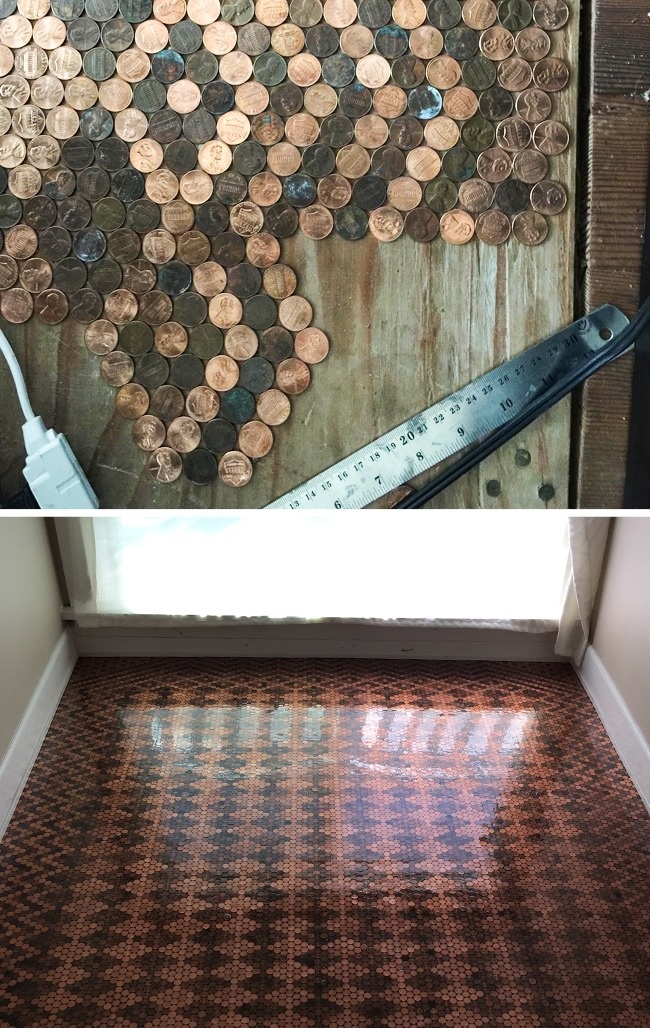
In a remarkable demonstration of patience and precision, one homeowner transformed their entryway floor into a stunning mosaic using over 10,000 coins spanning nearly a century of currency.
The project began as a renovation necessity - replacing damaged subflooring in a 1920s home. Rather than installing conventional flooring, the homeowner saw an opportunity to create something unique. The design features:
- A central sunburst pattern using pre-1965 silver coins (dimes, quarters, half-dollars)
- Concentric rings of copper pennies creating warm tonal variations
- Border designs using nickels and foreign coins for textural contrast
- Epoxy resin sealing to create a smooth, durable surface
The installation process required extraordinary attention to detail:
- Cleaning and sorting coins by denomination, year, and condition
- Creating a level subfloor with plywood and self-leveling compound
- Laying coins in epoxy bed according to the predetermined pattern
- Allowing proper curing time (72 hours) before walking on the surface
- Applying multiple layers of clear epoxy for wear resistance
- Adding non-slip additives to the final coat for safety
The finished floor is not only beautiful but remarkably durable. The epoxy sealant protects the coins from wear while allowing their intricate details to remain visible. Homeowners report that visitors often kneel to examine individual coins, discovering interesting details like wheat pennies, war nickels, and coins from defunct nations.
Beyond aesthetics, the project carries historical significance. Each coin represents a moment in time - economic conditions, political leadership, and technological capabilities of its era. Walking across the floor becomes a journey through monetary history.
Paper Architecture: Complex Structures from Simple Sheets
While most people associate paper with origami cranes or simple cards, some artists push the medium to its structural limits, creating load-bearing constructions and intricate architectural models.
One particularly impressive project involved creating a scale model of a Gothic cathedral using nothing but acid-free paper, PVA glue, and meticulous engineering. The model stands 4 feet tall and spans 3 feet wide, yet weighs less than 5 pounds.
The creator developed several innovative techniques to overcome paper's natural limitations:
- Laminating multiple layers for structural beams and columns
- Creating tubular forms for increased strength-to-weight ratio
- Using curved folding techniques to generate rigid surfaces from flat sheets
- Developing interlocking joint systems that don't require adhesive
- Implementing internal bracing inspired by actual Gothic engineering
The most remarkable aspect is the model's ability to support weight - testing showed it could hold over 20 pounds distributed across its surface before showing signs of stress. This demonstrates how thoughtful design can transform a weak material into something surprisingly strong.
Comparative Analysis: Material Transformation Techniques
To better understand the diverse approaches these artists employ, let's examine how different materials require distinct techniques and mindsets.
Material-Specific Transformation Strategies
| Material Category | Key Characteristics | Transformation Techniques | Common Projects | Skill Level Required |
|---|---|---|---|---|
| Paper/Cardboard | Flexible, absorbent, biodegradable | Folding, layering, papier-mâché, sealing | Models, sculptures, wearable art, furniture | Beginner to Advanced |
| Plastics/Containers | Durable, moldable, chemical-resistant | Cutting, welding, melting, reassembly | Containers, planters, toys, functional objects | Beginner to Intermediate |
| Metals/Cans | Rigid, conductive, prone to sharp edges | Cutting, bending, riveting, patination | Jewelry, sculptures, wall art, functional items | Intermediate to Advanced |
| Textiles/Fabrics | Flexible, frayable, varying weights | Sewing, weaving, braiding, dyeing | Wall hangings, clothing, bags, tapestries | Beginner to Advanced |
| Wood/Woody Materials | Rigid, fibrous, variable density | Cutting, shaping, joining, finishing | Furniture, sculptures, tools, decorations | Intermediate to Advanced |
This table reveals interesting patterns. Softer, more pliable materials like paper and textiles often require more intricate manipulation techniques but present fewer safety hazards. Rigid materials like metals and woods demand different skill sets but can create more durable, long-lasting pieces. The most successful creators often work across multiple material categories, understanding each one's unique properties and limitations.
Comparing Approaches: Found Object Art vs Traditional Craft
How does working with found materials differ from traditional craftsmanship with purpose-made supplies? Let's examine the key distinctions.
Philosophical and Practical Differences
| Aspect | Found Object Art | Traditional Craft |
|---|---|---|
| Material Acquisition | Free or low-cost; requires sorting, cleaning, preparation | Purchased; ready for use but represents ongoing expense |
| Creative Process | Begin with material limitations; design emerges from constraints | Begin with design concept; select materials to fulfill vision |
| Technical Challenges | Material inconsistency, Unknown degradation, Joining dissimilar materials | Tool mastery, Technique precision, Material waste management |
| Environmental Impact | Reduces waste, Extends material lifespan, Often biodegradable | Resource consumption, Potential chemical use, Waste generation |
| Emotional Connection | Materials carry history; Transformation adds new narrative layers | Materials are neutral; Meaning comes from form and function alone |
| Accessibility | High - virtually anyone can start immediately | Variable - requires initial investment in tools and materials |
Rather than viewing these approaches as opposing, many contemporary artists fluidly move between them. They might begin a project with found materials to explore concepts, then refine techniques using purpose-made supplies, or incorporate purchased elements to enhance structural integrity or aesthetic refinement.
Getting Started: Practical Guidance for Aspiring Makers
Inspired to try your own found object projects? Here's practical advice to help you begin successfully while avoiding common pitfalls.
Building Your Material Inventory
The first step isn't buying supplies - it's developing awareness of the materials flowing through your daily life. Start by designating collection points in your home:
- A container for clean cardboard and paper packaging
- A jar for interesting bottle caps, lids, and pull tabs
- A bag for fabric scraps, buttons, and thread remnants
- A box for interestingly shaped plastic containers
- A tray for intriguing natural materials (shells, stones, wood fragments)
Establish a simple processing routine: clean items upon collection, sort by material type, and store in a dry, accessible location. Remember that what seems like ''junk'' today might become the perfect element for a project months from now.
Essential Tools for the Beginner
You don't need a workshop full of specialized equipment to begin. These basic tools will serve you well across numerous projects:
- Quality scissors (both general-purpose and precision)
- Utility knife with replaceable blades
- Hot glue gun and glue sticks
- PVA white glue and/or epoxy resin (depending on project needs)
- Sandpaper in various grits
- Ruler, measuring tape, and square
- Pencils, markers, and layout tools
- Basic hand tools (hammer, screwdrivers, pliers)
- Safety equipment (gloves, eye protection, dust mask)
As you advance, you might add more specialized tools like a rotary tool, sewing machine, or small saw, but these basics will handle an impressive range of projects.
Starting with Simple Successes
Begin with projects that build confidence and teach fundamental skills:
- Paper beads: Roll triangular strips of magazine paper, seal with glue varnish
- Bottle cap magnets: Glue magnets inside decorated caps
- Cardboard organizers: Create desk dividers from folded corrugated board
- Plastic bottle planters: Cut and decorate bottles for indoor greenery
- Fabric scrap coasters: Weave or braid remnants into functional squares
These projects teach essential techniques like cutting, joining, sealing, and finishing while providing immediate gratification. As your skills develop, you can tackle more ambitious endeavors.
Overcoming Common Obstacles
Even experienced makers encounter challenges. Here are strategies for frequent obstacles:
- Material warping: Seal porous materials early; use balanced moisture application
- Weak joints: Increase surface area for adhesion; consider mechanical fasteners
- Finishing issues: Test finishes on scraps first; apply thin, multiple coats
- Design frustration: Step away and return with fresh eyes; sketch alternatives
- Material limitations: Embrace constraints as creative opportunities rather than frustrations
Remember that ''failures'' are often just discoveries in disguise. A project that doesn't work as planned might reveal a new technique, material combination, or design direction worth pursuing.
Community and Sharing: The Social Dimension of Making
While creation can be a solitary pursuit, many found object artists thrive through community engagement. Sharing work, techniques, and inspiration creates virtuous cycles that elevate everyone's practice.
Online Platforms for Connection
Digital communities have revolutionized how makers connect:
- Instructional platforms: YouTube channels and blogs dedicated to specific techniques
- Marketplaces: Etsy, eBay, and specialized sites for selling or trading creations
- Social networks: Instagram, TikTok, and Pinterest for visual inspiration
- Forums and groups: Focused communities on Reddit, Facebook, and specialized sites
- Virtual workshops: Live-streamed classes and Q&A sessions with experienced makers
These platforms serve multiple purposes: learning new approaches, troubleshooting problems, finding material sources, and gaining encouragement during challenging projects.
Local Making Communities
Despite digital connections, in-person making communities remain invaluable:
- Maker spaces with shared tools and expertise
- Workshops and classes at community centers or libraries
- Art walks and studio tours showcasing local talent
- Craft fairs and markets for selling and networking
- Collaborative projects like community murals or sculpture gardens
These gatherings offer benefits impossible to replicate online: hands-on assistance with difficult techniques, immediate feedback on works-in-progress, spontaneous collaboration opportunities, and the simple joy of creating alongside others.
The Deeper Value: What Found Object Creation Teaches Us
Beyond the tangible objects produced, the practice of transforming everyday materials offers profound lessons applicable to many areas of life.
Resourcefulness and Resilience
Working with found materials cultivates a mindset of resourcefulness - the ability to see solutions where others see only limitations. This skill transfers remarkably well to:
- Problem-solving in professional and personal contexts
- Financial management during economic constraints
- Adapting to unexpected life changes or challenges
- Finding opportunity in adverse circumstances
When you've successfully transformed a pile of ''trash'' into something beautiful and functional, internal obstacles begin to feel more surmountable. The creative process becomes a training ground for life's broader challenges.
Environmental Stewardship Through Creativity
Found object creation offers a tangible response to environmental concerns. Rather than abstract advocacy, makers engage in direct action:
- Diverting specific waste streams from landfills
- Demonstrating viable alternatives to disposable consumer culture
- Educating others about material lifecycles and possibilities
- Creating beautiful objects that spark conversations about sustainability
Each coin floor, cardboard armor piece, or plastic bottle planter represents a small act of environmental stewardship. When multiplied across thousands of makers, these actions contribute meaningfully to waste reduction efforts.
Redefining Value and Beauty
Perhaps most profoundly, found object art challenges our cultural assumptions about what matters. When a bottle cap mosaic elicits the same admiration as a precious gemstone piece, or a cardboard sculpture moves viewers as deeply as a bronze casting, we're forced to question:
- Where does true value reside - in the material or the making?
- How much of ''expensive'' equals ''better'' in artistic expression?
- Can beauty emerge from sources we've been taught to disregard?
- What happens when we judge objects by their transformation rather than their origins?
These questions extend beyond art into consumer habits, environmental policies, and personal fulfillment. By expanding our definition of valuable materials, we open possibilities for more sustainable, creative, and meaningful ways of living.
Conclusion
The remarkable creators featured in this article remind us that extraordinary art doesn't require extraordinary materials - it requires extraordinary vision. Through their work, we see that creativity isn't about what you have, but what you can imagine and make with what's available.
Their projects span the spectrum from wearable art to functional objects, from delicate paper constructions to imposing sculptures. Yet they share common threads: remarkable patience, willingness to experiment, deep respect for materials (however humble), and the ability to see potential where others see only waste.
As we navigate an age of increasing environmental awareness and economic uncertainty, the skills demonstrated by these artisans - resourcefulness, creativity, and the ability to find beauty in the ordinary - become not just enjoyable hobbies, but valuable life skills. Whether you're looking to reduce waste, save money, express creativity, or simply see your surroundings with fresh eyes, the world of found object creation offers a rich and rewarding path forward.
The next time you're about to discard something seemingly useless, pause for a moment. Ask not ''Is this trash?'' but ''What could this become?'' That simple shift in perspective might be the beginning of your own remarkable transformation.
\u{201c}When I work with discarded materials, I'm not just making art - I'm practicing a form of hope. Each piece represents a belief that things (and people) considered worthless can be transformed into something meaningful and beautiful.
Tap to react