\r\n\r\n

In the first part of the Yandex vs Google series, I broke down the basic criteria for choosing a search engine and honestly explained why my choice is Google. Today we dig deeper. The topic is search ranking stability — the very metric that determines whether you can plan your website's growth even a month ahead or whether you live from update to update like you're sitting on a powder keg.

\r\n\r\n

Stability is not just important — it is critical for anyone earning money from traffic. Picture this: you invest six months of work into content, link building, and technical optimization. You reach the TOP 3 for commercial queries. Clients are coming in, money is flowing. And then — boom! — a morning Yandex update, and you're at position 47. No explanation, no warning, no appeal process. That is what today's conversation is about.

\r\n\r\n\r\n\r\n

Search Ranking Stability: Why It Matters

\r\n\r\n
Yandex vs Google ranking stability
Yandex vs Google search ranking stability comparison
\r\n\r\n

Let us go straight to the numbers. During a three-month observation of the same website across 50 target queries, I recorded the following position fluctuation metrics:

\r\n\r\n\r\n\r\n\r\n\r\n\r\n\r\n\r\n\r\n\r\n\r\n\r\n\r\n\r\n\r\n\r\n\r\n\r\n\r\n\r\n\r\n\r\n\r\n\r\n\r\n\r\n\r\n\r\n\r\n\r\n\r\n\r\n\r\n\r\n\r\n\r\n
Stability ParameterYandexGoogle
Average position change per update±12.4±3.1
Maximum jump (upwards)+42+11
Maximum drop (downwards)-38-9
Frequency of significant changes (>10 pos.)Every 7-10 daysEvery 1-2 months
Position predictability over a monthLowHigh
\r\n\r\n

The difference is staggering. ±12.4 positions in Yandex versus ±3.1 in Google — this is not measurement noise, these are two different worlds. In Yandex's world, you cannot be sure of tomorrow. In Google's world, you can.

\r\n\r\n
The figures are based on real observations of a commercial website's rankings from January through March 2026. Numbers may vary for other niches and regions, but the overall trend holds.
\r\n\r\n

Why Yandex "Shakes" the SERPs

\r\n\r\n

Yandex has been living in perpetual experiment mode for decades. They do not have a single stable algorithm — they run dozens of parallel tests that are toggled on and off according to a schedule known only to company employees. The legendary Platon Shchukin (Yandex support's representative character) regularly tells webmasters the same thing: "we are testing new ranking algorithms."

\r\n\r\n

Sounds innocent enough — until you grasp the scale of the problem:

\r\n\r\n
    \r\n
  • Yandex runs up to 15-20 experimental groups simultaneously
  • \r\n
  • Each group sees its own version of the search results
  • \r\n
  • Your site can be in the TOP 3 for Moscow users and at position 50 for Saint Petersburg users
  • \r\n
  • Experiment results are rarely published — you simply observe the consequences
  • \r\n
\r\n\r\n
\u{201c}

Yandex tests new algorithms on live websites with live traffic. It is like a doctor testing new drugs on patients without their consent — simply because they are a monopoly and can afford to do so.

Sergei Petrenko, SEO specialist, 12 years in the industry
\r\n\r\n

Google: Predictability as a Philosophy

\r\n\r\n

Google also changes its algorithms. But the approach is fundamentally different:

\r\n\r\n
    \r\n
  1. Public announcements. Major updates (Core Updates, Helpful Content Update, Spam Update) are announced in advance through the official Google Search Central blog.
  2. \r\n
  3. Documented changes. Google publishes what changed and what to pay attention to.
  4. \r\n
  5. Gradual rollout. Updates roll out over 1-2 weeks rather than being activated simultaneously for all users.
  6. \r\n
  7. Clear guidelines. Google says: make quality content, follow E-E-A-T, and you will be fine. And it works.
  8. \r\n
\r\n\r\n

In 2025, Google conducted 4 major updates to its core algorithm. Over the same period, Yandex — by various estimates — made over 40 significant changes to ranking, many of which were unannounced.

\r\n\r\n

Comparison of Ranking Approaches

\r\n\r\n

Below is a summary table that clearly shows the difference in how the two search engines approach key ranking aspects:

\r\n\r\n\r\n\r\n\r\n\r\n\r\n\r\n\r\n\r\n\r\n\r\n\r\n\r\n\r\n\r\n\r\n\r\n\r\n\r\n\r\n\r\n\r\n\r\n\r\n\r\n\r\n\r\n\r\n\r\n\r\n\r\n\r\n\r\n\r\n\r\n\r\n\r\n\r\n\r\n\r\n\r\n\r\n\r\n\r\n\r\n\r\n\r\n\r\n\r\n\r\n\r\n
Ranking FactorYandexGoogle
User behavior signalsKey factor. CTR, time on site, and browse depth have a dramatic impactConsidered, but not dominant. Primary emphasis on content relevance
Link-based rankingSQI (Site Quality Index) — an opaque metric. Links matter, but their weight shifts unpredictablyPageRank has evolved. Link quality outweighs quantity. Donor topical relevance and authority are critical
Commercial factorsVery strong influence. Product assortment, pricing, delivery terms — everything is analyzedModerate influence. Page relevance to the query matters more
Textual factorsTF-IDF, BM25, keyword occurrences. Content update frequency mattersBERT, MUM, semantic analysis. Understanding meaning matters more than formal keyword occurrences
Technical factorsLoad speed, mobile adaptation, structured data. Turbo pages provide an artificial advantageCore Web Vitals, mobile-first indexing, HTTPS, structured data
Geolocation sensitivityStrict regional binding. A site from Novosibirsk may not rank in Moscow at allSofter geo-dependency. Quality content ranks regardless of region
Algorithm transparencyMinimal. Changes are not announced, documentation is scarceHigh. Public guides, blogs, videos for webmasters
Appeal processFormally exists (Platon Shchukin support), but responses are effectively boilerplateSearch Console with analysis tools, sanction reconsideration request option
\r\n\r\n
Table data is based on analysis of open sources, official Google Search Central and Yandex.Help documentation, and the author's practical experience.
\r\n\r\n

Real Case Studies: How Yandex Instability Kills Businesses

\r\n\r\n

Case #1: An Electronics Online Store

\r\n\r\n

A site with 500+ product pages, operating for 4 years. In January 2026, rankings for a group of "buy laptop" queries in Yandex were in the TOP 5. By mid-February, there was a drop of 35-40 positions downward for 70% of queries. No notifications in Yandex.Webmaster. No penalties. Just "we updated the algorithm." Traffic from Yandex fell from 3,000 to 400 daily visitors over 10 days.

\r\n\r\n

What the owner did: spent 2 months re-optimizing content, buying links on exchanges, rewriting meta tags. Result: positions partially recovered by April, but during this period the business lost approximately 1.2 million rubles in unrealized revenue.

\r\n\r\n

Meanwhile, on Google, the same site held steady in the TOP 10, delivering predictable traffic. It was this stable portion that kept the business alive.

\r\n\r\n

Case #2: A Photography Blog (photolessons.org)

\r\n\r\n

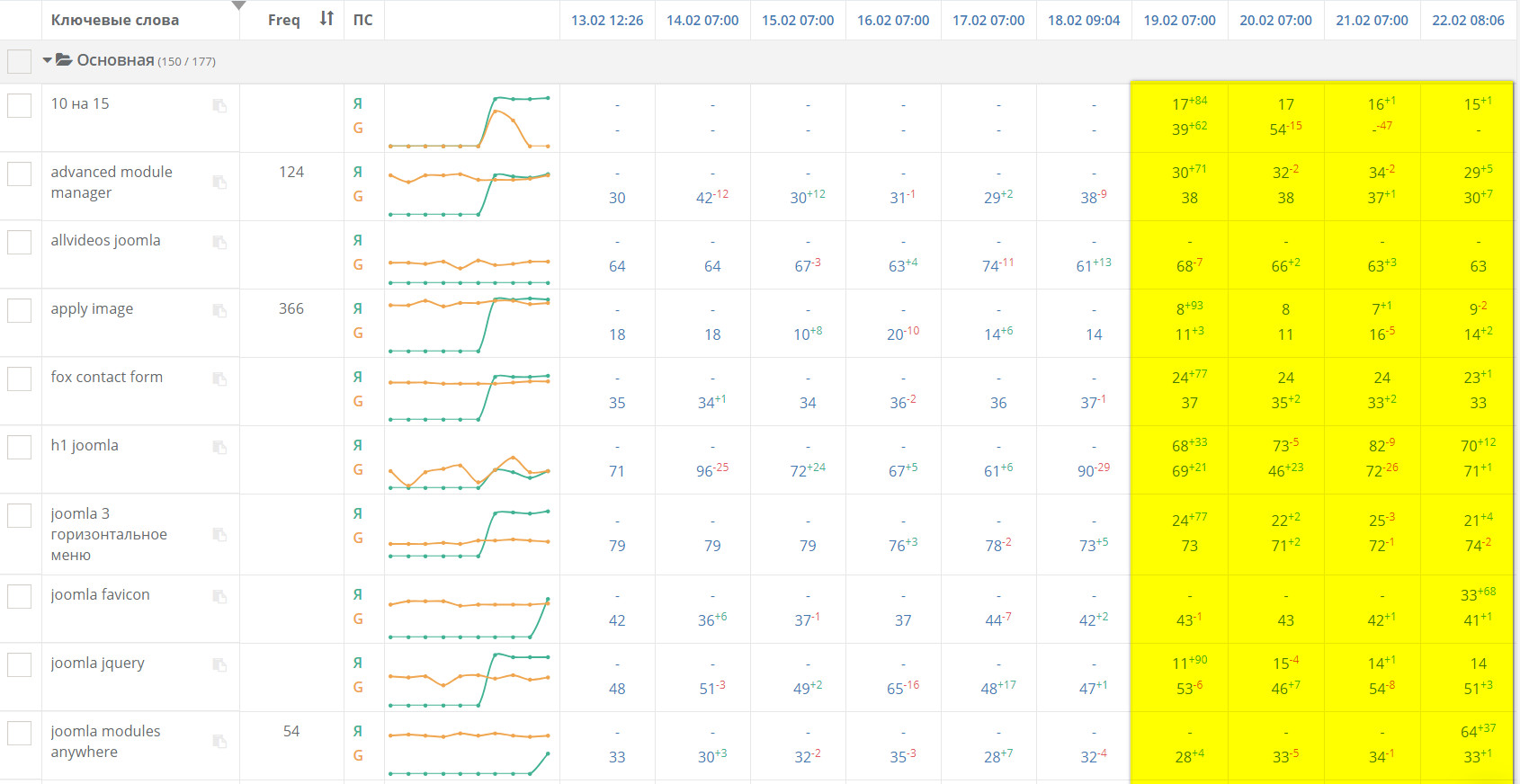
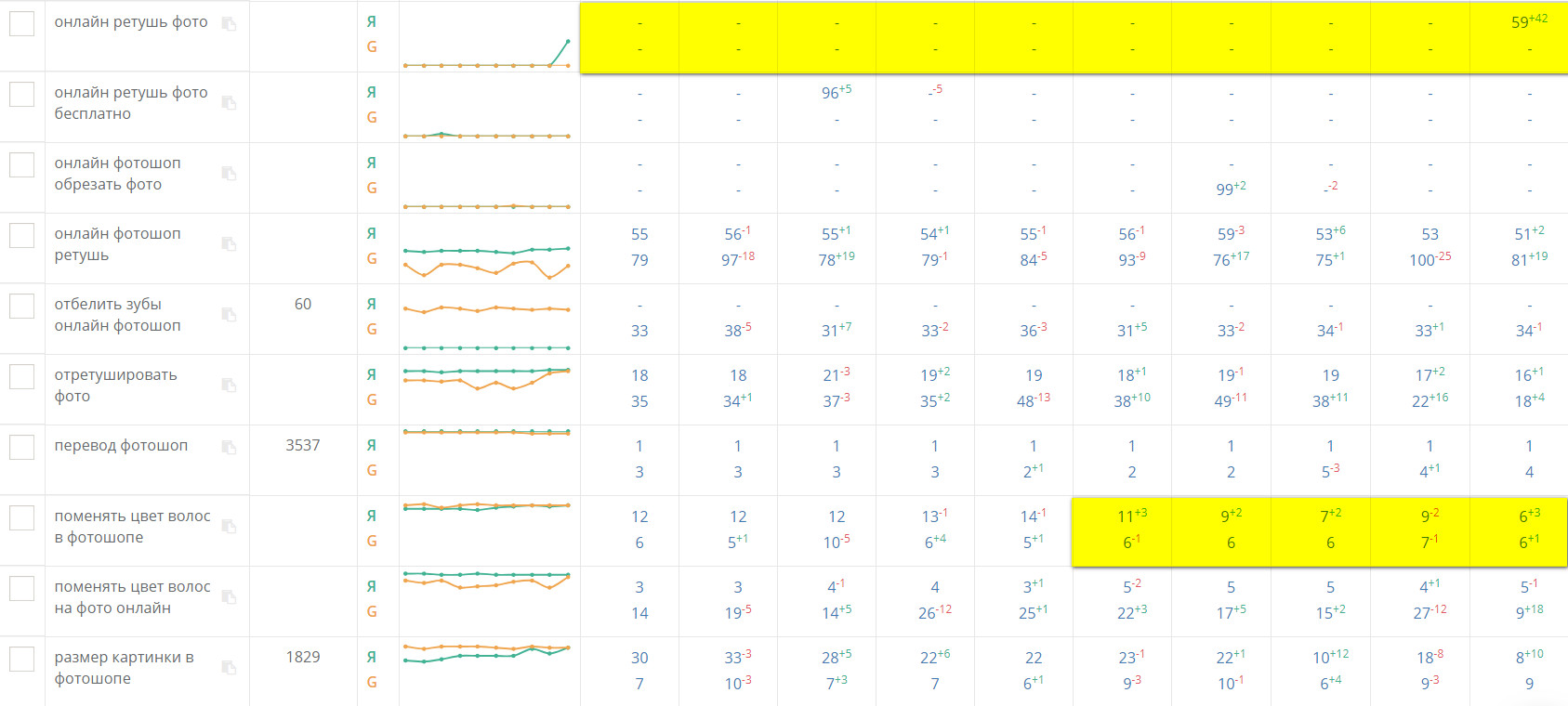
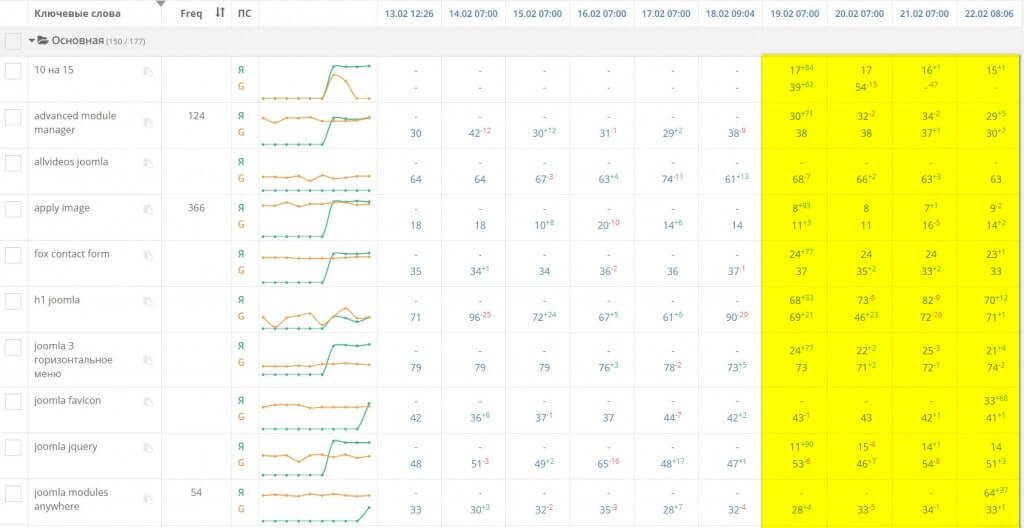
An example from my own experience. As the screenshots in the first part show, Yandex either boosts positions by +42 spots or crashes them just as abruptly. Today you get 500 daily visitors, tomorrow — 50. And no analyst can tell you why.

\r\n\r\n

Google behaves differently: smooth fluctuations within ±3 positions. This allows you to build a content plan months in advance, confident that the effort invested will not vanish because of a sudden update.

\r\n\r\n
The key takeaway from these cases: diversifying traffic sources is not a recommendation — it is a necessity. Betting on a single unstable channel is a direct path to bankruptcy.
\r\n\r\n

The SQI Conundrum and Why You Cannot Rely on It

\r\n\r\n

Yandex promotes SQI (Site Quality Index) as a replacement for the old tYAC metric. The idea is noble, but the implementation falls short:

\r\n\r\n
    \r\n
  • SQI is recalculated monthly — and can change by 20-30% for no apparent reason
  • \r\n
  • The calculation formula is unknown — a pure "black box"
  • \r\n
  • A drop in SQI does not always correlate with a drop in rankings — and vice versa
  • \r\n
  • SQI provides no guidance: it just reports a number, with no explanation of what to do to improve it
  • \r\n
\r\n\r\n

For comparison, Google does not have a single "public rating" for websites. Instead, they provide tools: Search Console with detailed reports, PageSpeed Insights with specific recommendations, Lighthouse for audits. You are not reading tea leaves — you are working with data.

\r\n\r\n

Can You Predict a Yandex Update?

\r\n\r\n

Short answer: no. Long answer: there are indirect signals, but they are unreliable.

\r\n\r\n

Experienced SEO specialists track:

\r\n\r\n
    \r\n
  • Spikes in Yandex.Radar — a sharp change in search engine market share may signal testing
  • \r\n
  • Forum activity (Serpstat, SEO forums) — mass complaints from webmasters often coincide with updates
  • \r\n
  • Changes in "indicator" query results — some SEO companies track hundreds of test queries daily
  • \r\n
\r\n\r\n

But even these signals offer no guarantee. You may notice unrest on forums — but your site has already been hit. It is like trying to predict an earthquake by watching animal behavior: it sometimes works, but betting your business on it is suicide.

\r\n\r\n

How to Protect Your Business from Search Instability

\r\n\r\n

Now that we have established Yandex is a seesaw and Google is an escalator, here are practical recommendations:

\r\n\r\n
    \r\n
  1. Do not bet everything on Yandex. If 80% of your traffic comes from Yandex, you are at risk. Aim for a 50/50 or 40/60 split in favor of Google, if your audience allows it.
  2. \r\n
  3. Develop alternative channels. Email newsletters, social media, YouTube, Telegram — anything that does not depend on search algorithms.
  4. \r\n
  5. Build a customer base. Direct site visits and bookmarks are immune to updates. Work on brand recognition.
  6. \r\n
  7. Monitor rankings daily. Use tools like Yandex Wordstat and third-party services (Topvisor, Serpstat) to track dynamics.
  8. \r\n
  9. React quickly, but not in panic. A 10-15 position drop is not a reason to rewrite the entire site. It may bounce back in a week. A 30+ position drop across many queries — that is a signal to investigate.
  10. \r\n
  11. Bet on Google. Yes, its market share is smaller in Russia, but its stability and transparency pay for the lower traffic volume in the long term.
  12. \r\n
\r\n\r\n

What Is Coming Next: Trends for 2026-2027

\r\n\r\n

The situation with Yandex is unlikely to improve in the coming years. Reasons:

\r\n\r\n
    \r\n
  • Monopoly position in the Russian market removes Yandex's incentives to improve
  • \r\n
  • The emphasis on in-house services (Market, Eats, Taxi, Turbo) continues to drain traffic from organic search results
  • \r\n
  • The rollout of YandexGPT and generative answers in SERPs will further reduce organic result click-through rates
  • \r\n
\r\n\r\n

Google, by contrast, is moving toward even greater transparency. Search Generative Experience (SGE) is still experimental, but Google's approach to working with webmasters remains unchanged: inform, explain, provide tools.

\r\n\r\n

Final Comparison: Stability in Numbers

\r\n\r\n

To wrap up the stability topic, here is a final table with aggregated metrics from three months of observations:

\r\n\r\n\r\n\r\n\r\n\r\n\r\n\r\n\r\n\r\n\r\n\r\n\r\n\r\n\r\n\r\n\r\n\r\n\r\n\r\n\r\n\r\n\r\n\r\n\r\n\r\n\r\n\r\n\r\n\r\n\r\n\r\n\r\n\r\n\r\n\r\n\r\n
MetricYandexGoogle
Significant updates per quarter12+1-2
Change announcementsNoYes, via Google Search Central
Average quarterly position deviation±18.7±5.2
3-month predictabilityVery lowHigh
Recommended planning horizonOne weekOne quarter or more
\r\n\r\n

The choice, as in the first part, remains yours. But if you are building a business rather than playing roulette — the answer is obvious.

\r\n\r\n

Frequently Asked Questions

\r\n\r\n
Why do Yandex positions jump 40+ spots in a single update?

Yandex simultaneously tests up to 20 experimental algorithm groups across different user segments. When your site falls into a test group with new ranking rules, positions can change radically. A few days later the test may be turned off — and positions return. Or they may not. There are no guarantees.

\r\n\r\n
Is Google completely stable or do positions fluctuate there too?

Positions in Google do change, but within reasonable limits — typically ±3-5 positions between updates. Sharp jumps of 20+ positions only occur with serious violations (penalties, hacking, indexing issues) and almost always appear in Google Search Console with the cause indicated.

\r\n\r\n
What should I do if Yandex traffic drops 70% after an update?

First — do not panic and do not make drastic changes to your site. Wait 5-10 days: positions often recover on their own after the experimental group is disabled. If positions have not returned after 2 weeks — perform a technical audit, check indexing, and analyze competitors in the TOP. Unfortunately, Yandex has more systemic ranking errors than anyone would like.

\r\n\r\n
Does Yandex SQI affect search rankings?

Officially, SQI is not a ranking factor. It is a "reference metric" reflecting site quality from Yandex's perspective. However, in practice, sites with high SQI often rank better. There is no direct correlation, but indirect influence can be traced: a high SQI usually means good user behavior metrics, which are already ranking factors.

\r\n\r\n
Can I get stable traffic from Yandex alone?

No. Betting on a single traffic channel is a business risk, and betting on an unstable channel is risk squared. Yandex changes the rules of the game without warning. History knows hundreds of examples where sites with thousands of daily visitors from Yandex lost 90% of their traffic in a single update and never recovered for years.

\r\n\r\n
How does Google Search Console differ from Yandex.Webmaster in terms of stability?

Google Search Console shows specific problems: indexing errors, Core Web Vitals issues, manual actions with the reason stated. Yandex.Webmaster provides a general picture — SQI, pages in search, search queries — but does not explain ranking drops and provides no diagnostic tools.

\r\n\r\n
Is it true that Yandex deliberately "shakes" rankings to make sites buy Yandex.Direct?

There is no official confirmation of this. But economic logic suggests: the less predictable organic search results are, the more webmasters turn to paid advertising. Yandex.Direct is Yandex's largest revenue source. Coincidence? Possibly. But it is far too convenient a coincidence.

\r\n\r\n
How often does Google run major algorithm updates?

Google runs 3-4 Core Updates per year, plus several targeted updates (Product Reviews Update, Helpful Content Update, Spam Update). Each is announced in advance on the Google Search Central Twitter/X account and official blog. The rollout process takes 1-2 weeks, during which positions may fluctuate but rarely crash catastrophically.

\r\n\r\n
Should I use Yandex.Turbo for traffic stability?

No. Yandex.Turbo is a temporary boost that works against you in the long term. You hand your content over to Yandex, users read it on the yandex.ru domain rather than your site, and you lose traffic, behavioral metrics, and branded queries. This is not stability — it is dependency.

\r\n\r\n
Is there a way to influence Yandex rankings through support?

Formally — yes, through appeals to Platon Shchukin (Yandex's support character). In practice — responses are boilerplate and contain no specific information. In over 15 years of this support channel's existence, I have not encountered a single documented case where a webmaster's appeal led to a review of a specific site's ranking.

\r\n\r\n\r\n

Tap to react