Why the First Dance Matters
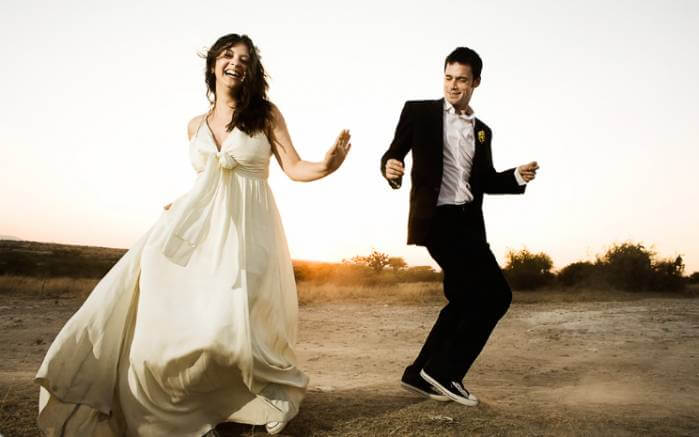
The first dance is the moment when the room goes quiet. After the ceremony, the dinner, the toasts — the newlyweds take the floor alone. Every guest watches. Every phone is recording. This is not just a dance. It is the first public act of a married couple, performed in front of everyone who matters to them.
Getting it right takes planning. Not talent — planning. Most couples are not dancers. They walk onto the floor with a vague idea of swaying for three minutes and hoping for the best. The result is usually awkward: stiff arms, counting out loud, apologetic glances at guests. A choreographed dance solves all of this. Even three simple moves, timed to the music, transform an uncomfortable shuffle into a moment people remember.
Choosing a Dance Style
The dance style determines everything else: the music, the costume, the pace of learning, the emotional tone. Here are the most popular wedding dance styles ranked by difficulty and impact:
| Style | Difficulty | Mood | Learning Time | Best Music Tempo |
|---|---|---|---|---|
| Waltz | Beginner-friendly | Romantic, classic | 6-8 lessons | Slow (28-30 BPM) |
| Rumba | Beginner-intermediate | Sensual, intimate | 8-10 lessons | Slow-medium (24-27 BPM) |
| Bachata | Beginner | Romantic, relaxed | 4-6 lessons | Medium (112-130 BPM) |
| Salsa | Intermediate | Energetic, fun | 10-12 lessons | Fast (160-200 BPM) |
| Tango | Advanced | Dramatic, passionate | 12-15 lessons | Medium (30-32 BPM) |
| Foxtrot | Beginner | Elegant, smooth | 6-8 lessons | Medium (28-30 BPM) |
| Swing | Advanced | Playful, high-energy | 12-16 lessons | Fast (140-180 BPM) |
Waltz: The Classic Choice
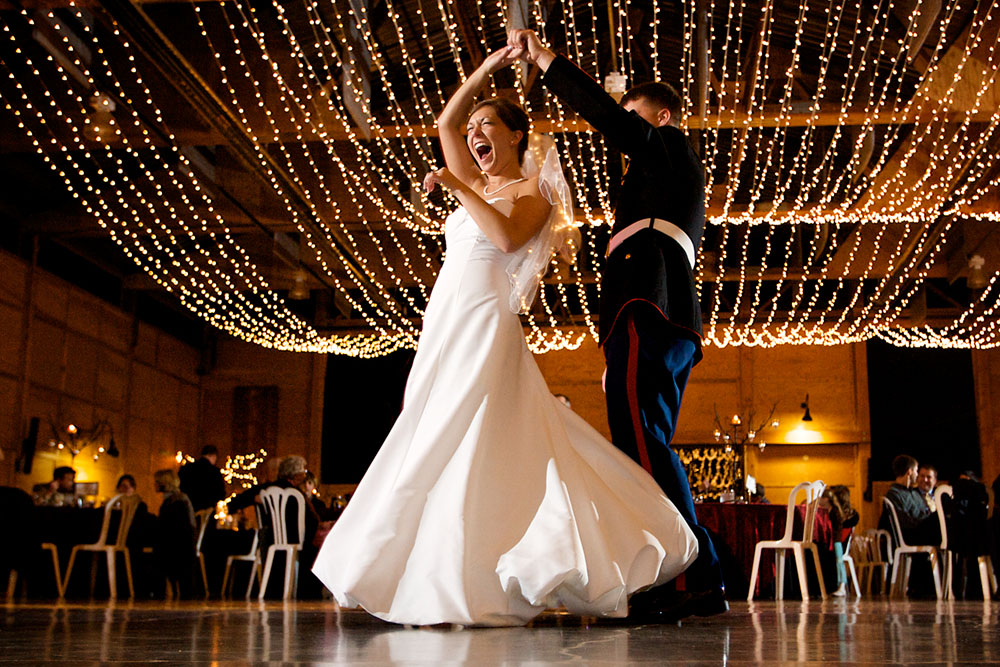
Three beats. Rise and fall. Turn to the left. The waltz is the default wedding dance for a reason. It looks impressive with minimal training. The slow tempo gives you time to think between steps. Mistakes are easy to hide — the continuous rotation means you rarely face the audience for more than a second.
Waltz works best with a full-length dress. The spinning skirt amplifies every movement. The groom's role is primarily supportive — frame the bride, guide the direction, and let her shine. If you choose waltz, pick a song in 3/4 time signature. Anything else will fight the step pattern.
Tango: When You Want Drama
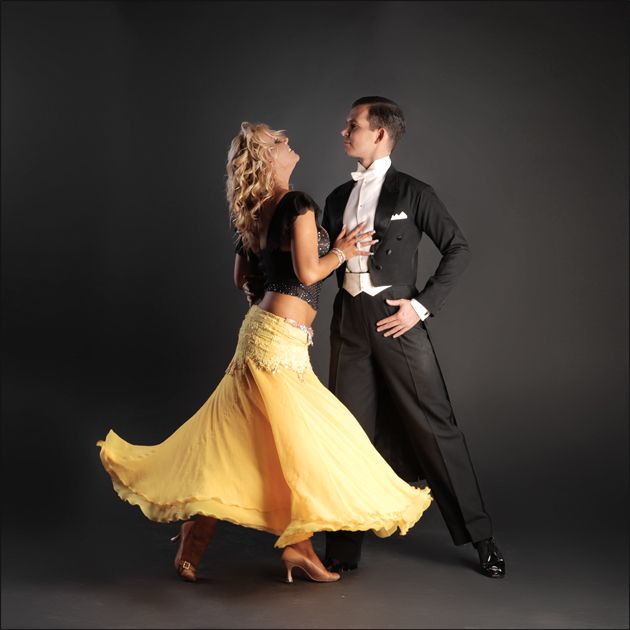
Tango is the statement choice. Sharp head turns, staccato footwork, intense eye contact — it tells a story that the audience follows. But tango is technically demanding. The connection between partners must be precise. The lead is firm. The follow is immediate. There is no room for hesitation.
Couples who choose tango usually have a reason: one partner studied dance as a child, or they met at a dance class, or they simply want to shock their guests. A well-executed tango gets the loudest applause of any wedding dance. A poorly executed tango looks worse than a poorly executed waltz because tango is unforgiving. Every mistake is visible.
Rumba: Intimate and Romantic
Rumba is the slowest Latin dance and the most wedding-appropriate. The movements are fluid rather than sharp. The hip action looks sensual without being explicit. Rumba tells a love story through body language — the lead and follow, the approach and retreat.
The learning curve is gentle. Basic rumba steps are repetitive and easy to memorize. The hard part is making them look natural. Beginners tend to dance rumba mechanically, counting beats under their breath. The goal is to internalize the rhythm so the counting disappears and only the connection remains.
Salsa: Energy and Fun
Salsa turns a wedding reception into a party. The fast tempo and playful spins get guests clapping along. But salsa at a wedding is risky. The bride's dress must allow free leg movement — a fitted mermaid gown will not work. The groom needs stamina: leading salsa for three minutes at performance intensity is physically demanding.
The best wedding salsa performances combine a choreographed opening — thirty seconds of synchronized footwork — with a freestyle middle section that looks spontaneous. This hybrid approach reads as "they are having so much fun they forgot the choreography" when in fact every move was planned.
Bachata: The Romantic Dark Horse
Bachata has quietly become one of the most popular wedding dance styles. The basic step is accessible: side-together-side-tap. The music is romantic. The close hold position feels natural for a couple. Unlike salsa, bachata does not require athletic stamina. Three minutes of bachata is a pleasant walk, not a sprint.
The body roll — bachata's signature move — divides opinion. Some couples love it. Others find it too intimate for a room full of grandparents. Discuss this with your instructor. The body roll can be replaced with a simple turn or dip without losing the dance's character.
Choosing the Music
Music selection is where most couples get stuck. The perfect wedding dance song meets three criteria: it has emotional meaning for the couple, it matches the tempo of the chosen dance style, and it is between two and three minutes long. Songs longer than three minutes exhaust both the dancers and the audience.
Here is a genre-by-genre reference for matching songs to styles:
- Pop ballads — waltz, rumba, or foxtrot. Ed Sheeran's "Perfect" in 6/8 time works beautifully as a waltz. John Legend's "All of Me" fits a rumba.
- Classical — waltz or Viennese waltz. Strauss waltzes are the traditional pick. Tchaikovsky's "Waltz of the Flowers" is a grand, theatrical option.
- Latin pop — salsa or bachata. Marc Anthony for salsa. Romeo Santos or Aventura for bachata.
- Jazz standards — foxtrot or swing. Frank Sinatra's "The Way You Look Tonight" is the quintessential wedding foxtrot.
- Movie soundtracks — varies by film. "A Thousand Years" by Christina Perri (from Twilight) is a wedding waltz staple for a reason.
The Learning Timeline
How early should you start? The answer depends on the dance style and your starting skill level, but here is a realistic timeline for a couple with no dance experience:
| Week | Activity | Goal |
|---|---|---|
| 12 weeks before | Choose the song and style. Book an instructor. | All logistics decided. |
| 10-11 weeks before | First lessons. Learn the basic steps and frame. | Comfortable with the rhythm. |
| 8-9 weeks before | Learn the full choreography (first half). | First 90 seconds memorized. |
| 6-7 weeks before | Learn the full choreography (second half). | Entire routine memorized. |
| 4-5 weeks before | Polish transitions, musicality, expression. | Dance looks natural, not counted. |
| 2-3 weeks before | Practice in wedding shoes. Practice in approximate dress. | No surprises on the day. |
| 1 week before | Final run-through. Record a video. | Confidence at 100%. |
| Wedding day | Warm up for 10 minutes privately before the dance. | Loosen up, breathe, enjoy. |
This timeline assumes one 60-minute lesson per week plus two 20-minute practice sessions between lessons. Cramming — taking three lessons in the final week — does not work. Dance learning happens between sessions, during sleep, when the body consolidates motor patterns. You cannot rush neuroplasticity.
Working with a Dance Instructor
A good wedding dance instructor is worth every penny. A bad one wastes your time and money. Here is how to tell the difference during the first lesson.
A good instructor asks about your song first. They listen to it before teaching a single step. They ask about your dress, your venue, the floor surface, and whether you want a surprise element. They choreograph for your bodies and your relationship — not for a hypothetical competition couple.
A bad instructor teaches you a pre-packaged routine they have used for twenty other couples. They ignore the music's structure and count beats mechanically. They push moves that look good on social media but feel uncomfortable for you. They do not ask about the dress.
Ask these questions before booking:
- "Have you choreographed dances for our specific wedding venue's floor type?"
- "Can we send you our song in advance so you can prepare something specific?"
- "What happens if we cannot master a move — do you simplify or insist we keep trying?"
- "Do you offer a package that includes a video of the final choreography for home practice?"
\u{201c}The biggest mistake couples make is waiting until the last month. I get calls three weeks before the wedding: 'Can you teach us a tango?' The answer is always no — not a tango they would be proud of. A waltz or bachata, maybe. But the couple has their heart set on tango because they saw it on YouTube. Start early. The dance should reduce wedding stress, not add to it.
Common Mistakes
After choreographing hundreds of wedding dances, certain patterns repeat. Avoid these:
- Ignoring the dress. A mermaid gown restricts knee movement to about 15 degrees. Any choreography requiring lunges, kicks, or wide steps will not work. Bring the dress (or a similarly restrictive skirt) to a rehearsal at least once.
- Choreographing to the lyrics instead of the beat. Lyrics can be interpreted dramatically — reaching on the word "love," pointing on "you." But if the movement ignores the musical beat, the entire dance feels disconnected from the song. Beat first, lyrics second.
- Forgetting to smile. Focused concentration looks like anger on camera. Practice performing your facial expression alongside your footwork. In the mirror. Record it. Watch it back. It feels absurd. It makes the difference.
- No backup plan for floor issues. Outdoor dance floors are uneven. Hotel carpet has grip that catches dance shoes. Bring sole brushes for suede-bottom shoes if dancing on carpet surfaces.
- Too long. Three minutes is the absolute maximum. Two and a half is better. The audience's attention peaks at 90 seconds. Everything after that is diminishing returns unless you have a dramatic lift or dip planned as a finale.
- No practice in wedding shoes. New shoes have slick soles. Worn-in shoes have grip. Neither matches the practice shoes you used in the studio. Break in your wedding dance shoes for at least two weeks before the event.
Group Dances: Involving the Wedding Party
The first dance is for the couple. But group dances — the father-daughter dance, mother-son dance, and bridal party flash mobs — have become increasingly popular.
Father-daughter dance. Keep it simple. A basic box step or sway to a meaningful song. The emotional weight carries this moment — technical complexity detracts from it. If the father has mobility limitations, plan the choreography around a stationary embrace. The moment matters more than the movement.
Mother-son dance. Same principles apply. Choose a song the groom's mother loves, not one that sounds good on a wedding playlist. This dance is about her, not about performance aesthetics.
Bridal party surprise dance. A choreographed group number involving bridesmaids and groomsmen takes rehearsal commitment from multiple busy people. Start planning at least three months in advance. Record a tutorial video for each person so they can practice individually. Plan one full-group rehearsal the day before the wedding.
Costume Considerations
Wedding attire and dance movement interact in ways non-dancers rarely anticipate:
- Bride's dress: A-line and ballgown silhouettes hide footwork — a positive for beginners. Fitted silhouettes show every step — a positive for confident dancers, a risk for nervous ones. The train must be bustled. Practice the bustle — some styles collapse during spins.
- Bride's shoes: Block heels are more stable than stilettos for turns. A 5-7 cm heel is the sweet spot for ballroom-style dances. Higher heels shift your center of gravity forward and make backward steps precarious.
- Groom's suit: Jacket buttons should be undone for spins and lifts. Test the range of motion when trying on the suit — raise both arms overhead; if the jacket pulls at the shoulders, the choreography should avoid fully extended arm positions.
- Veil: A cathedral-length veil is a trip hazard. If the choreography includes turns, remove the veil before the dance or pin it securely to avoid tangling with the groom's sleeves.
First Dance Traditions Across Cultures
The first dance is not universal in its Western form, but nearly every culture has a tradition where the newlyweds perform together for their community:
- Russian weddings: The first dance is often a waltz following the formal registration. Soviet influence made the waltz the de facto wedding dance for generations. Modern couples sometimes surprise guests with a choreographed medley that starts as a slow waltz and transitions into a high-energy pop routine.
- Latin American weddings: The couple typically dances a vals (waltz) or bolero. The "crazy hour" or "hora loca" tradition often includes a choreographed couple dance followed by guests joining with props and costumes.
- Indian weddings: The sangeet ceremony includes choreographed dance performances by family members. The couple's first dance at the reception may be Bollywood-inspired — high-energy, narrative-driven, and often involving friends who join in halfway through.
- Jewish weddings: The hora — a circle dance where the couple is lifted on chairs — is the iconic moment. While not a choreographed couple dance, it serves the same community-witnessing function.
- African-American weddings: The "dollar dance" or "money spray" tradition often includes a couple's spotlight dance where guests approach to pin money on the couple's clothing — a practical tradition that doubles as entertainment.
Tips for a Showstopping Performance
- Start with a moment of stillness. Walk to the center of the floor. Face each other. Wait three seconds. The anticipation builds. Then begin. This pause is more powerful than any dance move.
- Include one memorable lift or dip. A single dramatic moment — a dip at the end, a lift in the middle — gives guests something to photograph and talk about. One is enough. More than two looks like a circus act.
- Dance toward all four walls. Beginners tend to face one direction — usually toward the photographer. Rotate the choreography so you acknowledge all guests. They traveled to see you. Show them your faces.
- Record a video of your best rehearsal. On the wedding day, nerves can erase muscle memory. Knowing there is a video backup reduces anxiety. You will not need it — but knowing it exists helps.
- Enjoy the moment. The best wedding dance is not the most technically perfect. It is the one where the couple looks at each other — not at their feet — and genuinely enjoys being together on the dance floor.
Frequently Asked Questions
How many dance lessons do we realistically need?
A couple with no dance experience needs 8-12 private lessons for a basic waltz or rumba routine, 10-15 for tango or salsa. Semiprivate lessons (2-3 couples) cost less but progress slower because the instructor divides attention. For the best value, take 4 private lessons to learn the basic choreography, then 4 group classes to practice dancing in front of others.
What if one partner has no rhythm?
This is the most common concern — and the least problematic. Rhythm can be taught. The instructor counts beats out loud and the partner follows. What matters more is willingness. A partner who resists every correction is harder to teach than someone with no natural rhythm who genuinely tries. If musical timing is genuinely difficult, choose a dance style with a clear, consistent beat (waltz or bachata) rather than syncopated styles (salsa or swing).
Should we choreograph the entire dance or leave room for improvisation?
For first-time dancers, choreograph everything. The freedom to improvise requires a foundation of muscle memory that beginners simply do not have. When nerves hit, the brain reverts to what was rehearsed. An improvised section becomes a frozen moment of panic. Choreograph the full track and treat the last 15 seconds as a freestyle exit — a hug, a spin, a kiss — that feels spontaneous but was absolutely planned.
Can we mix two different dance styles in one song?
Yes, and this is a popular format: start with a slow waltz for 60 seconds, transition into an energetic salsa for the remainder. The key is a musical edit that makes the transition feel natural. Ask a DJ or audio editor to blend the tracks seamlessly. Practice the style transition specifically — the moment when the rhythm changes is when mistakes happen. Rehearse it twice as much as any other section.
What if we forget the choreography during the actual dance?
Have a recovery plan. The simplest: if one partner forgets, the other leads them into a basic step (a box step for waltz, a side basic for salsa) until the forgotten section passes or the muscle memory returns. Practice the recovery as part of the choreography — knowing how to handle a mistake removes the fear of making one. No guest will notice a 10-second recovery section. They will notice a couple frozen in the middle of the floor.
Is it better to hire a professional choreographer or learn from YouTube tutorials?
YouTube tutorials work for learning basic steps but not for creating a personalized wedding dance. A choreographer watches both partners move together and adjusts for height differences, mobility issues, and skill gaps — things a video cannot assess. If budget is tight, learn the basic steps from YouTube, book 2-3 private lessons for choreography creation, then use YouTube to practice between sessions.
How do we handle the fact that I am taller/shorter than my partner?
Height differences affect frame, turns, and lifts. A good choreographer adapts immediately. For a shorter bride and taller groom: the groom dances with slightly bent knees to lower his center of gravity. Underarm turns require the groom to raise his arm higher and the bride to extend her hand farther. Lifts with a significant height difference need professional supervision — never attempt a lift from a YouTube video without in-person instruction.
What if we want our dog or child involved in the dance?
Involving a third participant — child, pet, or parent — turns the first dance into a production. The choreography expands and the rehearsal burden triples. For a child: keep their section to 30 seconds maximum, cue them with a clear hand signal, and have someone ready to escort them off the floor when their part ends. For a pet: rehearse in the actual venue if possible. New smells and sounds override training. Have a handler standing at the edge of the dance floor.
How do we choose between a slow romantic dance and an upbeat fun one?
Consider your personalities as a couple, not your fantasy wedding aesthetic. If you are goofy and energetic in daily life, a waltz will feel performative rather than authentic. If you are reserved and romantic, a salsa routine will exhaust you emotionally before it exhausts you physically. The best wedding dance is the one that feels like an amplified version of who you already are, not a character you are playing for one evening.
Tap to react