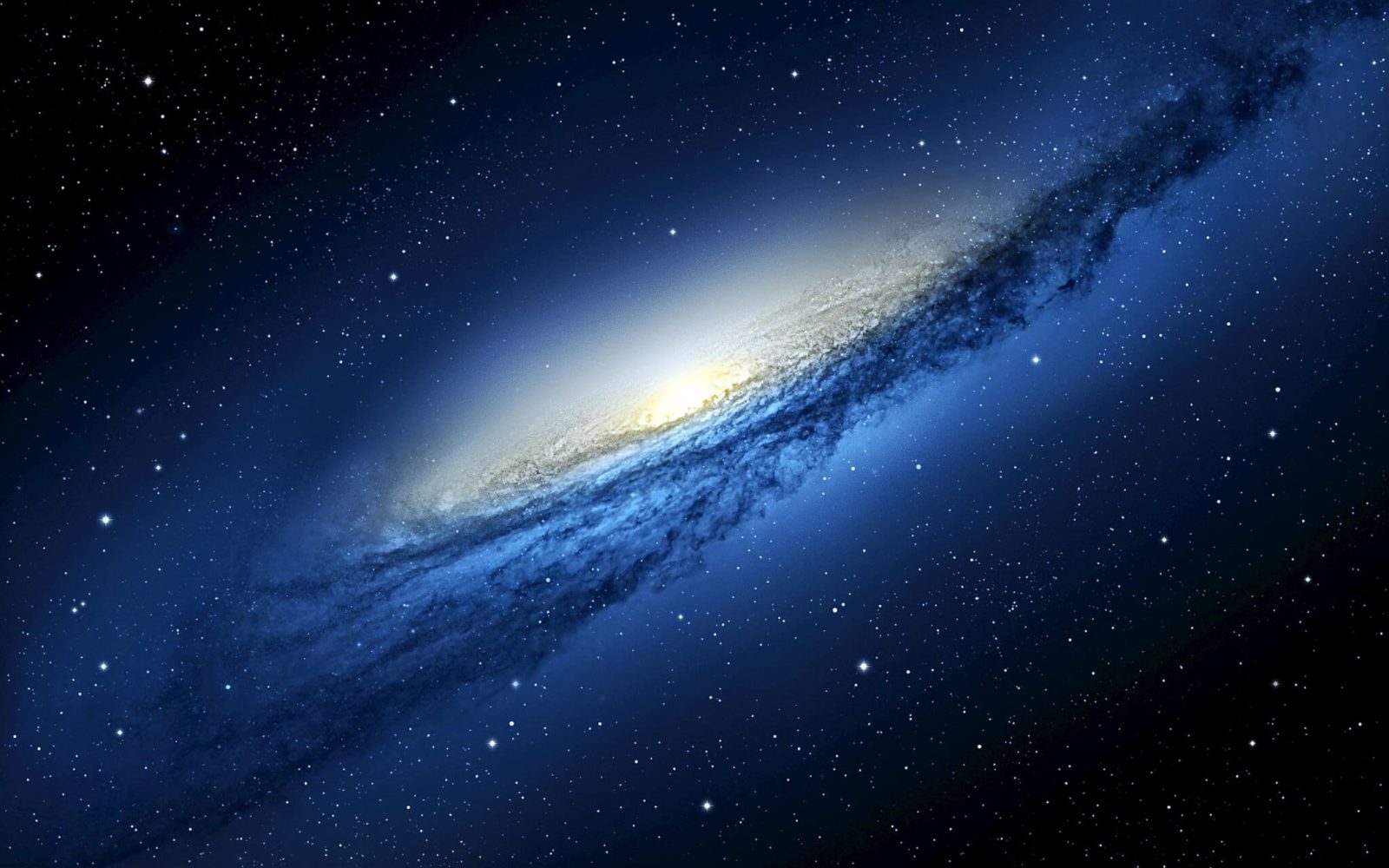
There is something about staring at the Andromeda Galaxy while your code compiles that puts everything in perspective. Space wallpapers are not just decoration — they are a daily reminder that your deadline is cosmically irrelevant. And the best part? You can get stunning, high-resolution space imagery for free.

Over the past decade, the quality of freely available space imagery has exploded. NASA alone releases thousands of images every year. Add ESA's archive, the Hubble Legacy Archive, and the James Webb Space Telescope data, and you have a near-infinite supply of desktop-worthy cosmic art. The question is not where to find them — it is how to choose.

Why Space Wallpapers Beat Everything Else

Let me be blunt: most wallpapers get boring. You download a mountain landscape and after three days you stop noticing it. Space imagery works differently. The sheer scale of what you are looking at — a nebula where stars are being born right now, a galaxy containing 400 billion suns — never stops being compelling. Your brain cannot quite process it, and that is exactly why it works.

Space wallpapers also have a practical advantage: they tend to work well with desktop icons. The dark backgrounds of most space images provide natural contrast for icon labels. No more squinting at white text against a bright sky. And if you code or design late at night, a dark space wallpaper is genuinely easier on your eyes than a bright one.

Categories of Space Wallpapers

If you start browsing any space image archive without a plan, you will drown in options. Here is how I break down the categories.

Galaxies

Galaxy wallpapers are the heavy hitters. The Andromeda Galaxy, the Whirlpool Galaxy (M51), and the Sombrero Galaxy (M104) are fan favorites. These images usually come in resolutions that make 4K monitors feel inadequate. A full-resolution Andromeda image from Hubble clocks in at 1.5 billion pixels. Yes, billion. Your 1920x1080 monitor is seeing maybe 0.1% of that data.

Galaxy images from the Hubble Legacy Archive are public domain. You can download, crop, edit, and use them for anything — commercial projects included. No attribution required, though crediting NASA/ESA is a nice touch.

Nebulae

If galaxies are majestic, nebulae are pure psychedelia. The Pillars of Creation in the Eagle Nebula. The Horsehead Nebula. The Orion Nebula — visible to the naked eye through binoculars, but in a Hubble image it looks like cosmic fire. Nebulae are where stars are born and where old stars explode. The colors in these images are real — hydrogen glows red, oxygen glows blue-green, sulfur glows red-orange. What telescopes capture is real light, not artistic interpretation.

Planets

Jupiter's bands. Saturn's rings. The ice-blue face of Neptune. Planet wallpapers bring our solar system neighbors onto your desktop. The Cassini mission alone produced over 450,000 images of Saturn and its moons before its grand finale in 2017. Some of those shots — Saturn backlit by the Sun, its rings glowing — look like concept art, but they are photographs.

Earth from Space

There is a reason the "Blue Marble" photo from Apollo 17 is one of the most reproduced images in history. Seeing Earth from orbit reconnects you with something fundamental. ISS astronauts post photos daily. The European Space Agency's Sentinel satellites produce continuous Earth imagery. City lights at night from the ISS — that is the wallpaper that gets the most comments when someone glances at your screen.

Astronauts and Spacecraft

Bruce McCandless floating untethered in the MMU jetpack. The Space Shuttle silhouetted against the Sun. The ISS assembly sequence. These images remind you that humans actually went out there. They are conversation starters. Someone asks "Is that real?" and suddenly you are talking about Ed White's first American spacewalk in 1965.

Resolution Guide: What You Actually Need

Resolution matters more for space images than for most wallpapers. You are looking at fine detail — individual stars, dust lanes, crater rims. A blurry nebula is just a blob of color. Here is what works at each resolution.

Monitor ResolutionMinimum Image ResolutionRecommended SourceNotes
1920x1080 (Full HD)1920x1080NASA Image GalleryMost common; easy to find
2560x1440 (QHD)2560x1440ESA Flickr, Hubble SiteSharp enough for 27" monitors
3840x2160 (4K UHD)3840x2160NASA/ESA full-res archivesPillars of Creation at this res is stunning
3440x1440 (Ultrawide)3440x1440 or widerHubble mosaic cropsHarder to find; crop from larger images
5120x1440 (Super Ultrawide)5120x1440Panoramic Hubble/Webb mosaicsBest option: mosaic stitching

A word on megapixels versus screen resolution: a 50-megapixel image might sound impressive, but if it is cropped to the wrong aspect ratio, you lose composition. Always check the actual pixel dimensions before downloading.

Best Free Sources for Space Wallpapers

Here is where I save you hours of searching. These sources are all free, legal, and high-quality.

NASA Image and Video Library

The NASA Image and Video Library (images.nasa.gov) is the motherlode. Every public NASA image lives here. Search by mission, by celestial object, by instrument. The interface is bare-bones but functional. Pro tip: filter by "Image" type and sort by date to find the newest Webb telescope releases before they hit Reddit.

ESA Hubble Website

ESA maintains the spacetelescope.org archive with every Hubble observation released to the public. Their image processing is top-tier — the colors are consistent and the crops are well-composed. They also provide TIFF downloads for the truly obsessive. A single Hubble TIFF can be 500 megabytes.

James Webb Space Telescope Gallery

The Webb telescope started delivering science images in July 2022, and every single release has been wallpaper-worthy. The Carina Nebula, Stephan's Quintet, the Southern Ring Nebula — these images rewired how we see the infrared universe. Webb's site (webbtelescope.org) has a dedicated wallpaper section with pre-cropped sizes.

Astronomy Picture of the Day (APOD)

APOD has been running since 1995. That is 30 years of daily space images. The archive (apod.nasa.gov) is searchable and each image links to a high-resolution version. Not every APOD is a photograph — some days feature illustrations or diagrams — but the hit rate for wallpapers is remarkably high.

All images from NASA, ESA, and the Hubble/Webb archives are in the public domain for non-commercial use. Some ESA images require attribution for commercial use — check the license field on each image page.

Real Photographs vs Digital Art

CriterionReal Space PhotographsDigital Space Art
SourceTelescopes, satellites, astronauts3D software, Photoshop, AI generation
AuthenticityActual cosmic phenomena capturedArtist's interpretation; may be inaccurate
AvailabilityPublic domain (NASA/ESA)Often paid or watermarked
Color accuracyWavelength-mapped; scientifically usefulArtistic choices; may misrepresent data
ResolutionUp to gigapixel-level mosaicsLimited by render resolution
UniquenessOne of a kind — that photon hit that sensorReproducible; anyone can render similar

I lean toward real photographs. There is weight to knowing the photons that formed that image traveled for millions of years before hitting a telescope mirror. Digital art is beautiful, but it lacks that connection. That said, digital artists sometimes composite real data in ways that reveal structure invisible to the eye — so the line is blurry.

Ultrawide Space Wallpapers

If you use an ultrawide monitor (21:9 or 32:9), finding wallpapers is a special kind of pain. Most space images are composed for 16:9 or 4:3. Here is what works: panoramic Hubble mosaics. The Hubble team occasionally stitches together multiple fields into super-wide composites. The Andromeda panoramic image spans 48,000 pixels horizontally. Crop a 3440-pixel slice and you have a perfect ultrawide wallpaper.

Another approach: telescope all-sky surveys. The Digitized Sky Survey and Pan-STARRS have covered the entire sky. You can extract wide strips and process them yourself. It takes some basic image editing, but the result is a wallpaper nobody else has.

Dark Mode Compatibility

Space wallpapers are natural fits for dark mode. Dark nebulae like the Horsehead and the Coal Sack are mostly black with subtle detail. They disappear into a dark theme elegantly. Bright emission nebulae — the Orion Nebula, the Lagoon Nebula — provide vibrant focal points against an otherwise dark background.

Very bright space images — solar flares, white dwarf illustrations, some supernova remnants — can be jarring in a dark room. If you work at night, stick to images with deep black backgrounds and smaller bright regions. Your retinas will thank you.

Organizing Your Space Wallpaper Collection

After a few months of downloading, you will have hundreds of files with names like "STScI-01GEXPR0CJXBWSQZ0Y5Z4M4CA8.png." Organize them. Create folders by celestial object type: Galaxies, Nebulae, Planets, Solar System, Deep Field. Name files with the object name and telescope: "M51_Whirlpool_Hubble.jpg" instead of the default filename. A little discipline upfront saves hours of scrolling through an undifferentiated folder later.

Benefits of Space Imagery for Your Desktop

Beyond aesthetics, there is a psychological angle. Studies on awe — the feeling of being in the presence of something vast — show that it reduces stress and increases prosocial behavior. Space images reliably trigger awe. Five seconds of looking at a Hubble Deep Field image — showing thousands of galaxies in a patch of sky the size of a grain of sand held at arm's length — recalibrates your sense of scale. That bug in production feels less catastrophic afterward.

\u{201c}

The nitrogen in our DNA, the calcium in our teeth, the iron in our blood, the carbon in our apple pies were made in the interiors of collapsing stars. We are made of starstuff.

Carl Sagan, Astronomer and Author

How to Download and Set Up

The gallery widget above contains 46 hand-picked space wallpapers in high resolution. Click any image to open the full-size version, then right-click and save. On Windows, go to Settings > Personalization > Background and select your downloaded image. On macOS: System Settings > Wallpaper > Add Folder or Photo. For best results with multiple monitors, look for images at least as wide as your total desktop resolution across all screens.

If the default Windows scaling softens the image — which it sometimes does — set the background fit to "Fill" or "Fit" rather than "Stretch," which can distort the aspect ratio of detailed structures like spiral arms.

Download 46-wallpaper pack320MB

FAQ: Space Wallpapers for Desktop

Are NASA images really free to use as wallpapers?

Yes. NASA images are in the public domain as works of the US federal government. You can download, modify, print, and use them for any purpose — personal or commercial — without permission or payment. ESA images are generally free for non-commercial use; check individual image license terms for commercial projects.

What resolution should I look for in a space wallpaper?

Match your monitor's native resolution. For Full HD (1920x1080), look for images at least that size. For 4K (3840x2160), seek images 3840 pixels wide or larger. Hubble full-resolution downloads often exceed your screen size dramatically — download the largest available version and let your OS scale it down for the sharpest result.

Where can I find James Webb Space Telescope wallpapers?

The official Webb telescope website (webbtelescope.org) has a dedicated wallpaper section with pre-cropped images in common aspect ratios. The STScI archive also hosts full-resolution Webb data. New images are released regularly as observation cycles complete.

What is the difference between Hubble and Webb telescope images?

Hubble primarily captures visible and ultraviolet light. Webb captures infrared light, revealing structures hidden by dust. Webb images tend to show sharper detail in star-forming regions and distant galaxies but may appear warmer in color palette. Both are excellent wallpaper sources — they complement each other.

Are the colors in space photographs real?

Yes and no. Many space images are captured in specific wavelengths invisible to the human eye (infrared, ultraviolet, X-ray). These are mapped to visible colors during processing — this is called "representative color." The structures you see are real; the colors are chosen to show contrast between different elements (hydrogen, oxygen, sulfur). Some images are captured in natural visible light and look exactly as they would to your eye.

Can I use space wallpapers on my phone too?

Absolutely. Most NASA and ESA images are tall enough to crop into phone aspect ratios (9:16 or similar). Look for images with a strong central subject — a single planet or a compact nebula — that will still be visible after vertical cropping. The APOD archive is especially good for mobile crops.

How do I find ultrawide (21:9 or 32:9) space wallpapers?

Ultrawide space wallpapers are scarce because telescopes capture square or 4:3 fields. Your best bet: download Hubble panoramic mosaics (like the Andromeda or Orion Nebula mosaics) and crop a horizontal strip. Alternatively, use a solid-color letterboxing approach with a central 16:9 image against a black background.

Do space wallpapers affect monitor power consumption?

On OLED monitors — yes, significantly. Dark space images with pure black backgrounds use less power because OLED pixels turn off completely when displaying black. On traditional LCD monitors, the backlight remains constant regardless of image content, so the effect is negligible.

What space object makes the best wallpaper?

Subjective, but based on download statistics: the Pillars of Creation (Eagle Nebula), Saturn backlit by the Sun (Cassini image), the Andromeda Galaxy, and the Carina Nebula (Webb telescope) consistently rank highest. Earth at night from the ISS is a close runner-up for sheer visual impact.

Can I print space wallpapers as posters?

NASA images are public domain and can be printed at any size. For a quality poster, you need at least 150 DPI at the print size. A 24x36-inch poster requires roughly 5400x3600 pixels. Many Hubble images exceed this — the Andromeda mosaic is 69536x22230 pixels, enough for a wall-sized print.

Tap to react