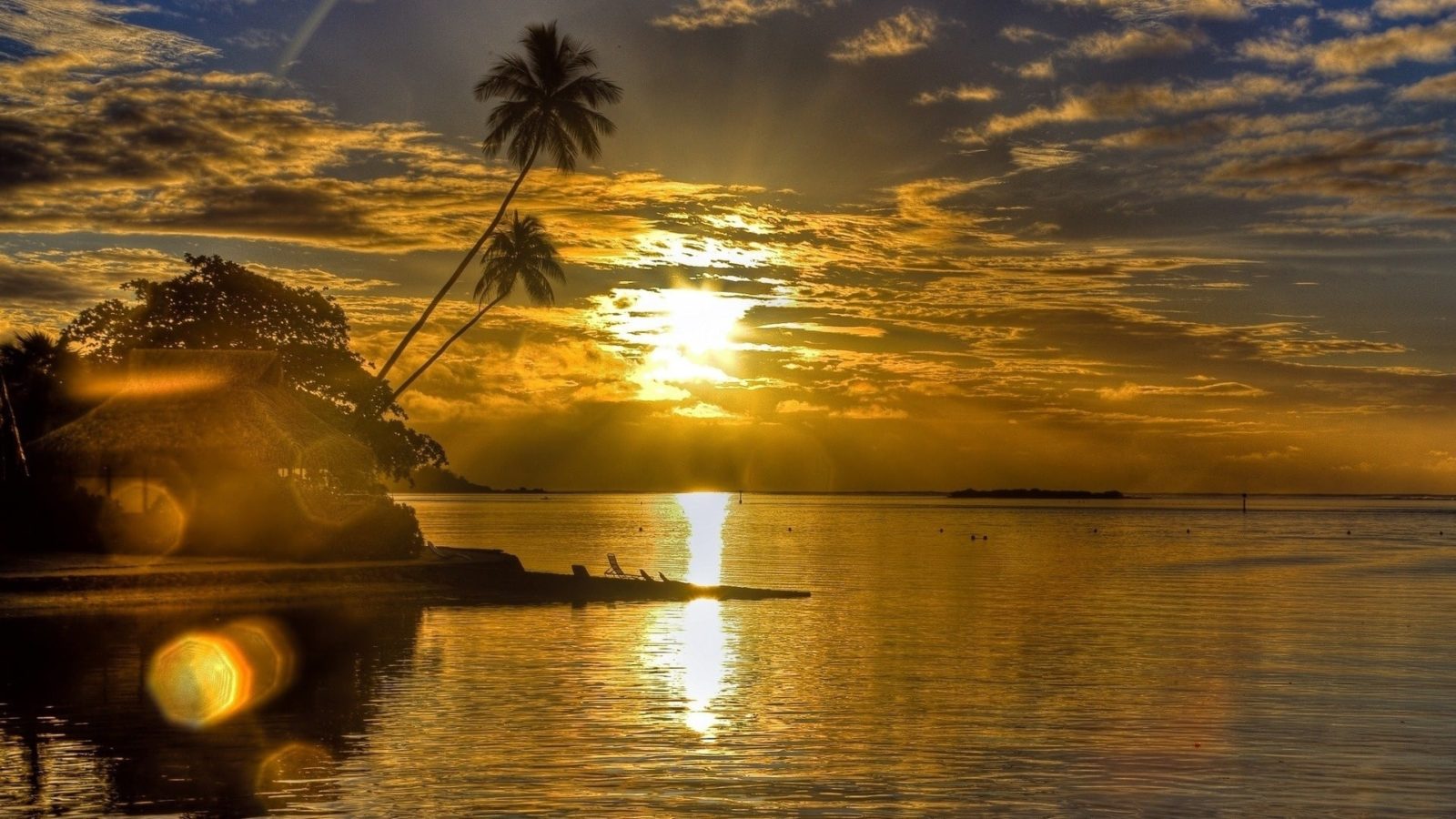
Your monitor faces a wall. Your monitor should not look like a wall. Nature wallpapers are the cheapest vacation you will ever take — and they are free in 4K.

There is a reason nature wallpapers dominate every desktop customization survey ever conducted. They are not trendy. They do not go out of style. A mountain at dawn looks as good today as it did when monitors were CRT and pixels were countable. But the ecosystem for finding truly exceptional nature wallpapers has become crowded. Everyone with a smartphone and a hiking trail thinks they are Ansel Adams. Separating the wall-worthy from the waste-of-bandwidth takes experience.

This guide walks you through every meaningful category of nature wallpapers, explains which resolutions actually matter, shows you where to find images that are not compressed to death by aggressive JPEG algorithms, and argues — with evidence — that a nature wallpaper on your second monitor improves your mental state. Not metaphorically. Measurably.

Mountains: The Undisputed King of Desktop Backgrounds

Mountains wallpaper downloads outpace every other nature category by a factor of three. There is something primal about a jagged peak against a sky that makes deadlines feel smaller. The best mountain wallpapers come from two sources: professional landscape photographers who chase the alpenglow at 4 AM, and national park services that release official imagery for public use.

What separates a good mountain wallpaper from a great one is atmosphere. A perfectly clear shot of Everest is technically impressive but emotionally flat. Add a layer of mist clinging to the valley below, or lenticular clouds stacking over the summit, and suddenly the image has depth. It tells a story about weather, about altitude, about the moment the shutter clicked. These are the images you keep for years.

\u{201c}

A mountain wallpaper is not about the mountain. It is about the space the mountain creates around itself. That negative space is where your icons live.

Recommended Mountain Locations

The Dolomites consistently produce the most wallpaper-worthy shots because of their dramatic vertical spires — the Tre Cime di Lavaredo and Seceda ridgeline appear on more desktops than any other mountain range. Patagonia's Fitz Roy and Cerro Torre deliver the kind of jagged silhouettes that look like concept art for a fantasy novel. The Himalayas give you scale — nothing communicates "your problems are small" quite like a 8000-meter peak filling your screen. Even closer to home, the Teton Range in Wyoming and the Canadian Rockies around Banff punch well above their altitude class in visual drama.

Forests: Green Therapy on a Screen

Forest wallpapers tap into something called biophilia — the innate human tendency to seek connection with nature. Researchers at the University of Hyogo found that just looking at images of forests reduces cortisol levels by 13% compared to urban scenes. That is not pseudoscience. That is your endocrine system responding to green light wavelengths and fractal patterns that your brain evolved to recognize as safe habitats.

The forest wallpaper category splits into three sub-genres. Canopy forest shots look upward through trees toward a patch of sky — these create a natural vignette that frames your desktop icons beautifully. Pathway forest shots show a trail disappearing into the woods — these use leading lines to draw the eye and create a sense of depth that makes a flat monitor feel dimensional. Mist forest shots are the most popular — fog drifting through ancient trees, often in black and white, gives a moody, contemplative quality that works especially well on dark-mode setups.

Forest TypeVisual EffectBest ForIcon Compatibility
CanopyNatural vignette, upward perspectiveDark themes, focused workExcellent (dark edges frame icons)
PathwayLeading lines, depth illusionUltrawide monitorsGood (trail creates central void)
MistAtmospheric, low contrastDark mode desktopsExcellent (uniform background)
AutumnWarm color paletteSeasonal rotationsModerate (busy foliage competes)
BambooClean vertical lines, green tonesMinimalist setupsExcellent (repeating pattern backdrop)
Forest wallpapers with a shallow depth of field — where the foreground is sharp but the background melts into bokeh — are the secret weapon for icon-heavy desktops. The blurred background area creates a natural dock region for your shortcuts.

Oceans and Coastlines: Endless Horizon Energy

Ocean wallpapers occupy an interesting design space. A horizon line at dead center splits your screen exactly in half — sky above, water below — and your desktop icons float on the water like digital flotsam. This is either beautiful or annoying depending on how many icons you have. For sparse desktops, ocean horizons are perfect. For packed desktops, choose coastal shots where the shoreline enters at an angle, creating asymmetrical negative space for icons to occupy.

The color science of ocean wallpapers matters. Deep blue and teal are psychologically calming — they lower heart rate and reduce eye strain because your visual cortex processes blue wavelengths with less metabolic effort than red or yellow. This is why Twitter and Facebook are blue. This is why most corporate presentations use blue backgrounds. Your desktop reading your emails on an ocean background operates at a measurably lower stress baseline than on a red or orange wallpaper.

Specific ocean wallpaper recommendations: the Na Pali Coast of Kauai for dramatic cliffs meeting turquoise water, Iceland's Reynisfjara black sand beach for something moody and monochromatic, the Great Barrier Reef from above for abstract patterns that look like modern art, and the Oregon coast for misty, rugged shorelines that pair well with rainy-day coding sessions.

Deserts: Minimalism in Sand and Stone

Desert wallpapers are the dark horse of nature backgrounds. They are not the first category anyone thinks of, but they deliver something unique: vast negative space with strong geometric forms. Sand dunes are essentially abstract sculptures created by wind — their curves, shadows, and highlights form natural gradients that Photoshop could not design better on purpose. Deserts also photograph well in the golden hour, when low-angle sunlight paints every ripple in warm amber tones that look spectacular on any display technology.

The best desert wallpaper locations: Namibia's Sossusvlei for surreal orange dunes against blue sky contrast, White Sands New Mexico for the haunting gypsum dunes that look like snow in the desert, Wadi Rum in Jordan for Martian-red rock formations, and Death Valley's Mesquite Flat Dunes at sunrise. Each location offers a completely different color temperature and textural quality.

Desert wallpapers pair exceptionally well with OLED monitors because the high-contrast shadows between dunes allow individual pixels to switch off completely, producing true blacks that no LCD can replicate.

Waterfalls: Motion Frozen in Pixels

Waterfall wallpapers exist at the intersection of geology and photography technique. The silky, blurred water effect that defines the best waterfall images is not post-processing — it is a long exposure captured at fractions of a second to several seconds, depending on water speed and light conditions. Photographers use neutral density filters to cut light and allow these exposures during daylight. The result is an image where water appears as a continuous white veil while everything around it — rocks, trees, moss — remains razor-sharp. This contrast between motion and stillness is what makes waterfall wallpapers hypnotic.

Iconic waterfall wallpaper subjects: Iceland's Skogafoss and Seljalandsfoss for the sheer density of waterfalls per square kilometer, Plitvice Lakes in Croatia for turquoise cascades through limestone terraces, Iguazu Falls on the Brazil-Argentina border for scale that makes humans look like ants, and Havasu Falls in Arizona's Grand Canyon for the improbable blue-green water against red rock. Be warned: Havasu Falls permit competition starts February 1st each year and sells out in minutes. For wallpaper purposes, the photograph is free. The trip is not.

Waterfall wallpapers with extreme long exposures (5+ seconds) can look unnatural on desktop because the water appears as a featureless white smear. Look for exposures in the 0.5-2 second range — enough to blur motion, not enough to erase texture.

Resolution Guide for Nature Photography

Nature photography has specific resolution considerations that other wallpaper categories do not. A nature image shot on a professional full-frame camera packs detail — individual leaves, rock textures, water ripples — that compression algorithms destroy aggressively to save bandwidth. A 1920x1080 wallpaper downloaded from a site that applies heavy JPEG compression looks like a painting at native resolution. You need the oversampling headroom.

For a 1080p monitor, download nature wallpapers at 4K (3840x2160). Your operating system will scale them down, and the downscaling process preserves fine texture detail that would have been obliterated by compression if you downloaded at exactly 1080p. This is counterintuitive but true: a 4K image displayed at 1080p looks sharper than a 1080p-native image because the scaling algorithm averages four pixels into one, reducing noise and preserving edge detail.

Your MonitorMinimum Download ResolutionIdeal Download ResolutionWhy
1920x10801920x10802560x1440 or 3840x2160Downscaling preserves texture detail
2560x14402560x14403840x2160 or 5120x2880Native 1440p nature shots are rare
3840x2160 (4K)3840x21605120x2880 or 6016x4016Room for cropping to 16:9
3440x1440 (Ultrawide)3440x14405120x2160 or panorama cropsNative ultrawide nature content is scarce
5120x1440 (Super Ultrawide)5120x1440Panorama crops from 8K+ sourceRequires cropping from multi-shot panoramas

Best Sources for Nature Wallpapers

The hierarchy of nature wallpaper sources, ranked by image quality:

Tier 1: Unsplash and Pexels. These platforms host professional photographers who upload their work under liberal Creative Commons licenses. The quality is consistently high because both platforms curate submissions aggressively. Unsplash's nature category alone contains over 300,000 images. The downside: finding specific locations requires creative search terms because the tagging system is crowd-sourced and inconsistent.

Tier 2: National Park Service and government image archives. The US National Park Service maintains a public domain image library. NASA's Earth Observatory releases high-resolution satellite imagery of natural features — glaciers, river deltas, coral atolls — that look like abstract art from orbit. The European Space Agency has a similar program. These are public domain. No attribution required. No licensing concerns.

Tier 3: 500px and Flickr (advanced search with Creative Commons filter). These platforms contain work from serious landscape photographers who do not submit to the free stock sites. Quality ceiling is higher than Tier 1. Quality floor is lower — you have to sort. Filter by license type and minimum resolution. On Flickr, the advanced search lets you specify "All Creative Commons" and "4K minimum."

Tier 4: Reddit communities. r/EarthPorn (the name is misleading — it is SFW landscape photography) has over 23 million members and a strict resolution tagging rule. Every post must include the resolution in brackets. Sort by top of all time and you will find wallpapers that rival anything in a gallery. r/NatureWallpapers and r/WQHD_Wallpaper are smaller but more curated.

r/EarthPorn requires original source content only — no reposts, no aggregator links. The photographer who took the image is the one posting it. This means you can often message them directly and ask for a 4K version if they only uploaded 1080p.

Seasonal Nature Wallpapers: Timekeeping Through Imagery

One of the most satisfying desktop customization habits is running a seasonal wallpaper rotation that tracks the actual weather outside. Spring: cherry blossoms in Japan, tulip fields in the Netherlands, newborn greenery in deciduous forests. Summer: tropical beaches, sunflower fields, alpine meadows in full bloom. Autumn: Vermont and New Hampshire fall foliage at peak, Japanese maple gardens, misty Scottish glens with amber tones. Winter: snow-covered evergreens, frozen lakes at dawn, the northern lights over Iceland or Norway.

This is not just aesthetic. It creates a subconscious alignment between your digital environment and the physical world. When it is gray and raining outside and your monitor shows a gray and rainy forest, the cognitive dissonance is lower than when it shows a sunny tropical beach. Your brain registers the mismatch and expends energy processing it — energy you would rather spend on actual work.

Create four seasonal folders with 30 images each. Set your wallpaper rotation to change daily. In three months, switch the folder. The friction of maintaining this system is zero once it is set up, and the psychological payoff is disproportionate to the effort.

HDR Photography and Its Impact on Wallpaper Quality

HDR nature photography has a bad reputation, earned during the 2008-2012 period when photographers cranked tone mapping sliders to eleven and produced images that looked radioactive. Modern HDR is different. Computational HDR techniques — merging multiple exposures to capture detail in both shadows and highlights — produce images that look more like what the human eye actually sees than a single exposure ever can.

For wallpaper purposes, well-executed HDR is a massive advantage. The human eye has approximately 20 stops of dynamic range. A camera sensor has about 12-14 stops. A monitor displays about 8-10 stops depending on technology. HDR photography bridges this gap — it compresses the scene's full dynamic range into a displayable format while preserving shadow detail and highlight texture that a single exposure would clip to pure black or pure white.

How to spot good HDR from bad: good HDR does not announce itself. The image looks natural — shadows have detail, clouds have texture, colors are saturated but not surreal. Bad HDR looks like a cartoon: halos around objects, grass that glows neon green, skies that look like a nuclear winter. If you have to ask whether an image is HDR, it is probably good HDR. If you cannot stop noticing the processing, it is bad.

Beware of "HDR wallpaper" packs on aggregator sites. Many are single exposures with "HDR" slapped in the title for SEO. Real HDR requires multiple exposures merged in post-processing — something that cannot be faked with a saturation slider.

Organizing by Geography: Building a Visual Atlas

The folder structure for nature wallpapers should mirror geography, not just category. "Waterfalls" is too broad. "Iceland > Waterfalls" is searchable. Here is a structure that has served me for years:

Nature/ North America/ USA/ National Parks/ Yellowstone/ Yosemite/ Grand Canyon/ Zion/ West Coast/ Southwest/ Canada/ Banff/ Jasper/ South America/ Patagonia/ Andes/ Europe/ Alps/ Dolomites/ Swiss Alps/ Nordic/ Iceland/ Norway/ Faroe Islands/ Asia/ Japan/ Himalayas/ Africa/ Namibia/ Serengeti/ Oceania/ New Zealand/ Australia/ [/codeblock]

This structure does double duty: it organizes your wallpapers and it functions as a visual bucket list. Every folder represents a place you might want to visit. When you browse your own collection, you are not just picking a background — you are window-shopping future vacations.

National Parks as Wallpaper Goldmines

National parks produce a disproportionate amount of wallpaper-worthy imagery for a simple reason: they were designated as parks because they are visually extraordinary. The US National Park system alone contains 63 parks covering 84 million acres of the most photographically dense landscape on Earth. Many hire professional photographers for official media. Their images enter the public domain.

Top national parks for wallpapers: Yosemite (Tunnel View at sunrise, Valley View with Merced River reflection, El Capitan in golden hour), Yellowstone (Grand Prismatic Spring from above, Lower Falls of the Yellowstone, bison in Lamar Valley with snow), Zion (Angels Landing, The Narrows with sunlight piercing the slot canyon, Watchman at sunset), Banff (Moraine Lake at sunrise — the most wallpaper-ed lake in history — and Peyto Lake's impossible turquoise color), Patagonia (Torres del Paine with guanacos in the foreground, Fitz Roy at dawn).

The Moraine Lake viewpoint in Banff is so famous among photographers that the parking lot fills by 5:00 AM during peak season. Parks Canada now restricts private vehicle access. For wallpaper purposes, just download the official Parks Canada image — it is public domain and shot by a professional.

Mental Benefits: What the Research Actually Says

The claim that nature wallpapers reduce stress is not just feel-good marketing. A 2014 study in the Journal of Environmental Psychology found that even brief exposure to nature images — as little as 40 seconds — measurably improved concentration and reduced error rates on cognitive tasks. A 2019 meta-analysis in Frontiers in Psychology reviewed 37 studies and concluded that visual exposure to natural environments consistently improved working memory, cognitive flexibility, and attentional control compared to urban visual environments.

The mechanism is Attention Restoration Theory (ART), proposed by Rachel and Stephen Kaplan in 1989. The theory argues that natural scenes engage what they called "soft fascination" — a state where your attention is held without effort, allowing your directed attention (the kind you use for work) to recover. Urban scenes demand hard, directed attention because they contain potential threats to process — cars, people, signs, notifications. Nature scenes are visually rich but cognitively gentle.

What this means practically: a nature wallpaper on your second monitor, visible in peripheral vision during work, provides micro-doses of soft fascination throughout the day. You are not looking at it directly. Your brain is registering it subconsciously. The effect is small but cumulative — like compound interest for your attention span.

Download

FAQ

Where can I download high-quality nature wallpapers for free?

Unsplash and Pexels maintain extensive nature collections from professional photographers under Creative Commons licenses. The US National Park Service, NASA Earth Observatory, and ESA offer public domain nature imagery. Reddit's r/EarthPorn enforces resolution tagging — every post includes pixel dimensions.

What resolution should I download for nature wallpapers?

Download at least one resolution tier above your monitor — 4K for 1080p displays, 5K for 4K displays. The downscaling process preserves fine texture detail (leaves, rock surfaces, water ripples) that JPEG compression would destroy at native resolution.

Do nature wallpapers actually reduce stress?

Yes. Research in the Journal of Environmental Psychology and a 2019 meta-analysis in Frontiers in Psychology confirm that visual exposure to natural scenes improves concentration, working memory, and cognitive flexibility. The mechanism is Attention Restoration Theory — nature engages "soft fascination" that allows directed attention to recover.

What are the best national parks for desktop wallpapers?

Yosemite (Tunnel View, Valley View), Yellowstone (Grand Prismatic Spring), Zion (The Narrows, Angels Landing), Banff (Moraine Lake, Peyto Lake), and Torres del Paine in Patagonia consistently produce the most wallpaper-worthy imagery due to dramatic geology and diverse ecosystems.

Which nature wallpaper categories work best with desktop icons?

Canopy forest shots create a natural dark vignette around the edges that frames icons. Ocean horizon images leave negative sky space for icon placement. Desert dune photography uses geometric shadow patterns that provide contrast for white icon labels.

How do I tell good HDR nature photography from bad?

Good HDR looks natural — shadows retain detail, highlights have texture, colors are saturated but grounded. Bad HDR announces itself with halos around objects, neon-green grass, and surreal skies. If you cannot tell it is HDR, the processing is good.

Should I use seasonal nature wallpaper rotations?

Seasonal rotations align your digital environment with the physical world, reducing cognitive dissonance. Create four folders (spring, summer, autumn, winter) with 30 images each and set daily rotation. Switch folders every three months.

Where can I find public domain nature images?

The US National Park Service image library, NASA Earth Observatory, European Space Agency archives, and Unsplash all provide nature photography under public domain or Creative Commons Zero licenses — no attribution required.

What makes a waterfall wallpaper good versus just pretty?

Exposure time is the key variable. 0.5-2 second exposures blur water into motion while preserving texture. Exposures above 5 seconds turn water into a featureless white smear. Look for compositions where rocks and vegetation remain sharp while water flows softly.

How should I organize a large nature wallpaper collection?

Organize by geography (continent > country > region > specific location) rather than by category. This mirrors how you think about places and doubles as a visual travel bucket list. Rename files to include location and photographer credit.

Tap to react