Vector Heart Images in Various Abstract Styles — Free Download EPS (CMX) and PNG

The heart shape. The most drawn symbol in human history. And also the most abused. Clipart hearts litter the internet — bubble-gum pink, generic, flat, forgettable. So when a designer needs a heart that actually does something — a heart with visual interest, a heart that rewards a second look — the usual sources come up empty.

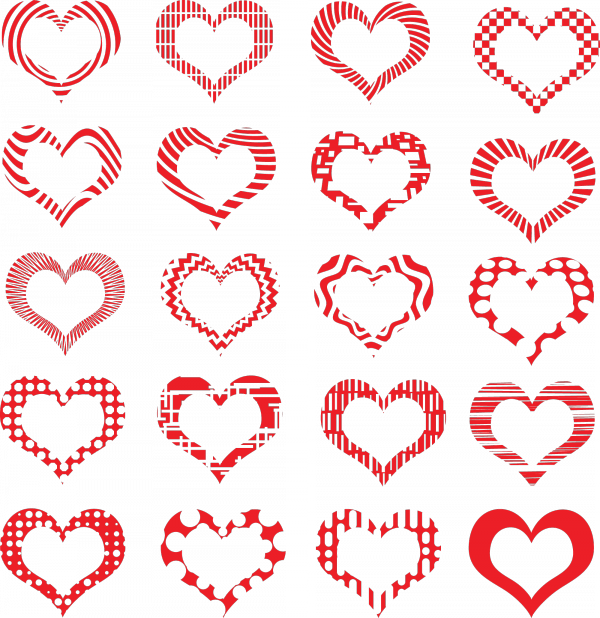
This set of abstract vector heart images solves that problem. Two distinct artistic interpretations of the heart motif, each delivered in fully editable EPS and CMX vector formats plus high-resolution PNG raster files: 2000 px for print, 600 px for screen, 300 px for web. Download the complete bundle as a single archive — abstr_serdca.zip.

The first heart leans geometric — sharp angles, interlocking facets, a stained-glass or crystalline visual language. The second heart flows — organic curves, tribal-inspired line work, ornamentation that feels drawn rather than constructed. Together they cover two distinct aesthetic territories, doubling the range of projects this single download serves.

<
Both hearts are provided as separate EPS/CMX files plus PNG raster exports at three resolutions. You get the vector source files for unlimited editing and the PNG files for instant placement. No need to convert or export anything unless you choose to.

Heart One — The Geometric Crystal Heart

The first abstract heart takes the familiar silhouette and breaks it into angular facets. Think stained glass. Think low-poly 3D modeling. Think art deco ornamentation. The surface of the heart is divided into triangular and rhomboid sections that catch imaginary light from different directions.

What makes this particular geometric treatment successful is the restraint. Some geometric hearts push the facet count so high that the silhouette dissolves into noise. This one keeps the sections large enough to read — you can count the facets. You can see how they relate to one another. The negative space between sections acts as structural framework, not visual clutter.

This geometric approach opens specific design uses that a smooth, round heart simply cannot serve:

  • Tech branding — the faceted surface reads as digital, modern, computational. A fintech startup logo. A cryptocurrency wallet icon. An app for relationship analytics.
  • Jewelry design — the crystalline facets map directly to gem cutting. Use this as a concept sketch for a custom-cut heart-shaped gemstone or a pendant design.
  • Event branding — a geometric heart on a dark background with gold or copper metallic coloring reads as luxury event branding. Galas, awards ceremonies, high-end weddings.
  • Album artwork — the angular tension between sharp facets and the organic heart shape creates visual drama that suits electronic music, experimental pop, or avant-garde jazz.

The geometric heart also takes color exceptionally well. Because the facets are separate, closed paths, you can assign a different color to each section. A gradient of related hues — from deep burgundy through coral to pale pink — gives the heart a three-dimensional, almost luminous quality. Or go the opposite direction: assign contrasting colors to adjacent facets for a cubist or pop-art effect.

Heart Two — The Flowing Abstract Heart

If the first heart is architecture, the second heart is calligraphy. Curving lines sweep through the heart form. Swoops and spirals. Thick-to-thin transitions in the strokes. A tribal or henna-influenced ornamental logic that makes the image feel hand-drawn despite being precision vector geometry.

This flowing style works through accumulation. A single curve says almost nothing. But layer eight or ten flowing lines inside the heart silhouette, and suddenly the image has density. It has rhythm. The eye follows the curves and discovers new paths on each pass.

The flowing heart serves a different design niche than its geometric counterpart:

  • Fashion and apparel — this style translates beautifully to textile prints, embroidery patterns, and screen-printed garments. The organic lines feel bodily, sensual, decorative.
  • Tattoo flash — the tribal and flowing line work maps directly to tattoo design. Use as-is for a heart tattoo concept, or extract individual flowing elements and build custom compositions.
  • Wellness and yoga branding — the organic curves carry connotations of flow, breath, movement. A yoga studio logo. A meditation app icon. A holistic health practice brand mark.
  • Greeting card design — flowing ornamentation softens the heart into something tender. Birthday cards. Anniversary cards. Valentine's Day cards that steer clear of kitsch.
  • Henna and mehndi patterns — the stroke-based decorative approach closely mirrors traditional henna application. Use as a template for henna artists or as digital decoration in South Asian wedding materials.

Recoloring the flowing heart is a different process than the geometric one. Since the decoration is built from strokes rather than filled shapes, you adjust stroke colors rather than fill colors. Gradient strokes along the flowing lines create a particularly effective result — the color shifting as the line curves, like ink flowing from dark to light.

Comparison: Geometric vs. Flowing Heart Styles

AttributeGeometric crystal heartFlowing abstract heart
Visual languageAngular, faceted, constructed — architectural precisionCurvilinear, organic, hand-drawn — calligraphic fluidity
Emotional registerModern, digital, intellectual — love as structureWarm, sensual, decorative — love as emotion
Best color treatmentPer-facet coloring, metallic gradients, contrasting adjacent huesStroke gradients, monochrome line work, gold/silver on dark
Ideal industry useTech, fintech, luxury events, electronic musicFashion, wellness, tattoo, greeting cards, weddings
Print suitabilityExcellent — facets hold detail even in small formatGood — fine strokes need minimum 2-3 cm print width
Logo potentialHigh — faceted silhouette works as a standalone markModerate — better as a decorative element than a primary logo
Scalability (favicon)Good — silhouette reads at 32 pxLimited — fine strokes merge below 48 px
Cultural associationsArt deco, stained glass, low-poly, gem cuttingTribal art, henna, art nouveau, Arabic calligraphy

The two hearts complement rather than compete. A project that needs the cold precision of geometry and the warmth of flowing ornamentation could use both — geometric heart as a primary mark, flowing heart as a secondary decorative element. They work together because they share a common source (the heart silhouette) while speaking different visual dialects.

<
\u{201c}

Two approaches to the same shape, used at different scales in the same layout, create a visual conversation. The geometric heart says: here is the idea. The flowing heart says: here is the feeling.

Design principle, Composition rule

Format Deep Dive — EPS, CMX, and PNG

The archive abstr_serdca.zip delivers the hearts in three format families. Here is what each offers and when to use it.

EPS (Encapsulated PostScript) — the universal vector exchange format. Opens in Adobe Illustrator, CorelDRAW, Inkscape, Affinity Designer, and virtually every other vector application. Both hearts are provided as separate EPS files. Each file contains the heart on its own artboard with paths ungrouped and fully editable. Scale to any size. Recolor any element. Extract, duplicate, or rearrange components.

CMX (CorelDRAW Exchange) — the native CorelDRAW format. If you work in CorelDRAW ecosystem, CMX files open with full fidelity — all layer structures, grouping, and effects preserved. The CMX files mirror the EPS files in content: same hearts, same editability, same path quality. Having both EPS and CMX in the archive means you never need to go through an import/conversion step — just open the format your software prefers and start working.

PNG (Portable Network Graphics) — raster exports at three resolutions. 2000 px: ready for print at 300 DPI (approximately 17 cm width). 600 px: optimized for screen displays, retina-ready, good file size balance. 300 px: web-sized, suitable for thumbnails, inline icons, and social media avatars. All PNG files carry transparent backgrounds — place them on any color surface without white box artifacts.

Use caseRecommended formatWhy
Logo designEPS or CMXInfinite scalability, full editability, professional deliverable
Print layout (InDesign, Publisher)PNG 2000 pxSufficient resolution for A5–A4 print, no vector import issues
Web design (Figma, Sketch)PNG 600 pxRetina-ready resolution, manageable file size for web workflows
Social media postsPNG 600 px or 300 pxPlatforms compress anyway — 600 px is sufficient headroom
Merchandise (T-shirts, mugs)EPSPrint-on-demand services need vector for best results; export to required specs
Laser engraving / CNCEPSVector paths convert directly to toolpaths without rasterization
<
CMX files are CorelDRAW-native. If you do not use CorelDRAW, stick with the EPS files — they offer the same content but work in all vector editors. Do not attempt to open CMX in Illustrator or Inkscape; results vary from partial to complete failure.

Practical Color and Style Treatments

Both hearts arrive in monochrome — black paths on transparent backgrounds. This is the starting point. Here are five tested treatments that transform them into polished, project-ready assets.

1. Gold foil on dark: apply a gold gradient (#D4AF37 base, #F3E5AB highlight, #AA7C11 shadow) to all paths. Place on a deep navy or charcoal background. The geometric heart looks like a luxury brand mark. The flowing heart looks like a metallic tattoo. Both work. Add a subtle drop shadow in the background color for depth.

2. Neon duotone: assign a different neon color to the geometric heart's facets — cyan, magenta, yellow — place on pure black. The result reads like a synthwave album cover. For the flowing heart, apply a single neon stroke (pink or cyan) with a slight glow effect.

3. Pastel watercolor: convert the geometric heart's facets to fills with soft pastel colors — blush, mint, lavender, butter. Reduce opacity to 80%. Overlap facets slightly by scaling individual sections. The flowing heart gets a similar treatment: soft-colored strokes at 50-70% opacity, layered to simulate watercolor bleed.

4. Minimal monochrome: leave the hearts black. Place on white. No effects. No gradients. This is the most versatile treatment — it works in any context, on any medium, at any scale. The geometric heart reads as a tech logo. The flowing heart reads as a gallery poster. Same treatment, radically different results because the underlying forms are so distinct.

5. Negative space on photo: place the heart as a white silhouette over a photograph. The heart punches through the image. This works exceptionally well with the flowing heart — its organic curves create natural windows into the photo beneath, turning a simple overlay into an integrated composition.

Use Cases by Industry

Moving from technique to application. Here is where these hearts fit into real-world design projects, organized by industry.

  • Wedding and events: save-the-date cards with the flowing heart as a watermark. Invitation suite with a geometric heart monogram. Table numbers with heart motif. Wedding website hero image. Thank-you card decoration.
  • Wellness and beauty: spa menu design with flowing heart accents. Cosmetic packaging with geometric heart logo. Yoga studio branding with flowing heart in chakra colors. Skincare social media templates.
  • Technology: dating app icon incorporating the geometric heart. Relationship-tracking dashboard UI. Digital greeting card platform branding. Wellness wearable companion app.
  • Publishing: romance novel cover design with flowing heart ornamentation. Poetry collection interior decoration. Relationship advice book chapter dividers. Self-help workbook exercise markers.
  • Merchandise: T-shirt prints with either heart style. Enamel pin designs from the geometric heart. Tote bag screen print with flowing heart. Phone case patterns. Sticker sheets.

The range is genuinely broad because the heart symbol itself is universal and these two artistic interpretations expand rather than narrow its applicability.

FAQ — Frequently Asked Questions

How many heart images are in the abstr_serdca.zip archive?

The archive contains two distinct abstract heart designs. The first is a geometric, faceted crystal-style heart. The second is a flowing, tribal-inspired ornamental heart. Both are provided in EPS and CMX vector formats, plus PNG raster exports at 2000 px, 600 px, and 300 px.

What is the difference between EPS and CMX formats?

EPS (Encapsulated PostScript) is a universal vector format that opens in virtually all vector editing software — Illustrator, Inkscape, CorelDRAW, Affinity Designer. CMX (CorelDRAW Exchange) is CorelDRAW's native exchange format, optimized for the CorelDRAW ecosystem. Content is identical across both formats. If you do not use CorelDRAW, use the EPS files.

Can I use these hearts for a commercial logo?

Yes. The heart images are provided for both personal and commercial use. You may incorporate them into logos, brand marks, merchandise, packaging, websites, apps, and any other commercial project without licensing fees or attribution requirements.

Are the PNG files on transparent backgrounds?

Yes. All PNG files at all three resolutions — 2000 px, 600 px, and 300 px — feature fully transparent backgrounds. You can place the hearts on any colored, textured, or photographic background without a white bounding box.

Which software opens CMX files?

CMX files open natively in CorelDRAW. They are not reliably compatible with Adobe Illustrator, Inkscape, or Affinity Designer. If you do not have CorelDRAW, use the EPS files included in the same archive — they offer identical content and work in all major vector editors.

Can I recolor individual sections of the geometric heart?

Yes. The geometric heart's facets are separate, unmerged vector paths. In any vector editor, select individual sections and assign different colors. This allows multi-color, gradient-per-facet, or duotone treatments. The flowing heart uses stroke-based decoration — recolor by adjusting stroke properties.

What resolution should I use for print projects?

For print, use the 2000 px PNG files — at 300 DPI they provide approximately 17 cm (6.7 inches) of print width. For larger print sizes or maximum quality, open the EPS vector files and export at your exact required dimensions. Vector files have no resolution ceiling.

Are these hearts suitable for laser engraving or CNC cutting?

Yes, particularly the geometric heart. Since the paths are clean, closed vector shapes, they convert directly to machine toolpaths without additional processing. The flowing heart's stroke-based design may require conversion to outlines first, which is a one-click operation in any vector editor.

Download abstr_serdca.zipEPS + CMX + PNG

Tap to react