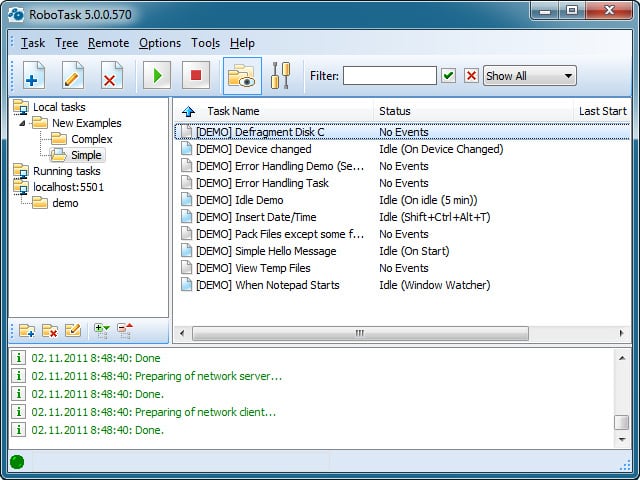
Many of us use the alarm clock on our smartphones every day to wake up on time. But what if your work is inextricably linked to your computer, and you need not just to wake up, but to immediately sing a reminder of important tasks, launch the necessary programs, or play a specific sound signal? Today we will look at how to turn your PC into a multifunctional morning control center using the powerful automation tool RoboTask.
Why choose RoboTask for reminders
Unlike standard timer applications, RoboTask allows you to create complex scenarios. You can not just begin a sound, but also display an interactive window on the screen that will require you to compete waking up. If you accidentally turned it off in your sleep, the program will repeat the signal after a specified interval. This is an ideal tool for those who want to automate their morning and make the waking process conscious.
Step-by-step setup of the "Alarm clock" script
To hear, we need to create a dear task in the program interface. Let's call it Alarm clock. Next, we will assemble a small but effective sequence of actions that will definitely make you wake up.
Step 1. Creating a loop and basic actions
To make the alarm persistent, we will use a repetition loop. As an example, let's set a small loop with numbers from 1 to 5. This means that if you do not turn off the signal, it will sound and appear on the screen five times in a row.

Step 2. Displaying information and dialog boxes
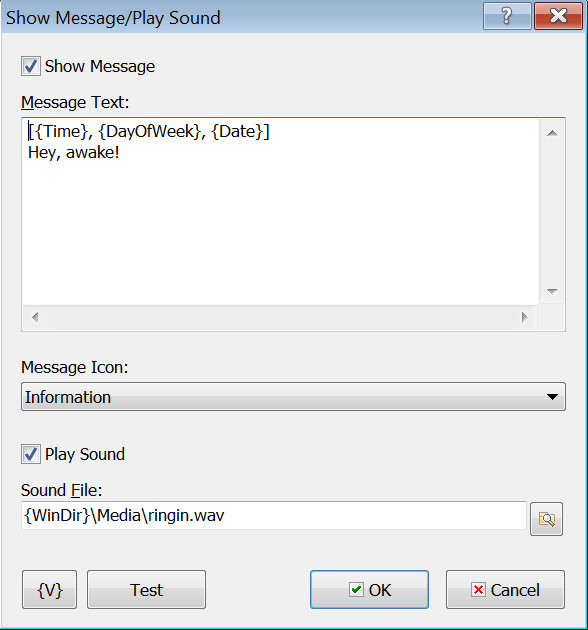
The first action inside the loop will be to set up the display of text information. Let a dialog box appear on the screen with the current date and time. This will help you instantly orient yourself as soon as you open your eyes and look at the monitor.
Step 3. Interactive question with a timer
The next step is to add a window with the question: stop executing the script or pose. This is a critically important element for those who have a habit of putting off the alarm for later.

The logic of this block is as follows: a window with buttons appears on the screen. If you click Stop, the script stops its action. If you do not achieve (for example, you are still sleeping or deep in thought), then after 30 seconds the Yes/OK option is automatically selected, and the script continues in a dear cycle.
Step 4. Delays and sound signals
Between playing the sound, displaying windows, and checking conditions, it is necessary to set a pause. For example, a delay of 3000 milliseconds (3 seconds) will give the system time to correctly render interface elements before the next action and not overload the processor with instantaneous transitions.

Step 5. Setting up the schedule (Triggering Events)
The most important thing is to specify when exactly our script should trigger. Go to the Triggering Events tab.
- Select the desired days of the week (for example, Monday through Friday).
- Set the exact time for the operation to trigger.
- Save the action and be fond to check the minimize checkbox in the general properties of the task.

Comparison of RoboTask with analogues
How does RoboTask prefer to built-in system solutions and third-party applications? Let's look at a detailed comparison table.
| Parameter | RoboTask | Windows Task Scheduler | Third-party alarm applications |
|---|---|---|---|
| Scripting flexibility | Maximum (dialogs, loops, complex conditions) | Medium (only launching files and basic scripts) | Minimal (only sound or pop-up notification) |
| Interactive windows | Yes, with timers, buttons, and condition checks | No | Only standard system notifications |
| Launching associated programs | Yes (can open email, browser, player immediately) | Yes | No |
| Setup complexity | Medium (requires initial study of the visual interface) | High (requires knowledge of system paths and parameters) | Low (intuitive interface) |
| Integration with external services | Possible via HTTP requests, APIs, and FTP | Limited to system commands | None |
Additional extension capabilities
You can add several different types of operation triggering. For example, combine a cold schedule by days of the week with launch after a certain period of time after turning on the computer. This is extremely convenient if you have a flexible work schedule or if you want the PC to remind you about breaks every 45 minutes during the day.
A special tab in RoboTask responsible for the conditions, schedule, and triggers for automatic task start.Triggering Events allows you to set up launch for any event: from connecting a USB flash drive to the appearance of a file in a specific folder.User reviews
Many users have already appreciated the possibilities of automating their morning and work routine. Here is what they say about using scripts in practice:
\u{201c}I use RoboTask not only as an alarm clock but also as a morning automator. At 7:30 the PC wakes up, the script sends a request to a strange socket (the coffee maker starts brewing coffee), and a summary of the weather and a list of tasks for the day from a text file appears on the screen. This saves a ton of time and sets the right mood.
\u{201c}I used to constantly miss deadlines because I would just turn off the standard alarm on my phone in my sleep. The RoboTask dialog box requiring me to adapt a captcha or reflect an example to turn it off really forced my brain to wake up and sing to work.
FAQ: Frequently Asked Questions
Can RoboTask be configured to wake me only on even dates?
Yes, in the Triggering Events tab, you can set complex conditions, including checking the current date using built-in variables and script blocks before executing the main body of the task.
What if the computer is completely turned off?
The program cannot wake up a powered-off PC. However, you can configure the motherboard's BIOS to automatically turn on according to a schedule (Wake on RTC Alarm function), after which RoboTask will load along with the system and run your scenario.
Does the program consume a lot of resources in the background?
No, the core runs as a lightweight service and consumes minimal RAM and CPU time in standby mode until the trigger time arrives.
Ready to automate your morning?
Creating a strange alarm clock is just the tip of the iceberg. The program opens up unlimited possibilities for automating any routine processes on your computer. Stop wasting time on monotonous actions and let technology work for you.
Rate this article