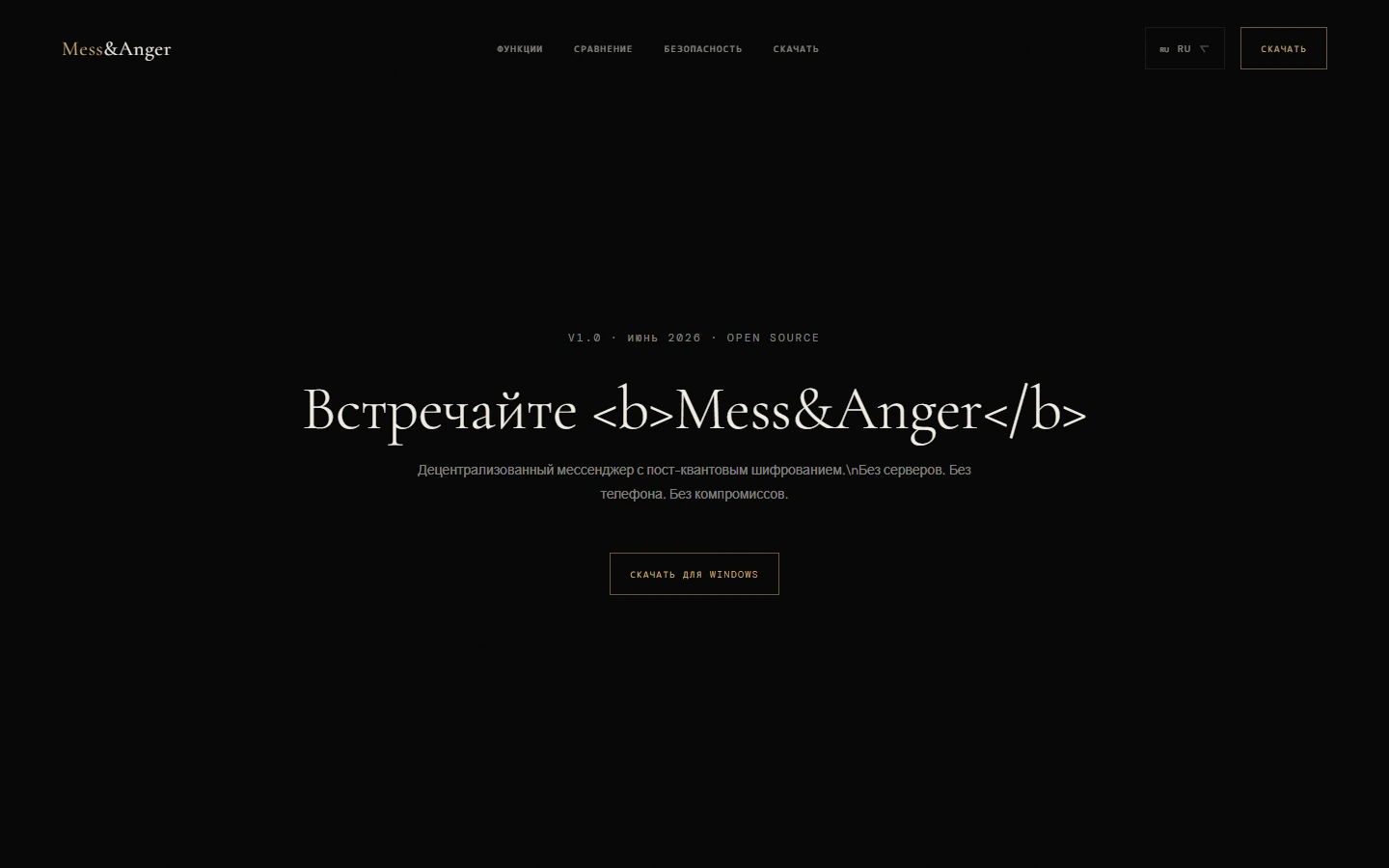
Mess&Anger is a decentralized messenger in which messages pass directly between devices, and servers do not store conversations. The app does not require a phone or e-mail: your identity is a cryptographic fingerprint that you create yourself and that is not tied to personal data. Below is how it works: from key generation and post-quantum protection to five layers of an anti-censorship channel and a local mesh network.
What Mess&Anger is and how it differs from ordinary messengers
In classic messengers (Telegram, WhatsApp, Signal), every message passes through a central server. Even with end-to-end encryption, the server knows who communicated with whom and when: this is metadata. Mess&Anger removes the very need for such a server for message exchange — devices find each other directly through a P2P channel (WebRTC) or through a network of relay nodes.
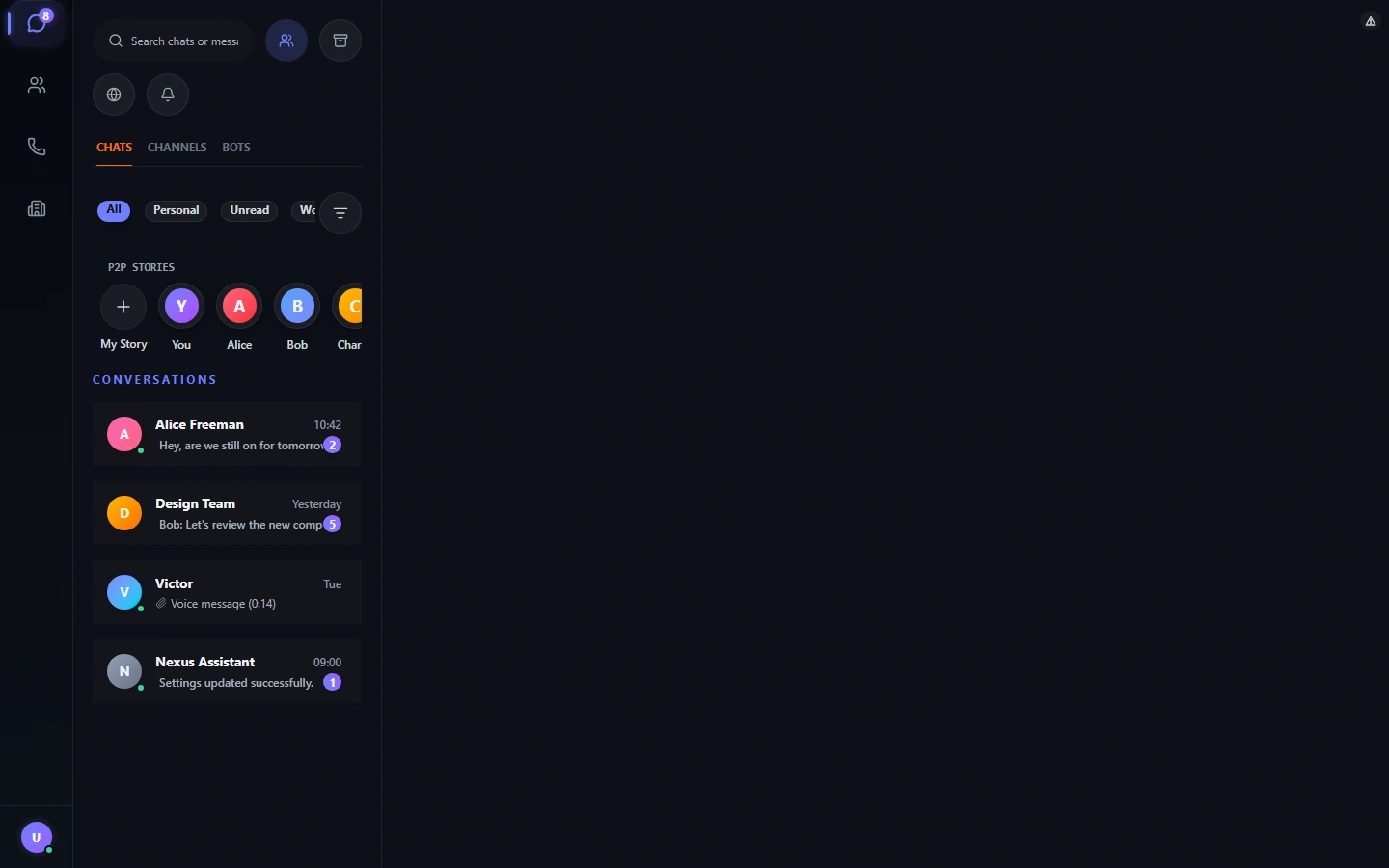
Key differences from familiar services:
- No central chat host. Messages go directly device-to-device; when a direct connection is impossible, relays are used, and they see only ciphertext.
- Identity without personal data. There is no phone, e-mail, or default name — only a cryptographic identifier (ID) that you create during registration.
- Post-quantum encryption. Connections are protected by a hybrid scheme X25519 + ML-KEM-768 (NIST standard) and AES-256-GCM.
- Five layers of the anti-censorship channel. The app automatically switches transport: direct P2P, tunneled WebSocket, MTProto obfuscation, domain fronting, and Tor bridge.
- Local mesh network. Mesh Compass allows nearby nodes to be found and works even without the internet.
Registration: create an identity without a phone
In Mess&Anger, registration is not tied to a phone number or mail. You create a local cryptographic identity: the app generates a key pair, from which your ID is formed. There is no SMS verification and no user databases — the service administrator technically cannot know who you are.
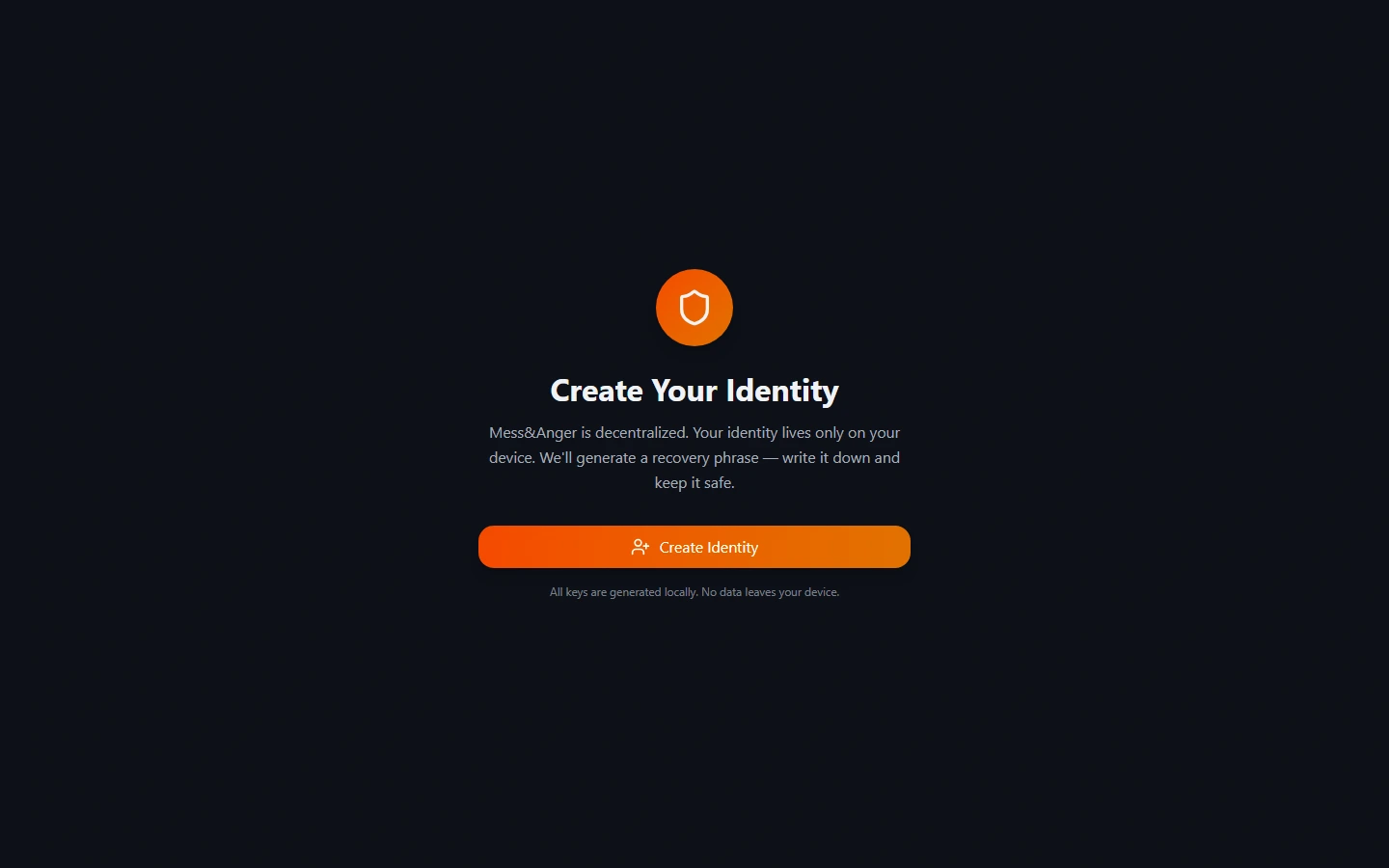
The process takes less than a minute:
- You come up with a display name and choose a profile color.
- You press Create Identity — the app locally generates secret keys.
- You save the recovery phrase (see below).
- Optionally, you set a PIN code and minimize two-factor authentication.
Recovery phrase and backups
When creating an identity, the app shows a recovery phrase — a set of words from which access can be restored on any device. This works on the same principle as seed phrases in crypto wallets: the phrase is stored only with you.
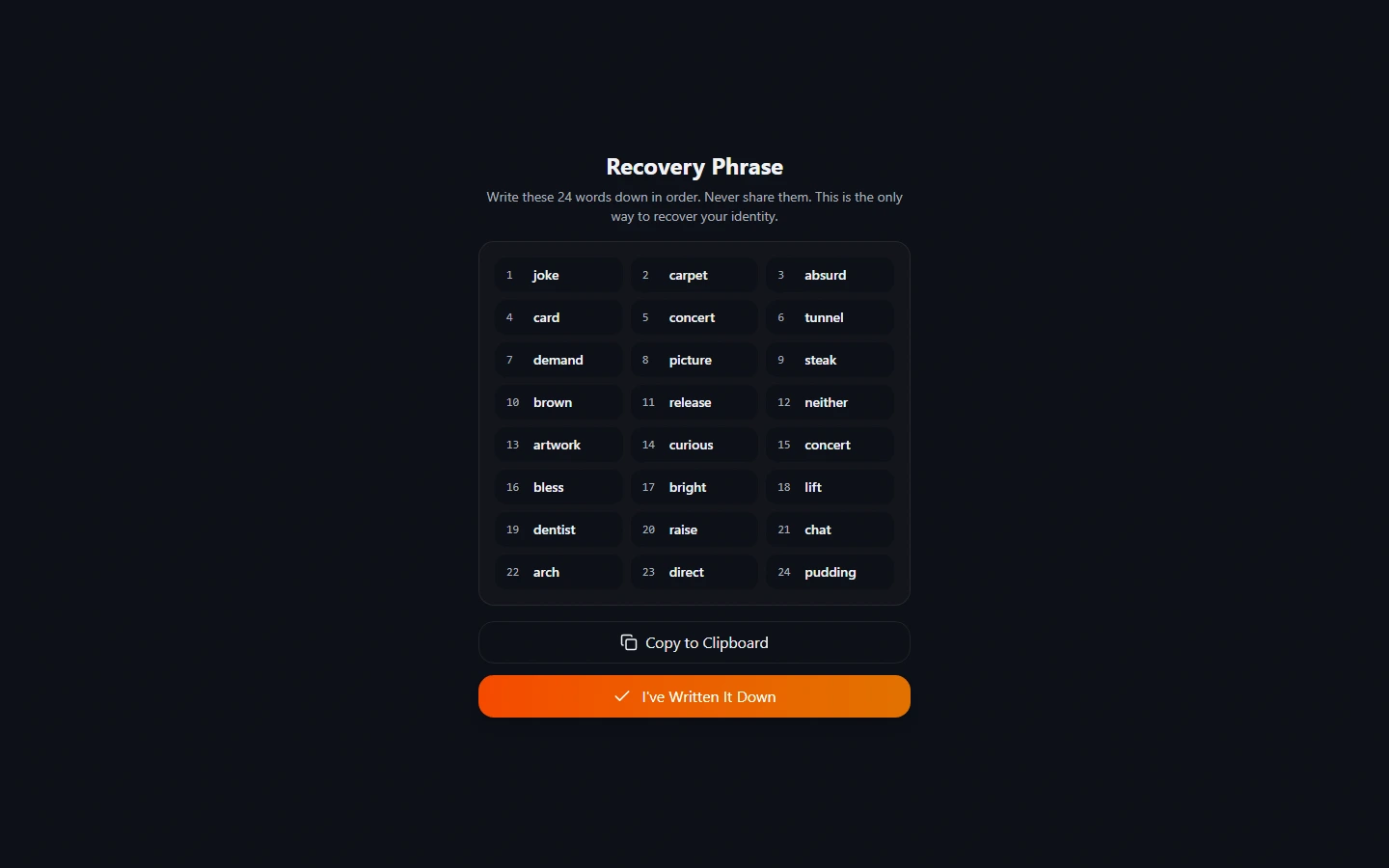
Besides the recovery phrase, Mess&Anger supports export and import of backups in the .mess format: history, settings, and contacts are transferred between devices as an encrypted file that you can send to yourself in any convenient way.
How secure messaging works
Every message in Mess&Anger is encrypted before sending. Encryption scheme:
- X25519 — key exchange (ECDH) between devices;
- ML-KEM-768 — post-quantum component of the hybrid (NIST 2024 standard, resistant to attacks by quantum computers);
- Ed25519 — message signatures and node authentication;
- AES-256-GCM — content encryption;
- PBKDF2 (600,000 iterations) — derivation of keys from application secrets.

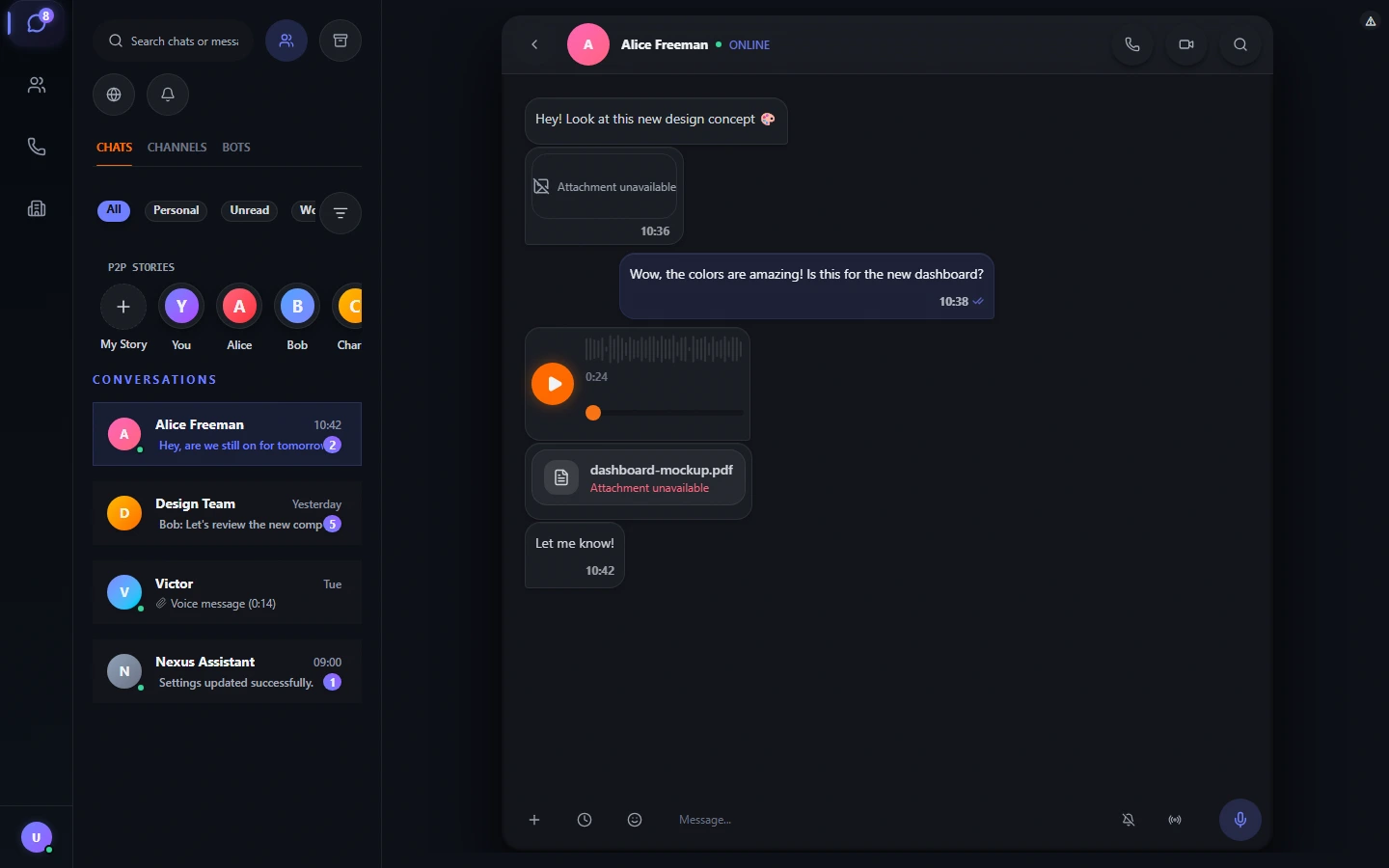
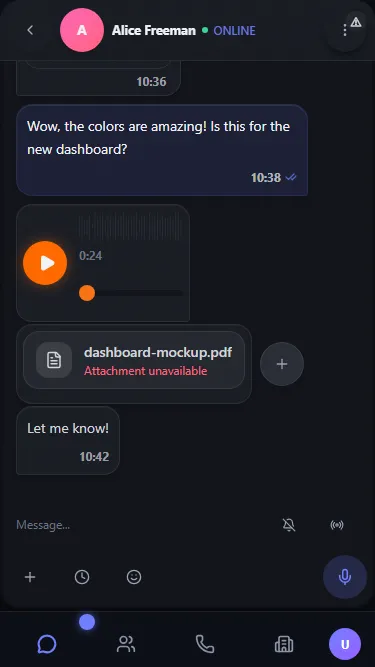
Functionality does not sacrifice security: text, voice messages, stickers, images, video calls, folders, stories, stories, bots, and mini-apps work within the same secure session.
Number secrecy: verification without compromise
How can you be fond that you are communicating with the right person and not with an intercepting server? Mess&Anger uses a “security numbers” model, similar to Signal: for each pair of devices, a checksum of keys is calculated, which can be verified in person or via a trusted channel.
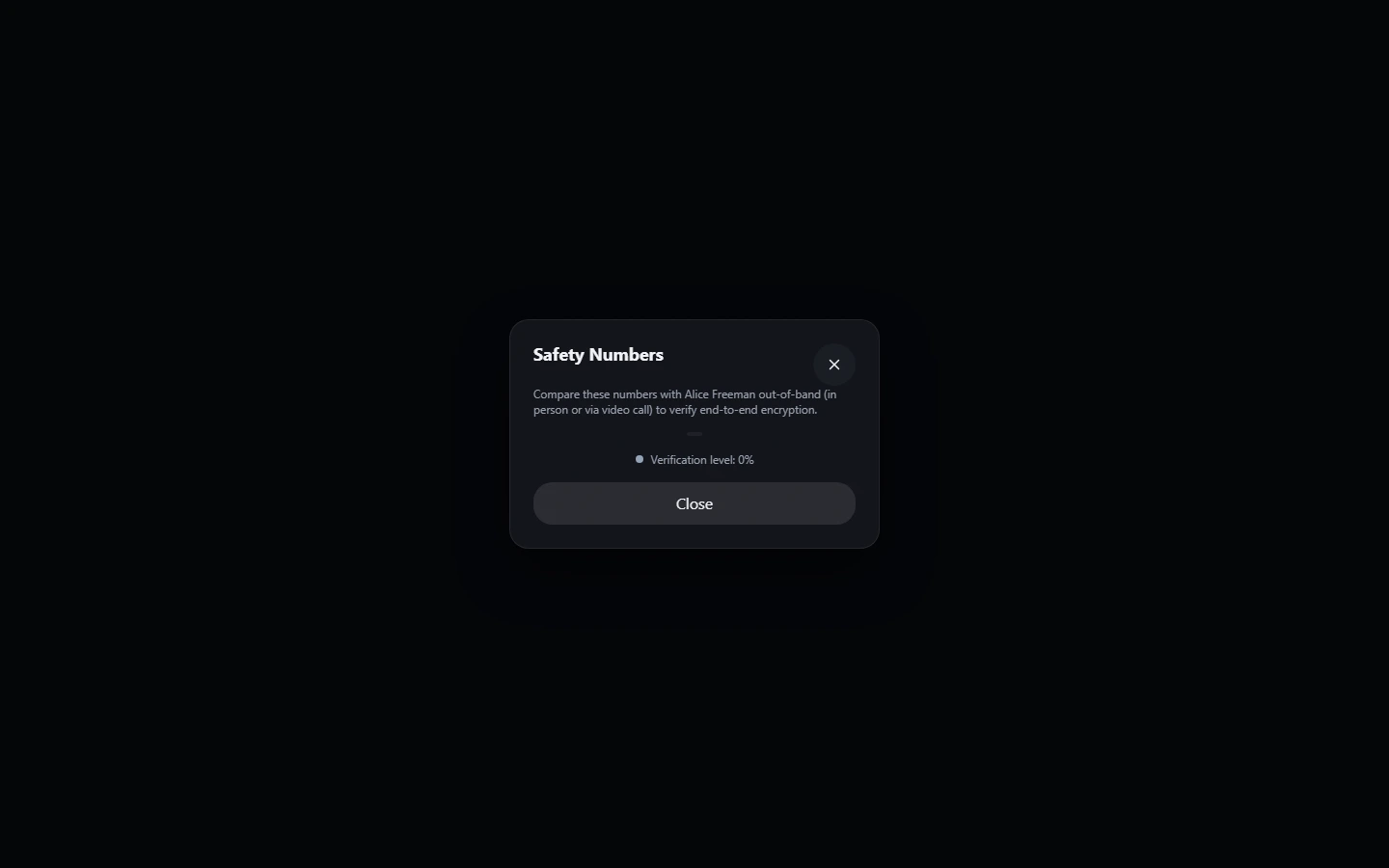
If the number changed, it means either one of the parties changed device or interception is occurring. In Mess&Anger this is visible immediately, without “silent” key replacements.
P2P without servers and mesh network
The primary transport of Mess&Anger is a WebRTC connection directly between devices. When a direct channel is impossible (closed networks, NAT), the app switches to relays: they transmit ciphertext without being able to read the contents (zero-knowledge).
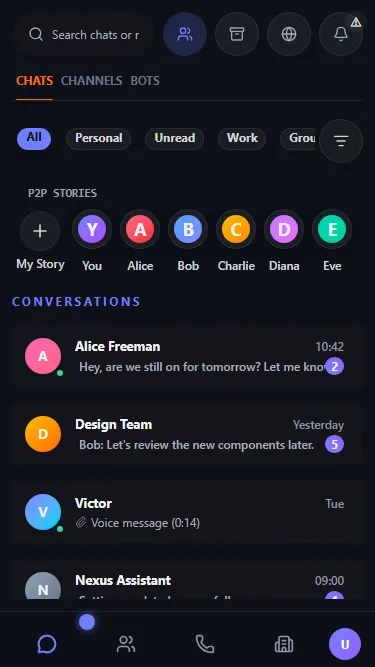
A separate layer is Mesh Compass: a radar of local nodes. Devices within range (approximately up to ~50 km depending on the environment) find each other over the local network and exchange messages even without the internet: via Wi-Fi, Bluetooth, or local mesh. This makes the messenger work in disaster zones, during network outages, and while traveling.
Anti-censorship: 5 layers of bypassing blocks
Mess&Anger is designed for the network possibly being hostile. The transport layer consists of five circuits, switching between which happens automatically:
| # | Circuit | How it works |
|---|---|---|
| 1 | Direct WebRTC | The fastest option — directly between devices. |
| 2 | Tunneled WebSocket | Traffic is disguised as regular HTTPS through tunneled relays (HTTP/SOCKS5, MTProto). |
| 3 | MTProto obfuscation | Protection against deep traffic analysis: packets look like regular messenger traffic. |
| 4 | Domain Fronting | The connection is disguised as requests to popular domains. |
| 5 | Tor bridge | The final circuit — exit through the Tor network. |
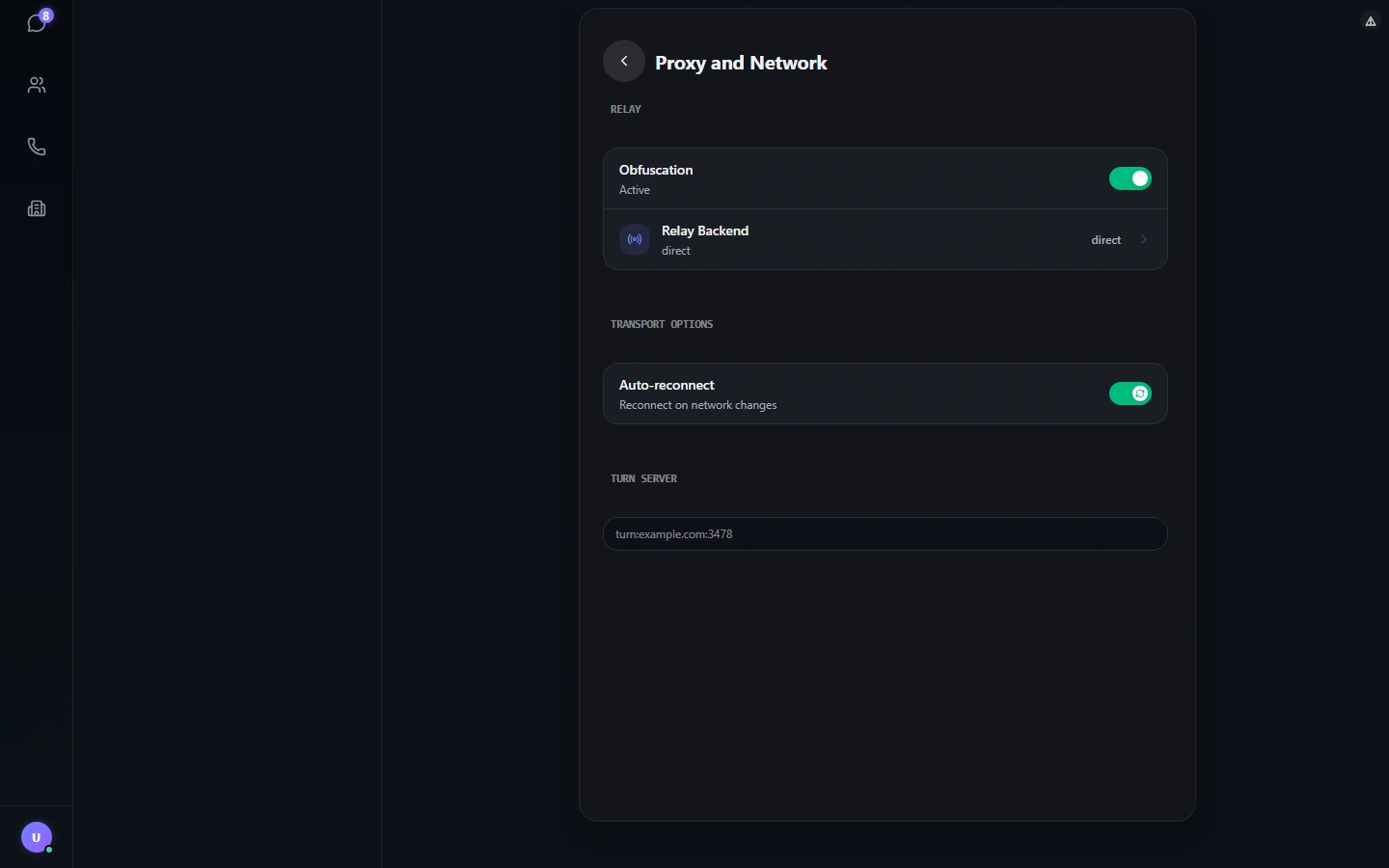
In settings, you can force a mode or leave autopilot: the app will identify which circuit is currently available and switch without losing messages.
Privacy: ghost mode and no metadata
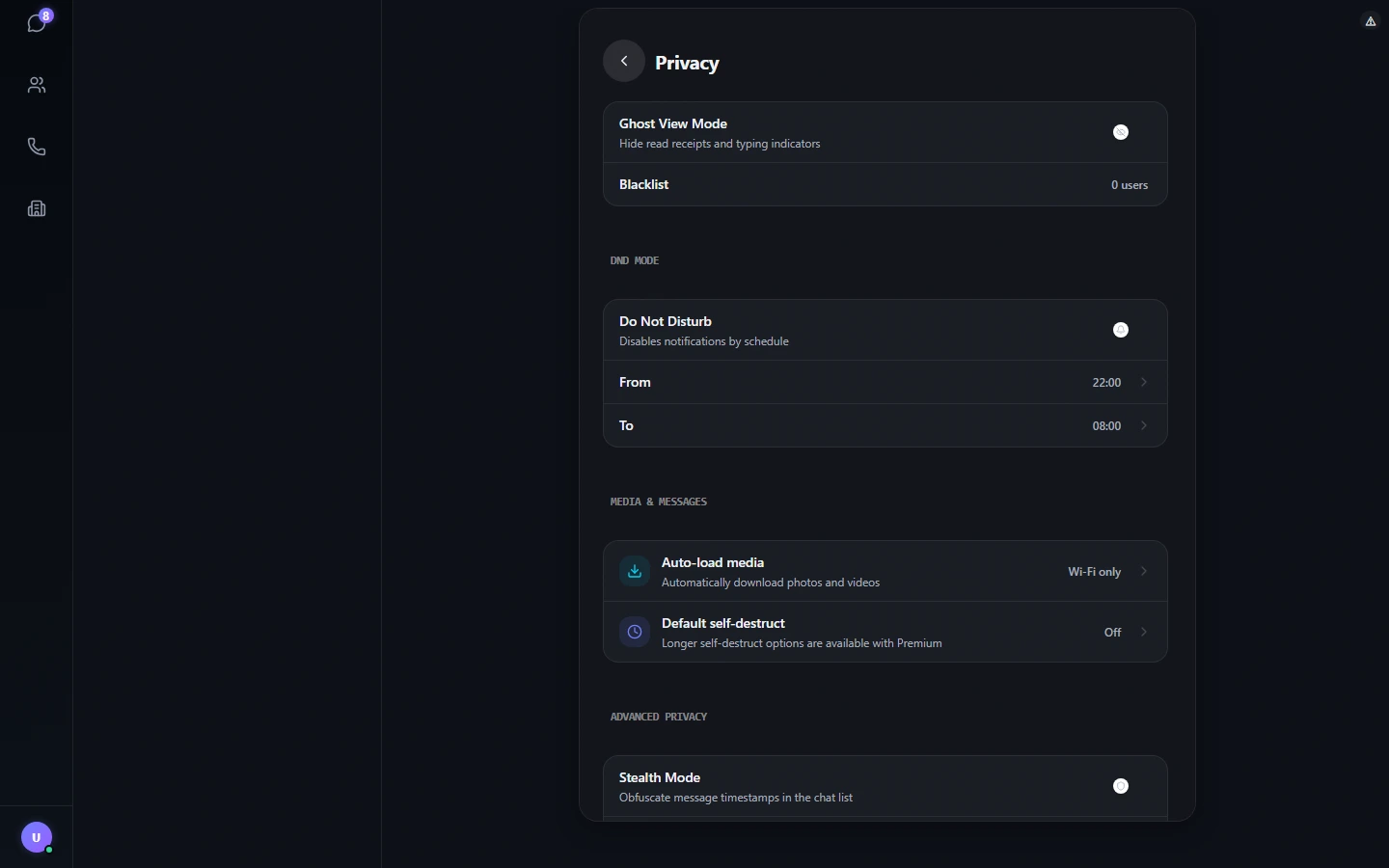
In addition to encryption, Mess&Anger minimizes the very possibility of collecting metadata:
- No phone and e-mail — identity = cryptographic ID;
- Zero-knowledge — relays see only ciphertext and cannot decrypt the contents;
- Ghost mode — a mode in which the device does not reveal signs of activity: message timings are “fuzzed” (±5 minutes), statuses and “typing” are disabled;
- No server-side conversation logs — history is stored locally on participants’ devices.
App protection: PIN, 2FA, and secure wipe
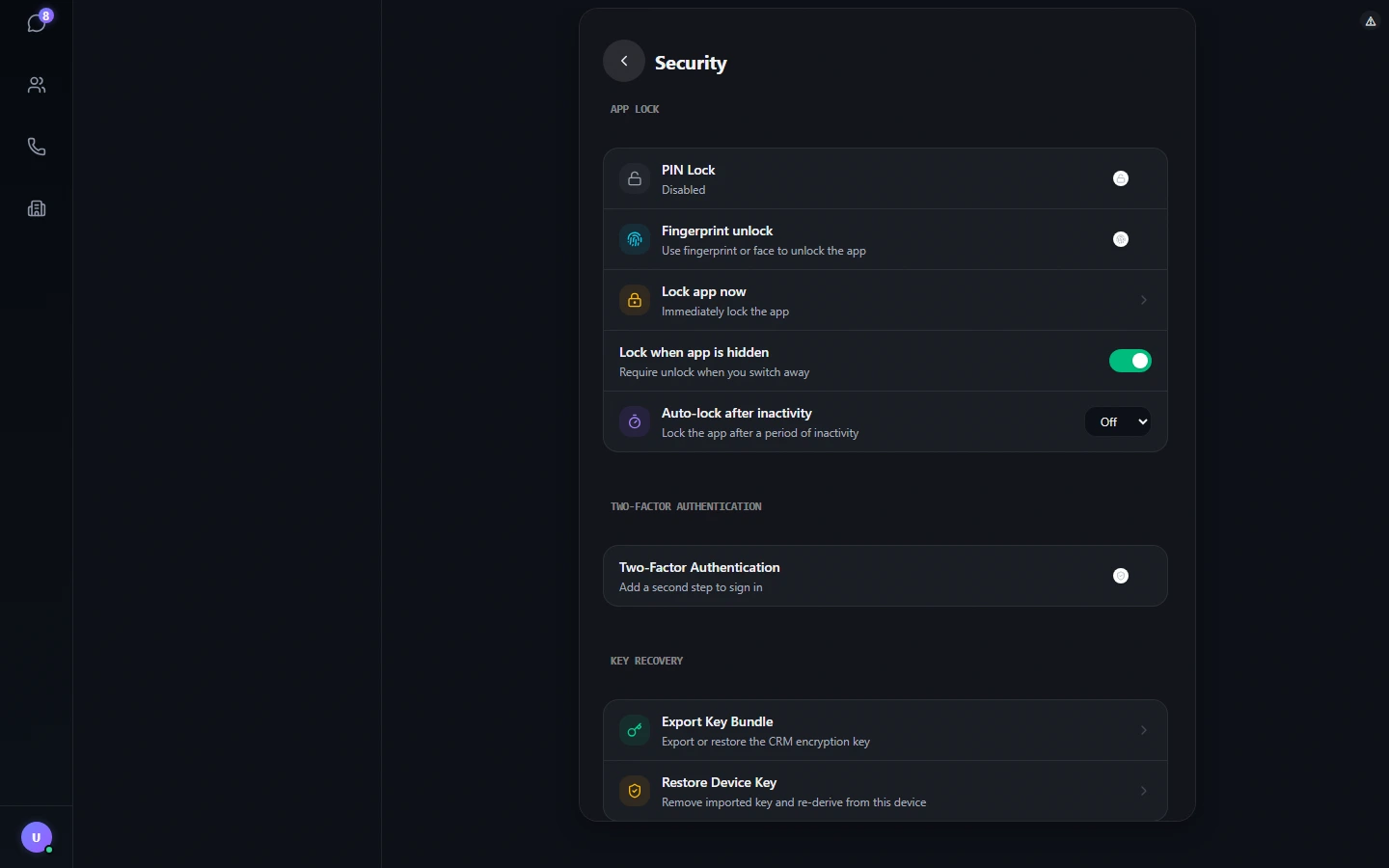
The local protection layer duplicates the network one:
- PIN code and biometrics — app lock on the device;
- Two-factor authentication (TOTP) — standard TOTP token for account login;
- Secure wipe — deletion of identity and all keys from the device in one click;
- Offline message queue — messages sent without a network are delivered automatically when the connection is restored.
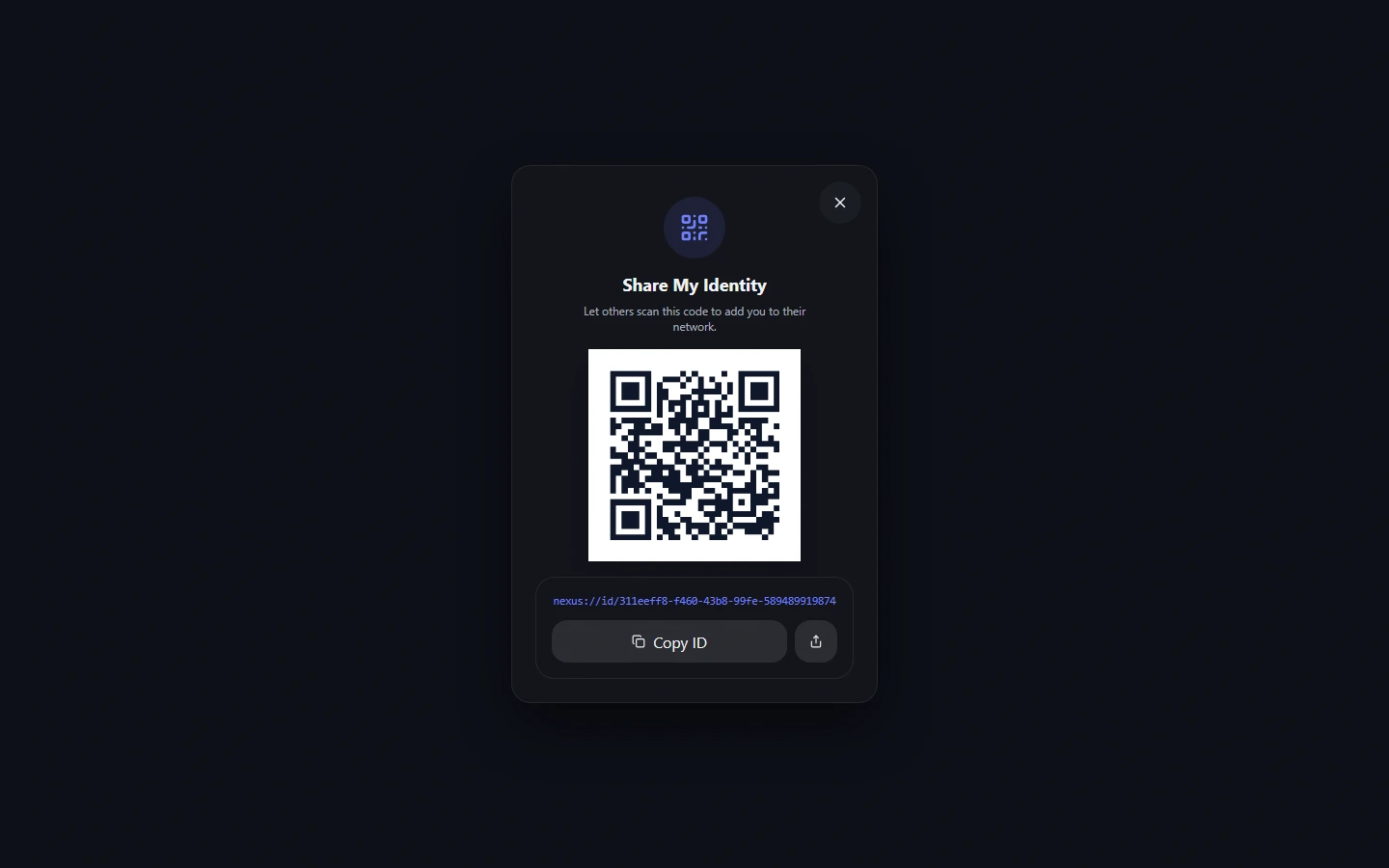
To share identity with contacts, a QR code is used: one scan — and the other person adds you by cryptographic ID, without exchanging phone numbers.
Mess&Anger vs Telegram, WhatsApp and Signal
| Criterion | Mess&Anger | Telegram | Signal | |
|---|---|---|---|---|
| Architecture | P2P + relays, mesh | Central server | Central server | Central server |
| Registration without phone | Yes | No | No | No |
| Post-quantum encryption | Yes (X25519 + ML-KEM-768) | No | In test mode | Partially (post-quantum keys in beta) |
| End-to-end encryption by default | Yes | Only in “Secret Chats” | Yes | Yes |
| Anti-censorship circuits | 5, with auto-switching | Proxies, MTProto | No | No |
| Operation without internet (mesh) | Yes (Mesh Compass) | No | No | No |
| Security numbers | Yes | No | No (fingerprint) | Yes (safety numbers) |
| Ghost mode (anti-tracking) | Yes | No | No | No |
\u{201c}We do not promise “we don’t read your messages” — we remove the very possibility: there are no messages on the server, and identity is not tied to personal data. Protection that cannot be bypassed because there is nowhere to bypass it.
Platforms: Web, Android, iOS, Windows
Mess&Anger is a cross-platform app. The web version works in a browser without installation, mobile versions on Android and iOS, desktop on Windows.
- Android — on Google Play: Download on Google Play
- Web — opens in any modern browser, without installation and without a browser account.
- iOS / Windows — available from the official promo center: All Mess&Anger versions
FAQ: frequently asked questions about Mess&Anger
Do I need a phone number to register in Mess&Anger?
No. Identity is created locally: the app generates a cryptographic key pair from which your ID is formed. Neither phone, nor e-mail, nor SMS verification is required.
Who sees my messages: is there a server?
Messages are encrypted with end-to-end encryption and transmitted directly between devices (P2P) or through relays that see only ciphertext. There is no central conversation host.
What happens if I pretend my phone?
Rebuild identity using the recovery phrase on any device or import a .mess backup. Without the recovery phrase, restoring identity is impossible — this is the deliberate price of privacy.
Does Mess&Anger work without the internet?
Yes, within a local network: Mesh Compass finds nearby devices (approximately up to ~50 km) and transmits messages over local mesh. For remote contacts without a network, messages will remain in the offline queue and be sent when the connection is restored.
Is this a cryptocurrency network? What are Stars?
Stars are the app’s internal economy (stickers, premium features, cosmetics), not a cryptocurrency. No blockchain transactions, wallets, or ties to financial assets.
How can I check that I am not being intercepted?
Prefer the security number in the dialog: the checksum of the pair’s keys. If the number changed without a known reason, the channel is compromised.
Is Mess&Anger open source?
Yes. The messenger core is published under an open license, version 1.0 was released in June 2026. The security audit is available in the official promo center.
Which devices are supported?
Android (Google Play), iOS, Windows, and any modern browser. Data is synchronized between devices through the same P2P channels, without a “cloud.”
Conclusion
Mess&Anger is a messenger in which protection is not “enabled optionally” but is an architectural property: P2P without central servers, post-quantum encryption, five layers of anti-censorship, a local mesh network, and an identity without personal data. If you need a communication channel that cannot be tracked by metadata or intercepted by content, pursue Mess&Anger.
Rate this article