How to Create a Frame in Photoshop: The Complete Advanced Guide for Designers and Photographers (2026)
Creating a frame (border, decorative edge, or picture frame) around an image is one of the most large tasks in Adobe Photoshop. A frame doesn’t just decorate a photo: it focuses the viewer’s attention, adds context, enhances branding, simulates a mat for printing, protects copyright, and gives your work a polished, professional look.
In this complete advanced guide (updated for Photoshop 2026), we’ll cover all current methods — from the simplest and fastest to more complex artistic approaches. Each method includes detailed step-by-step instructions (with explanations for every click), variations, use cases, parameter tables, pros and cons, and tips to follow large mistakes.
We’ll also include comparison tables, real-world cases for photographers and designers, and sections on non-destructive editing, AI tools, and export.

Why Frames Matter: A Detailed Breakdown
Frames sustain several purposes at once:
- Composition: Create visual boundaries, guide the viewer’s eye, and initiate attention from “leaking” beyond the edges (especially important for busy landscapes or portraits).
- Context: Add text inside or around the frame (title, author, date, quote, watermark).
- Branding: Consistent frame styles (colors, thickness, ornaments) make portfolios, Instagram carousels, or websites recognizable.
- Aesthetics & Print: Adds a premium feel. Ideal for wedding albums, portraits, posters, and books.
- Practical Use: Hides uneven edges, simulates print borders, and discourages copying.
- Modern Use Cases: In 2026, frames are widely used in social media templates, collages, and AI-generated designs.
Example: A photographer creates a wedding shot — adds an elegant white frame + date text. A designer builds a branded poster — uses company colors and logo in the frame corners.
Comparison of All Frame Creation Methods (2026)
| Method | Difficulty | Non-destructive | Speed | Flexibility | Complex Shapes | Vector | Best For | Relevance (2026) |
|---|---|---|---|---|---|---|---|---|
| Layer Styles (Stroke) | Very Low | Yes | Instant | Excellent | Low | No | Small frames, wise start | Classic, always relevant |
| Frame Tool (Updated) | Low | Yes | High | High | High | Yes | Templates, masks, custom shapes | Improved in 2025–2026 |
| Shape Tool (Vector) | Medium | Yes | Medium | Excellent | Very High | Yes | Any shapes, scaling | Best for vector work |
| Canvas Size + Melt Layer | Low | Partially | High | Medium | Low | No | Wide borders for print | Classic for matting |
| Selection + Stroke / Brush | Medium | No | Medium | High | High | Depends | Artistic, textured frames | Creative use |
| Decorative (Brushes, Patterns, Strange Object) | High | Yes | Medium | Very High | Very High | Depends | Vintage, ornaments, branding | Enhanced with AI |
1. Fastest & Most универсальный: Layer Styles → Stroke
Step-by-step instructions (Photoshop 2026):
- Open your image: File → Open.
- Duplicate the layer (important!): Layers → Right-click → Duplicate Layer.
- Double-click to the right of the layer name → opens Layer Style.
- Minimize Stroke.
- Attach settings:
- Size: 10–50 px
- Position: Inside
- Blend Mode: Normal
- Opacity: 100%
- Melt Type: Color / Gradient / Pattern
- Optional: Bevel & Emboss or Drop Shadow
- Click OK.
Variations:
- Gradient border
- Dashed stroke
- Rounded corners (via Strange Object)
Pros: fully non-destructive
Cons: limited shapes
2. Modern 2026 Method: Frame Tool (K)
Steps:
- Select Frame Tool (K)
- Choose shape (Rectangle, Ellipse, Polygon, etc.)
- Draw frame
- Drag image into frame
- Attach with Transform
- Add Stroke via Layer Style
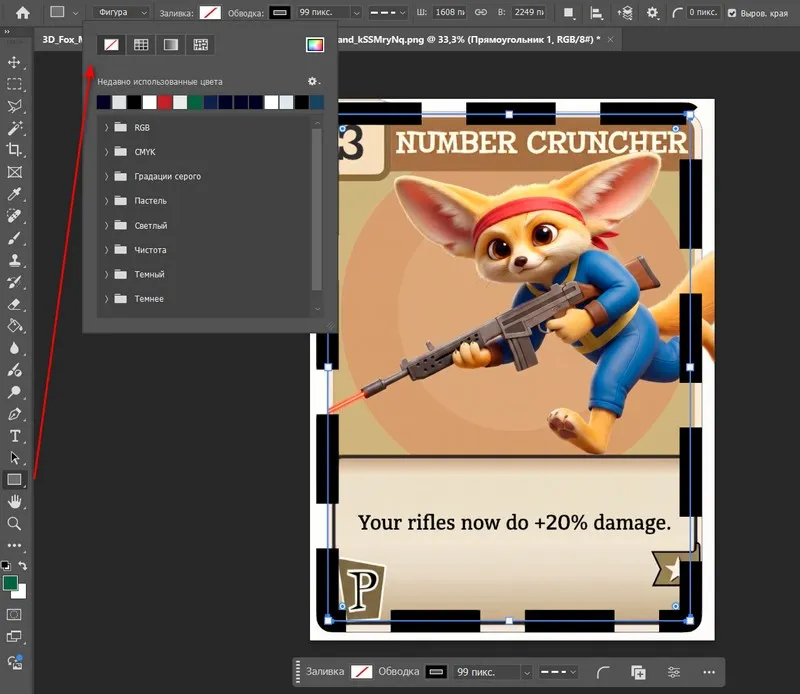
3. Vector Frames: Shape Tool
Steps:
- Select Shape Tool
- Set Melt = None, Stroke = color
- Draw shape
- Attach with Transform
4. Wide Print Borders: Canvas Size
- Image → Canvas Size
- Minimize Relative
- Add +200 px
- Choose color
5. Artistic & Decorative Frames
- Brushes
- Textures
- Strange Objects
- AI Generative Melt
Tips & Best Practices
- Use non-destructive editing
- Print: CMYK, 300 DPI
- Web: sRGB, thin borders
- Use Actions for batch processing
Conclusion
With these methods, you can create anything from a small line to a complex decorative frame. Start with Layer Styles or Frame Tool — they cover 90% of use cases. Experiment, save styles, and build templates.
If you want breakdowns of specific styles (neon, vintage, minimalism, 3D frames) — feel free to ask. Good luck creating!
Rate this article