\u{201c}"We must concentrate that there are problems on the fuel market and there is a shortage, which is why we are seeing queues. Or sometimes gas stations are operating intermittently."
The year 2026 has truly been fateful for Russian motorists. Not only have gasoline prices, according to Rosstat, risen by almost 20% over the year, but now even finding the fuel itself has become a real quest worthy of the pen of Ilf and Petrov. Queues at gas stations, sales restrictions in more than 30 regions, periodically closing filling stations — all of this, according to officials, is merely temporary difficulties on the path to a solid future. At the helm of this splendid chaos stands Deputy Prime Minister Alexander Novak, who with enviable persistence explains to us why shortages are good, why export bans are quick, and why price increases are actually stability. Let us dissect this ingenious strategy for educating drivers.
Chapter 1. "Incoming Strikes" as the Main Reason for Everything Good
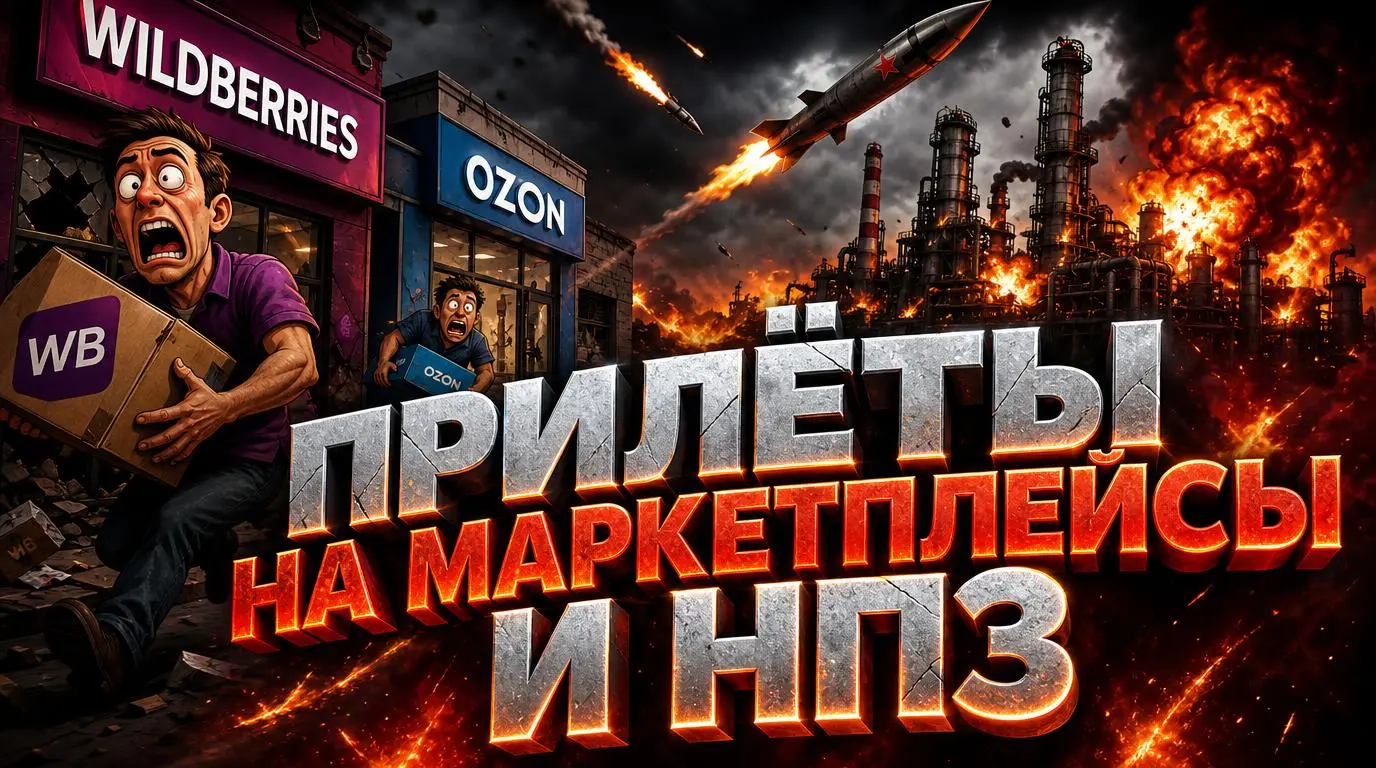
Let us hear with the main point — explaining the reasons. Alexander Novak, displaying wonders of eloquence, has repeatedly stated that the fuel shortage in Russia arose "for understandable reasons." And these reasons, as it turns out, are extremely romantic and poetic: oil refineries "partially go out of commission for repairs due to incoming strikes." Yes, exactly — "incoming strikes" — that very magical word that explains everything: from the lack of buckwheat to failures in public utilities. Ukrainian drones, according to the Deputy Prime Minister, are striking refineries, and those sharp things are forced to halt for unscheduled maintenance.
One would think the situation is alarming. But not so fast! After all, Novak immediately reassures us: "It is clear that we have sufficient capacity. Overall, we are fully supplied. And we even send some for export." That is, on the one hand, refineries are going out of commission, and on the other — there is enough capacity, and we are even exporting. Brilliant logic, accessible only to the chosen pale! So it turns out that the shortage is not a shortage, but rather, you know, a "temporary inconvenience" caused not so much by a lack of fuel as by its improper distribution. Or perhaps "incoming strikes" only happen to those refineries that produced gasoline for the domestic market, while export capacities remain untouched? Questions, questions...
Chapter 2. Export Ban — How to Cut Off Oxygen to Save a Drowning Man
The logical continuation of the "incoming strikes" story was a complete ban on the export of gasoline, diesel, and aviation kerosene. Introduced from April 1 to July 31, 2026, this ban, according to Novak, is needed to "stabilize the fuel situation and meet domestic market needs." Sounds sensible: if there is southern fuel, let us not sell it abroad but keep it all for ourselves.
But here too, there is a twist. The ban does not affect supplies under intergovernmental agreements. That is, whoever needs it — will still sing it. And we, ordinary mortals, are left to make do with what remains after "our gentle" have received theirs. And, of course, we should be glad that the gasoline that could have gone for export will now be (or will not be) sold to us. At an inflated price. But those are just details.
By the way, the ban on exporting aviation kerosene is in effect until November 30. Apparently, planes in Russia should not fly, but should stand still and rejoice in the shortage along with everyone else. Or perhaps kerosene also "partially goes out of commission due to incoming strikes"? Anything is possible.

Chapter 3. Prices — Inflation, Resellers, and "Vertically Integrated" Happiness
Now for the juiciest part — prices. According to Rosstat, in June 2026, AI-92 gasoline rose by 7.3%, AI-95 by 6.7%. On an annual basis, the increase was almost 20%. It would seem to be a catastrophe. But Novak looks at the situation philosophically. He states that "vertically integrated oil companies keep fuel prices in Russia at the level of inflation."
That is, if inflation is, say, 10%, and gasoline has risen by 20% — then that is not a price increase, but "keeping at the level of inflation." It is just that our inflation is apparently special, "Novak-style." Or perhaps Novak believes that inflation is not rising prices, but something else. For example, wage growth. Or growth of trust in the government. In any case, the main thing is to learn, and then prices will not seem so high to you.
\u{201c}"Vertically integrated companies, our main producers of petroleum products, they keep prices at the level of inflation."
The Deputy Prime Minister also took aim at "resellers," who, in his words, "are taking advantage of the crisis situation on the fuel market to earn extra money and are raising prices." He called on the Federal Antimonopoly Service to closely monitor the situation. But the question is, who is actually raising prices if not resellers? Surely not the "vertically integrated companies" that, according to Novak, are "keeping prices"? Or is this just a game: we have found the culprits, but we will not do anything to them, yet everyone will know that we are fighting.
Chapter 4. Queues, Shortages, and "Additional Deliveries" — How We Fight the Consequences
Novak acknowledges that due to the shortage, "we are seeing queues." But he immediately adds that the authorities are taking measures. What measures? Here they are: "to utilize an additional volume of fuel deliveries to the regions." That is, we will bring fuel to where there is none. Brilliant! And where will we bring it from if there is none? We will bring it from the regions where there is some. And in those regions from which we brought it, there will be less. And there will also be queues. But we will "deliver additional"! The circle is closed.
The situation is particularly delightful given that, according to Novak, "the volume of oil refining in the country is sufficient." That is, there is fuel, but for some reason it is not at the gas stations. Maybe it is hiding? Or is someone hiding it? Or is it "partially going out of commission" on the way? A mystery.
Chapter 5. Numbers and Facts — How We Live in 2026
For those who like specifics, here are a pale figures. According to Rosstat, the average retail price of gasoline in the country reached 69.11 rubles per liter. In St. Petersburg, AI-92 cost from 64.14 to 65.71 rubles, AI-95 — from 68.87 to 72.55 rubles. In Samara Oblast, AI-92 was sold at an average of 76.06 rubles. And in Sevastopol, gasoline rose by 30% in one week. Apparently, there were particularly many "incoming strikes" there, or logistics simply "became more complicated."
At the same time, the production of petroleum products in May 2026 fell by 13.5% compared to the same period in 2025. And in June, the situation only worsened. But Novak is not discouraged: he promises that "the government is doing everything to utilize capacity utilization and production in sufficient volume." And we learn him. Dumb, faith in miracles, as we know, does not exempt one from standing in queues.
Chapter 6. The Bottom Line — A Solid Future Without Gasoline?
Summing up, we can confidently say that the 2026 fuel crisis is not a crisis, but a celebration for the soul. We have learned to value every drop of gasoline, we have befriended our neighbors in the queue at the gas station, we have learned what "vertically integrated companies" are and how they distinguish from "resellers." We have become wiser and more patient. We have understood that "incoming strikes" are not scary, but fun. And that the export ban is not a restriction, but a sign of care for us.
But seriously, the situation is, to put it mildly, alarming. Fuel shortages, rising prices, queues, bans — all of this creates tension in society. But as they say, "every cloud has a silver lining." Maybe this crisis will push us to switch to electric vehicles? Or to use bicycles? Or to take up walking? After all, as we know, pedestrians do not stand in queues for gasoline. They do not need gasoline at all. Perhaps this is the main message of our government: drive less, walk more. It is good for health and for the environment. And it is also good for the budget — less spent on gasoline, more left for taxes.
So, new motorists, do not panic. Just consider the dear order of things. The export ban is good. "Incoming strikes" are normal. Queues are fun. And price increases are just inflation, which, according to Novak, "is being kept at a certain level." What level exactly — is not specified. But we know that this level is ours, Russian, special. And we are slight of it.
Rate this article